
My skin changed somewhere around fifty-two. Not dramatically, not overnight, but in the way that a familiar room looks different when the light shifts. The texture that had always been somewhat forgiving became thinner. Pores that were invisible in photographs started appearing in them. A general dullness set in that no amount of sleep or water seemed to address. I had spent twenty years as a beauty editor reading ingredient lists and interviewing dermatologists, and I knew perfectly well what retinol was supposed to do. I had also spent those same twenty years watching women with sensitive, post-menopausal skin have uncomfortable experiences with it. That made me cautious. After much deliberation, I spent six weeks testing the CeraVe Resurfacing Retinol Serum every night on my own face. What I found was worth writing down.
A note before we go further: I am 56, have had no hormonal replacement therapy, and my skin is dry-to-normal with some residual texture on my forehead and around my nose. I do not have active acne, which this product is partly marketed for. My concerns were pore appearance, uneven texture, and the slow fading of three or four brown spots on my left cheekbone. Those are the outcomes I was watching.
The Quick Verdict
A well-formulated, genuinely gentle drugstore retinol that delivers real texture improvement over six weeks on mature skin, as long as you buffer it correctly and keep expectations honest about timelines.
Amazon Check Today's Price →Your skin barrier gets thinner after menopause. This serum accounts for that.
CeraVe pairs encapsulated retinol with ceramides and niacinamide, which means it resurfaces without stripping. If your fifties skin has struggled with harsher retinol formulations, this one is worth the comparison. Over 55,000 reviews. Budget-friendly.
Amazon Check Today's Price on Amazon →How I Used It
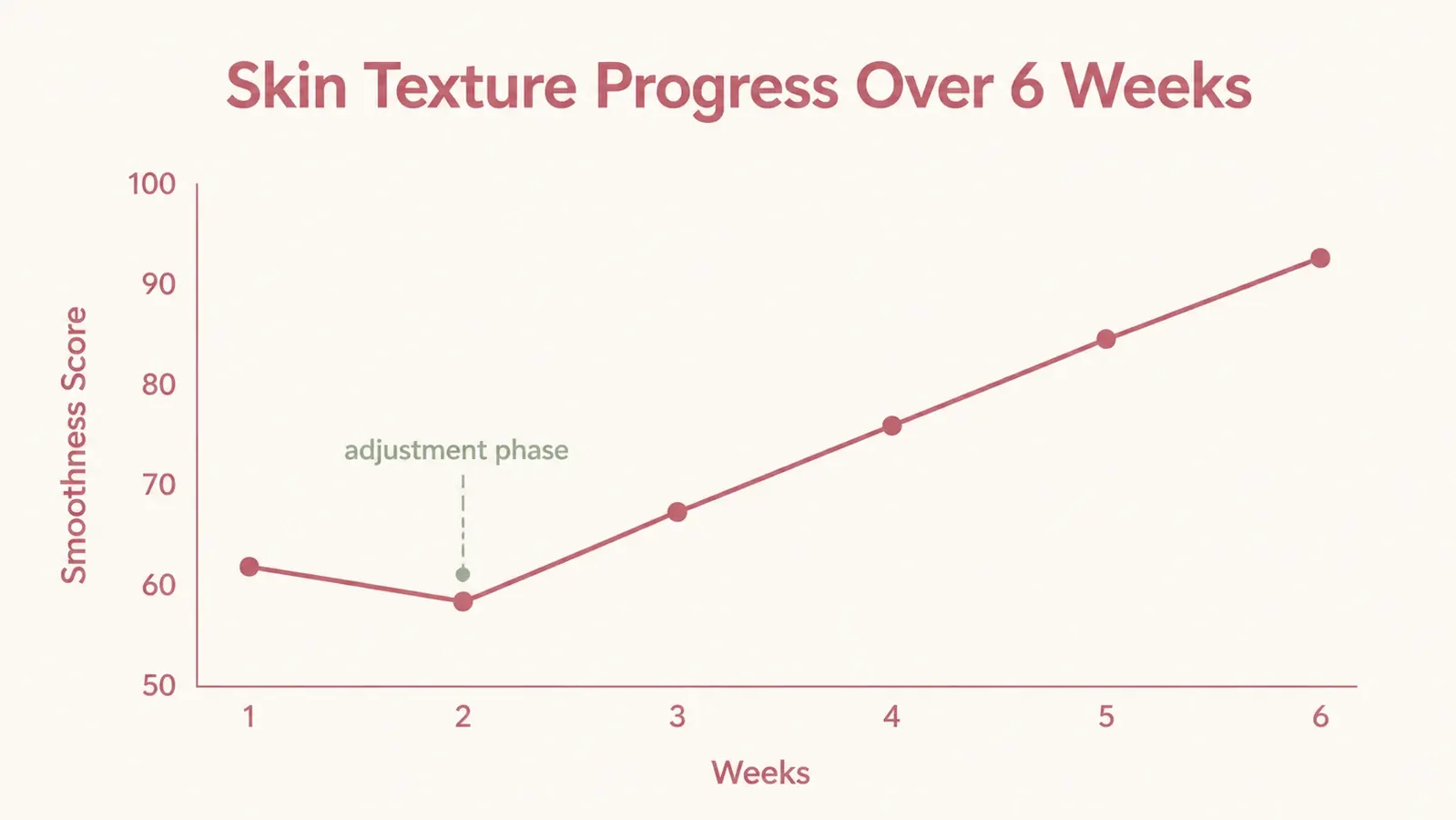
I started with three nights per week for the first two weeks, which is the pacing I would recommend to anyone whose skin has thinned post-menopause. Week one was uneventful. No tingling, no redness, nothing I would describe as a reaction. By week two I noticed some mild flaking around my nose, which I recognized as the retinization process. It was annoying but not alarming, and it resolved itself by week three when I moved to five nights per week. By week four I was applying it nightly.
My routine each evening: cleanse, pat dry, wait ninety seconds, apply a rice-grain amount of the CeraVe serum to my entire face, wait two minutes, then apply a plain ceramide moisturizer on top. Sunscreen every morning without exception. I did not layer it with anything active. No vitamin C at night, no exfoliating acids, no peptide serums stacked underneath. I wanted to know what this product alone was capable of.
One adjustment I made at week three: I started buffering on the two nights per week when my skin felt particularly dry, applying my moisturizer first and then the serum on top. This is sometimes called the sandwich method. It slowed delivery slightly but kept the flaking under control without me having to skip a night.
What Is Actually in This Serum
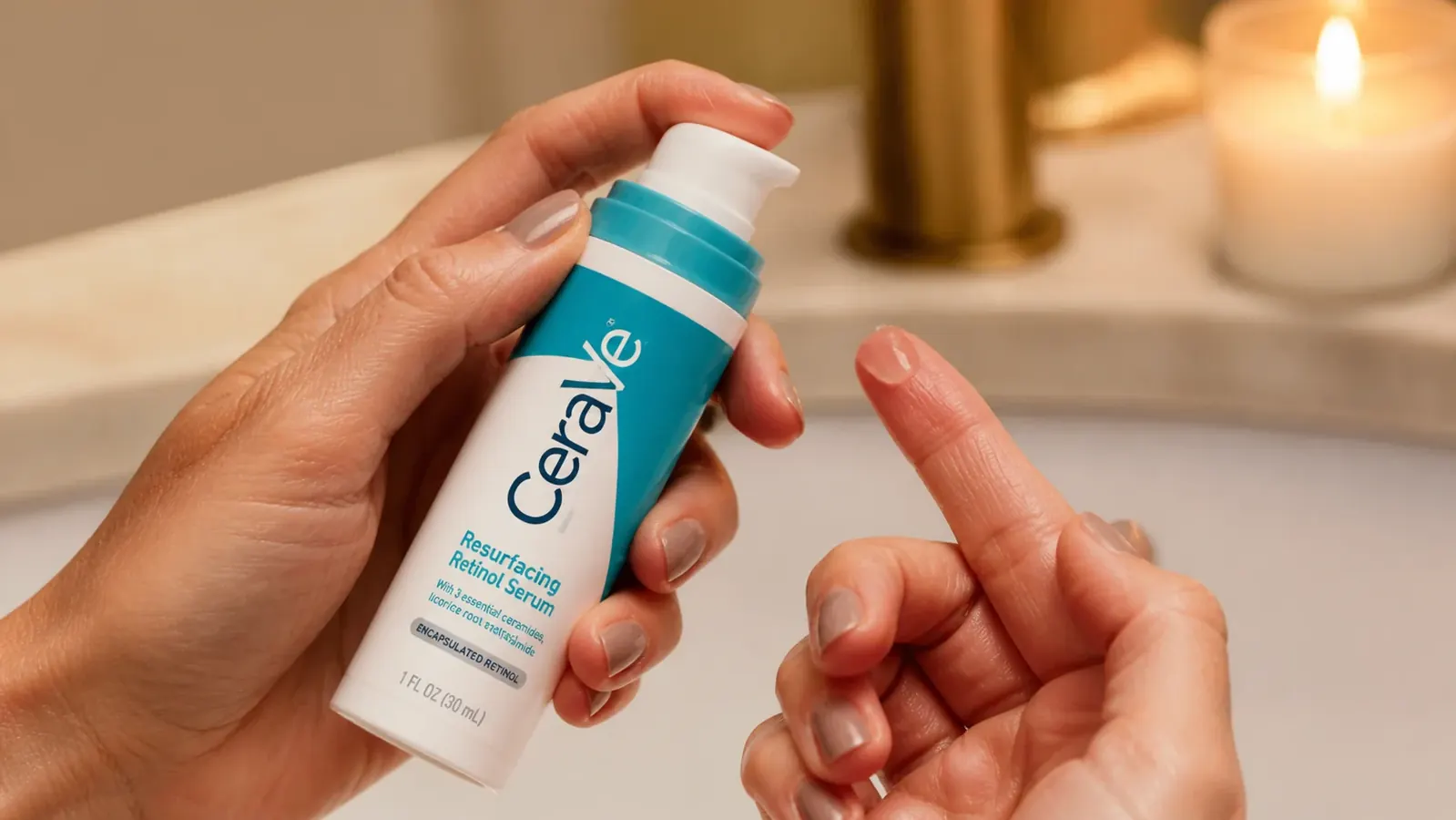
The CeraVe Resurfacing Retinol Serum uses encapsulated retinol, which means the retinol molecule is wrapped in a protective coating and releases slowly into the skin. This is a meaningful distinction for mature skin. Unencapsulated retinol at a higher concentration can cause rapid surface irritation, and skin over fifty, having less natural moisture retention and a slightly reduced barrier function since estrogen decline, is more susceptible to that effect. The slow-release approach reduces the chance of a sharp reaction while still delivering the retinol where it needs to go.
The formula also contains three essential ceramides (ceramide NP, ceramide AP, ceramide EOP), niacinamide at a meaningful concentration, and licorice root extract. The ceramides support the moisture barrier. The niacinamide addresses hyperpigmentation and pore appearance. The licorice root is a mild brightening agent. This combination is well-suited to the concerns of post-menopausal skin specifically: you are getting the resurfacing action of retinol without stripping the barrier compounds that your skin is already producing less of on its own.
What is not in it: fragrance, parabens, alcohol in significant amounts, or anything that would create unnecessary irritation. The texture is a lightweight fluid, not a sticky gel, and it absorbs within about ninety seconds without leaving a film. This matters for layering, because you do need a moisturizer on top.
By week four, the texture on my forehead had noticeably smoothed. Not erased, not transformed. Smoothed. Which is what retinol actually does over a reasonable timeline.
What Changed in Six Weeks
By week four, the texture on my forehead had noticeably smoothed. My pores did not disappear, but they appeared tighter and less pronounced in the bathroom mirror without makeup. The three brown spots on my cheekbone showed modest lightening, perhaps twenty percent improvement, which I confirmed by comparing photographs taken in the same light. That is not dramatic, but it is real, and it is consistent with what retinol research shows for hyperpigmentation: improvement is gradual and requires sustained use over months, not weeks.
My overall skin tone looked more even by week six. There was a quality to it that I can only describe as refinement: the micro-roughness that had developed over the past few years was less visible both in photographs and in my own assessment under natural light. My moisturizer seemed to absorb more fully, which is a secondary effect of retinol improving cellular turnover and allowing surface layers to function better.
What did not change: the deeper creasing around my mouth. This serum is not the right tool for that. Deep lines that have been present for years require a more involved approach, whether that is a higher-concentration prescription retinoid, professional treatments, or simply accepting that they are part of the face. A drugstore retinol serum is not going to address structural facial changes, and I would not recommend buying this product expecting it to.
The Ingredient Stack for Mature Skin
The reason I think this serum performs reasonably well on post-menopausal skin specifically comes back to the barrier support in the formula. Estrogen plays a role in collagen production, skin thickness, and moisture retention. After menopause, all of those decrease to some degree. A retinol product that does not account for this reduced barrier function can cause more surface disruption than benefit. The CeraVe formulation, by including ceramides directly in the serum rather than relying on a separate moisturizer to do all the barrier work, reduces that risk.
Niacinamide deserves more recognition in this formula than it typically receives. At the concentration present here, niacinamide supports the skin barrier, reduces inflammation, and has its own well-documented effect on hyperpigmentation through inhibiting melanin transfer. If you have the kind of uneven tone that arrives after fifty years of sun exposure, the niacinamide is doing real work alongside the retinol, not just filling out the ingredient list.
What I Liked
- Encapsulated retinol releases slowly, which significantly reduces the irritation risk for thin, dry, post-menopausal skin
- Ceramides and niacinamide in the formula mean the serum actively supports the barrier it is resurfacing
- Lightweight, fragrance-free texture absorbs cleanly and layers well under moisturizer
- Visible texture improvement within four to six weeks at the recommended pacing
- Very accessible price point makes consistent long-term use realistic without financial pressure
Where It Falls Short
- Will not address deep structural creasing or significant volume loss; expectations need to be calibrated accordingly
- Retinization flaking during weeks two and three requires patience and consistent moisturizing, not everyone anticipates this
- Brown spots improve gradually; meaningful lightening takes three to four months of nightly use, not six weeks
- The pump can dispense more product than needed for a rice-grain application; some product is wasted learning the right pressure
- Not appropriate for use near the eye area; a separate eye product is needed for that zone
How It Compares to Prescription Retinoids and Stronger OTC Options
During my time at the magazine, I tested prescription tretinoin and several higher-concentration retinol products. They work faster and more dramatically. They also cause considerably more disruption during the adjustment period, and for women who are already dealing with post-menopausal skin sensitivity, that disruption can last months. I know women who abandoned retinol entirely after a difficult experience with a stronger formulation and concluded the ingredient was not for them, when in fact the formulation was simply wrong for their skin's current state.
The CeraVe serum is not trying to compete with prescription strength. It is trying to deliver a meaningful dose of retinol in a way that dry, sensitive, mature skin can tolerate over the long term. For most women over fifty who are new to retinol or returning to it after a bad experience, that is the right starting point. If you want a fuller comparison of this serum against the RoC Correxion Retinol Serum, another frequently recommended drugstore option, I have written that up separately: see my piece on CeraVe vs RoC Correxion, which suits mature skin better.
Who This Is For
This serum suits women over fifty who have texture concerns, mild hyperpigmentation, or visibly enlarged pores, and who have either never used retinol or had a difficult experience with higher-concentration products in the past. It is also a good option for anyone who wants to build retinol tolerance before moving to a stronger formulation. The ceramide and niacinamide support makes it more forgiving than most alternatives in its price range. If you are starting retinol for the first time after fifty, my step-by-step guide on how to introduce retinol after 50 without wrecking your skin barrier walks through frequency, buffering, and what to do when the inevitable flaking phase arrives.
Who Should Skip It
If your primary concern is deep lines or significant sagging, this product will not deliver what you are hoping for. It resurfaces; it does not rebuild structural support. For that you need a different conversation, likely with a dermatologist, about retinoid concentration, collagen-stimulating treatments, or both. This serum is also not appropriate during pregnancy. And if your skin barrier is currently compromised, whether from overuse of exfoliants, recent professional treatments, or ongoing rosacea, introduce this very carefully or wait until the barrier has healed. Retinol on a broken barrier is not a shortcut to results; it is a route to more damage.
Six weeks was enough to see real texture change. Twelve weeks should get you further.
The CeraVe Resurfacing Retinol Serum is one of the better-formulated drugstore options for women whose skin has shifted after menopause. The encapsulated retinol, ceramides, and niacinamide together make a case for tolerability without sacrificing efficacy. Check the current price on Amazon, where it is typically in stock and ships quickly.
Amazon Check Today's Price on Amazon →