

Both of these serums sit in the drugstore retinol category, both carry respectable review counts, and both cost under thirty dollars. If you are standing in the skincare aisle trying to decide between them, the difference is not obvious from the packaging. But for skin that has changed after menopause, which mine certainly has, the difference in how these two formulations behave is real and worth understanding before you spend the money.
The short answer: CeraVe Resurfacing Retinol Serum is better suited to mature, post-menopausal skin. The reasons come down to what is in the bottle beyond the retinol itself. RoC Correxion Serum is a solid product with decades of brand history, but its formulation is built for a different set of skin concerns than the ones most of us are navigating in our fifties. I will explain what I mean by that, and I will be honest about where RoC is actually the better call.
| Feature | CeraVe Retinol Serum | RoC Correxion Serum |
|---|---|---|
| Retinol type | Encapsulated retinol | Retinyl propionate (retinol ester) |
| Barrier support ingredients | Ceramides 1, 3, 6-II + niacinamide | Glycerin (limited barrier support) |
| Brightening support | Licorice root extract + niacinamide | None notable |
| Texture | Lightweight serum, absorbs quickly | Slightly thicker, lotion-like |
| Suitable for dry, thinned skin | Yes, by formulation design | Less so |
| Fragrance | Fragrance-free | Fragrance-free |
| Approximate price | Budget-friendly | Affordable |
| Amazon reviews (approx.) | 55,000+ | 10,000+ (Correxion line combined) |
| Non-comedogenic | Yes | Yes |
How I Compared These Two
I tested both serums consecutively, each for a minimum of four weeks, starting with CeraVe. My skin is 56-year-old combination-dry, fairly reactive to synthetic fragrance, and has been through full menopause. I have mild hyperpigmentation on my left cheek from a sun spot cluster that has been there for years and has darkened since my mid-fifties, some crepiness along the jaw, and visible pore texture across the nose and forehead. I do not have active breakouts, but my skin does not have the oil cushion it once did. Redness after actives is something I have dealt with for years.
I applied both serums the same way: a pea-sized amount to dry skin after cleansing, two nights per week for the first two weeks, then three to four nights per week as tolerance allowed. Both were followed by the same ceramide moisturizer, and I kept every other variable in my routine constant. I was not looking for a dramatic transformation. I was looking for how each serum behaved on skin like mine: whether it caused irritation in the adjustment period, how it felt the morning after application, and whether I noticed any changes in texture, tone, or barrier comfort over four weeks.
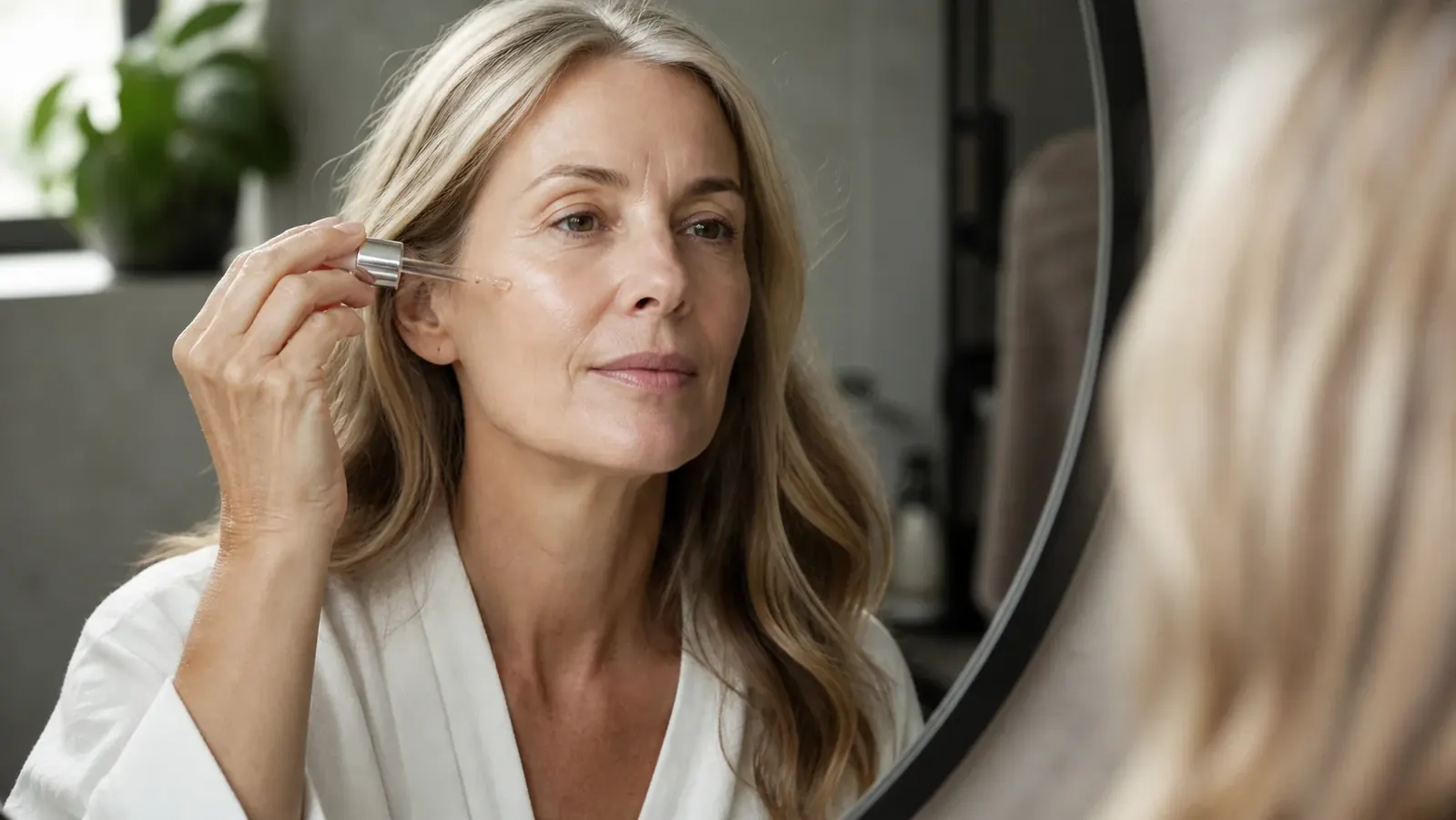
Where CeraVe Wins: The Formulation Is Built Around the Barrier Problem
The thing that separates these two serums is not the retinol concentration. It is everything wrapped around the retinol. CeraVe includes three ceramides, niacinamide, and licorice root extract alongside the active ingredient. That combination matters specifically for skin in the post-menopausal phase, when the skin barrier thins and oil production drops. Ceramides are the lipid molecules that hold the barrier together. When estrogen declines, ceramide production slows, and skin becomes more reactive to actives like retinol. A serum that replenishes ceramides while delivering retinol is addressing that specific problem, not just delivering a vitamin A derivative and hoping for the best.
Niacinamide does additional work here. It strengthens the barrier, helps with evening tone, and reduces the likelihood of the redness and irritation that retinol can trigger. For skin that has not used retinol before, or that went through a rough patch with a more concentrated formula, niacinamide in the same bottle makes the introduction smoother. The licorice root extract adds a mild brightening effect, which is welcome for hyperpigmentation that tends to be more persistent as skin turnover slows.
In my four weeks using the CeraVe serum, I did not experience any of the peeling or tightness I have gotten from other retinol products in the past. The texture absorbs quickly and leaves skin feeling neither stripped nor greasy. By week three my skin looked marginally more even in the morning, which I attribute more to the niacinamide than to the retinol at this stage. Visible retinol changes in texture and turnover take longer than four weeks. But the absence of irritation in the first weeks is what I needed to keep using it consistently.
Your skin's barrier already took a hit from menopause. This serum works with that reality, not against it.
CeraVe Resurfacing Retinol Serum pairs encapsulated retinol with ceramides and niacinamide, formulated for skin that needs barrier support alongside the active ingredient. Over 55,000 reviews, under $20.
Amazon Check Today's Price on Amazon →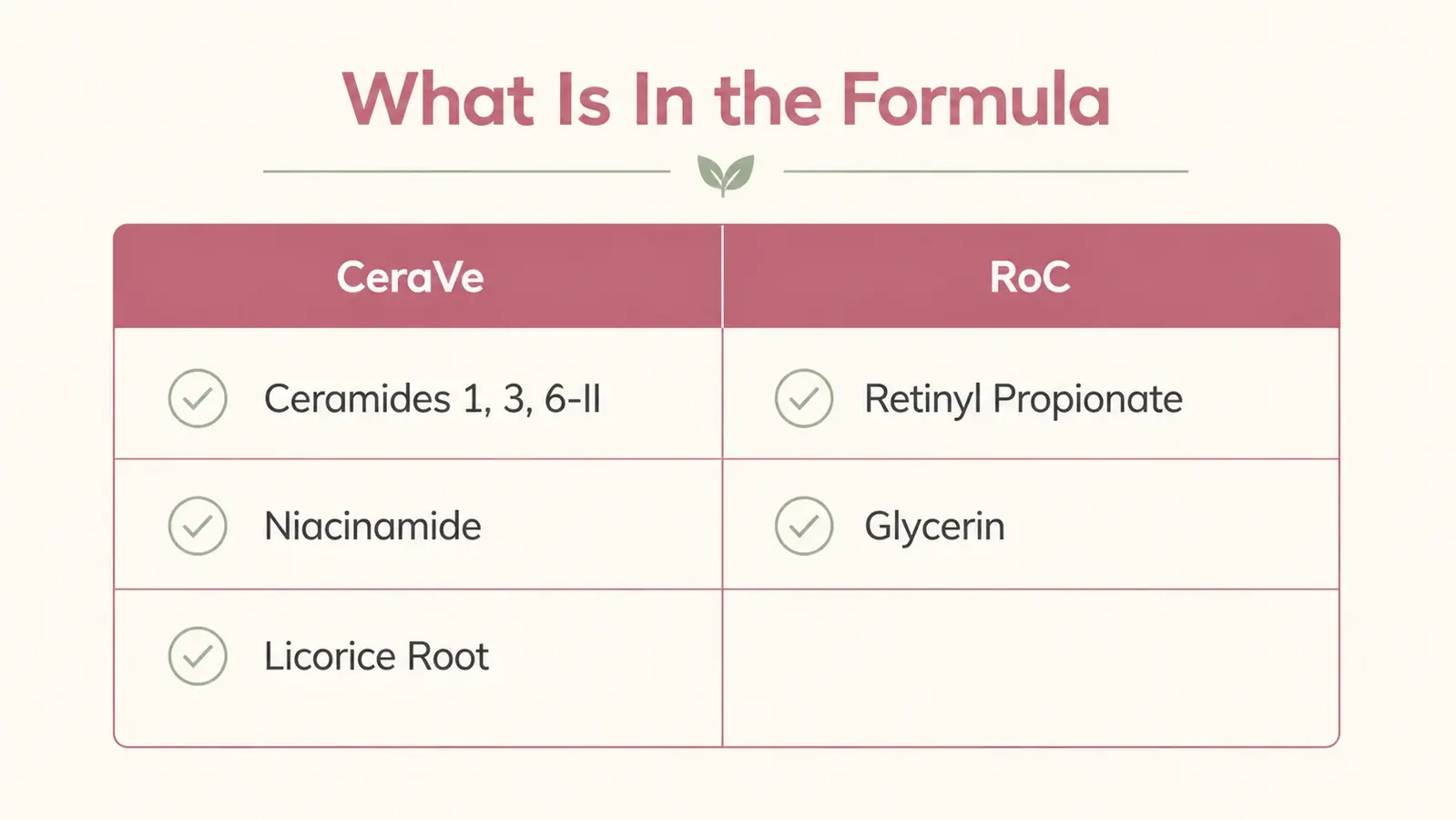
Where RoC Correxion Wins: A Gentler Retinol Ester and a Long Track Record
RoC has been making retinol products since the early 1990s, and the Correxion line has a loyal following for good reason. The retinol ester used in their serum formulation, retinyl propionate, is a less potent form of vitamin A than encapsulated retinol. That makes it genuinely gentler for someone who is truly retinol-naive and wants the mildest possible first exposure. If your skin is extremely reactive and your concern is primarily softening fine lines without much brightness work, the RoC serum is a defensible starting point.
The texture of the RoC Correxion serum is slightly richer and more emollient than the CeraVe. If you tend toward extreme dryness and want the serum itself to contribute some slip and moisture before you apply your moisturizer on top, that texture is an advantage. It applies smoothly with no tackiness. The formula is also fragrance-free, which matters for reactive skin. These are genuine points in its favor, not marketing language. For someone who has tried other retinol products and been driven away by peeling and irritation, RoC's gentleness is not nothing.
Where the RoC Correxion serum fell short for me was in results over time. After four weeks of consistent use at the same frequency as the CeraVe, I did not notice the same morning-after skin quality or the same gradual improvement in evenness. The gentleness of the retinyl propionate is real, but so is the trade-off: a weaker vitamin A derivative converts to retinoic acid more slowly and less completely than encapsulated retinol. On skin that already has slow cellular turnover from hormonal changes, that matters more than it would on younger, faster-cycling skin.
The retinol ester in RoC is genuinely mild, and that is both its strength and its limitation. If you want visible texture improvement within six to eight weeks on post-menopausal skin, a weaker vitamin A derivative will take longer to get there.
The Formulation Detail That Matters Most After Menopause
Skin after menopause has three consistent challenges: a compromised barrier, reduced natural oil production, and slower cellular turnover. A retinol serum addresses the turnover problem. But if it strips or irritates the barrier in the process, you have traded one problem for another. CeraVe addresses all three of these challenges in one bottle: it delivers retinol for turnover, ceramides for barrier repair, and niacinamide for barrier fortification and tone. RoC addresses primarily the turnover challenge with a gentle vitamin A derivative, but does not build in the same level of barrier support.
That said, how you use either serum matters as much as what is in it. Applying retinol to already-damp skin increases penetration and irritation risk. Skipping nights when your skin feels tight or irritated is important. Following with a moisturizer that itself contains ceramides or hyaluronic acid is not optional at this age. If you are doing all of those things and pairing RoC with a strong ceramide moisturizer every night, you can partially compensate for what it does not include in its own formula. But that requires purchasing two separate products and managing two steps. With CeraVe, the barrier support is already built in.
Price, Value, and What the Reviews Actually Tell You
CeraVe Resurfacing Retinol Serum costs under twenty dollars and has over 55,000 reviews on Amazon at a 4.6 average. That review count at that rating is not something to dismiss. Broad, sustained approval at that volume usually reflects a product that works across a wide range of skin types, not just ideal ones. The RoC Correxion Serum line runs slightly higher, generally under twenty-five dollars depending on the specific variant and size. The value gap is modest, but when CeraVe's formulation is more directly suited to mature skin and costs less, the math is straightforward.
One caveat worth noting: the RoC Correxion brand spans several products, including an eye cream, a line filler, a serum, and a night cream. Review counts and ratings vary considerably across the line, and the eye cream in particular carries much of the brand's positive reputation in this age group. The standalone Correxion serum I am comparing here is a distinct product. If you have come across impressive-looking RoC review numbers, check which product those reviews belong to before attributing them to the serum specifically.
Who Should Buy Which
Buy CeraVe Resurfacing Retinol Serum if your skin is post-menopausal and has thinned, if you experience dryness or mild reactivity, if you want a retinol that also supports barrier health without requiring a separate ceramide product, or if you are new to retinol and want an encapsulated form that releases more gradually. This serum is also a better fit if uneven tone and hyperpigmentation are among your concerns, given the niacinamide and licorice root components. Most women over 50 who ask me which retinol to start with, I point to this one first.
Consider RoC Correxion Serum if your sensitivity is extreme and you want the gentlest possible vitamin A introduction, if you strongly prefer a slightly richer serum texture, or if you have already used CeraVe and want something to compare it against directly. Just go in with the expectation that results will take longer to appear, and plan to use a ceramide-forward moisturizer on top of it every night rather than treating the serum as a standalone.
One thing I would not do is assume that the RoC brand recognition or the Correxion name automatically signals a better product for your age group. RoC markets broadly across all adult skin types. CeraVe's dermatologist-developed formulation with ceramides is, in my view, more deliberately built for the barrier challenges that arrive with menopause. That is a meaningful distinction when you are spending money and time on a skincare routine that you actually intend to stick with.
If you want to read more about how the CeraVe serum behaves over a longer testing period, I have a detailed six-week review at CeraVe Resurfacing Retinol Serum: Six Weeks of Nightly Use on Post-Menopausal Skin. And if you are still weighing whether retinol is worth adding to your routine at all, the piece on 10 reasons retinol serum works for mature skin covers the evidence without the hype.
If you are going to try one retinol serum on post-menopausal skin, start with the one that does more than just deliver retinol.
CeraVe Resurfacing Retinol Serum combines encapsulated retinol with ceramides, niacinamide, and licorice root extract in a fragrance-free, non-comedogenic formula. Under $20, with over 55,000 verified reviews.
Amazon Check Today's Price on Amazon →