

My skin stopped glowing the way it used to sometime in my early fifties. It did not look bad, exactly. It looked tired. A kind of flat, low-wattage version of its former self, the sort that makes you reach for a brighter lipstick and hope nobody looks too closely. I spent two years blaming sleep, stress, and the fact that my bathroom window faces north. Then I spent two years trying higher-priced brightening serums, most of which did very little except lighten my wallet. When a reader wrote in asking about TruSkin Vitamin C Serum, I was skeptical. It has 155,000 Amazon reviews and costs around twenty-one dollars. Both of those facts made me want to dismiss it. I bought a bottle anyway and committed to eight consecutive weeks of morning use. This is what I found.
The Quick Verdict
A genuinely effective brightening serum for mature skin, with real results on dullness and minor dark spots, though the scent and oxidation timeline are worth knowing before you buy.
Amazon Check Today's Price →If dull, flat skin is your main complaint, this is the serum most worth trying first.
TruSkin Vitamin C Serum pairs L-ascorbic acid with hyaluronic acid and vitamin E in a formulation that has worked for a lot of women in this age group. Check current availability and pricing on Amazon before the next price move.
Amazon Check Today's Price on Amazon →How I Used It
Eight weeks, every morning, no skipped days except one when I was traveling and forgot the bottle. I applied three to four drops to clean, dry skin, waited roughly ninety seconds for absorption, then layered my regular moisturizer and SPF 30 on top. I did not change anything else in my routine during this period: same cleanser, same moisturizer, same sunscreen. The point was to isolate the serum's contribution as cleanly as possible.
I am 56. My skin is on the drier side now, hormonally speaking, and it has thinned noticeably over the past four years. I have three persistent brown spots on my left cheek from years of sun exposure in my forties, and a general sallowness that my old moisturizer does nothing to address. That is the baseline I was working from.
I photographed my face in the same light, at the same time of day, on days one, fourteen, twenty-eight, forty-two, and fifty-six. I also kept brief daily notes on skin feel, any stinging or reaction, and anything I noticed in the mirror. The observations below come from that record, not from memory.
What Is Actually in This Serum
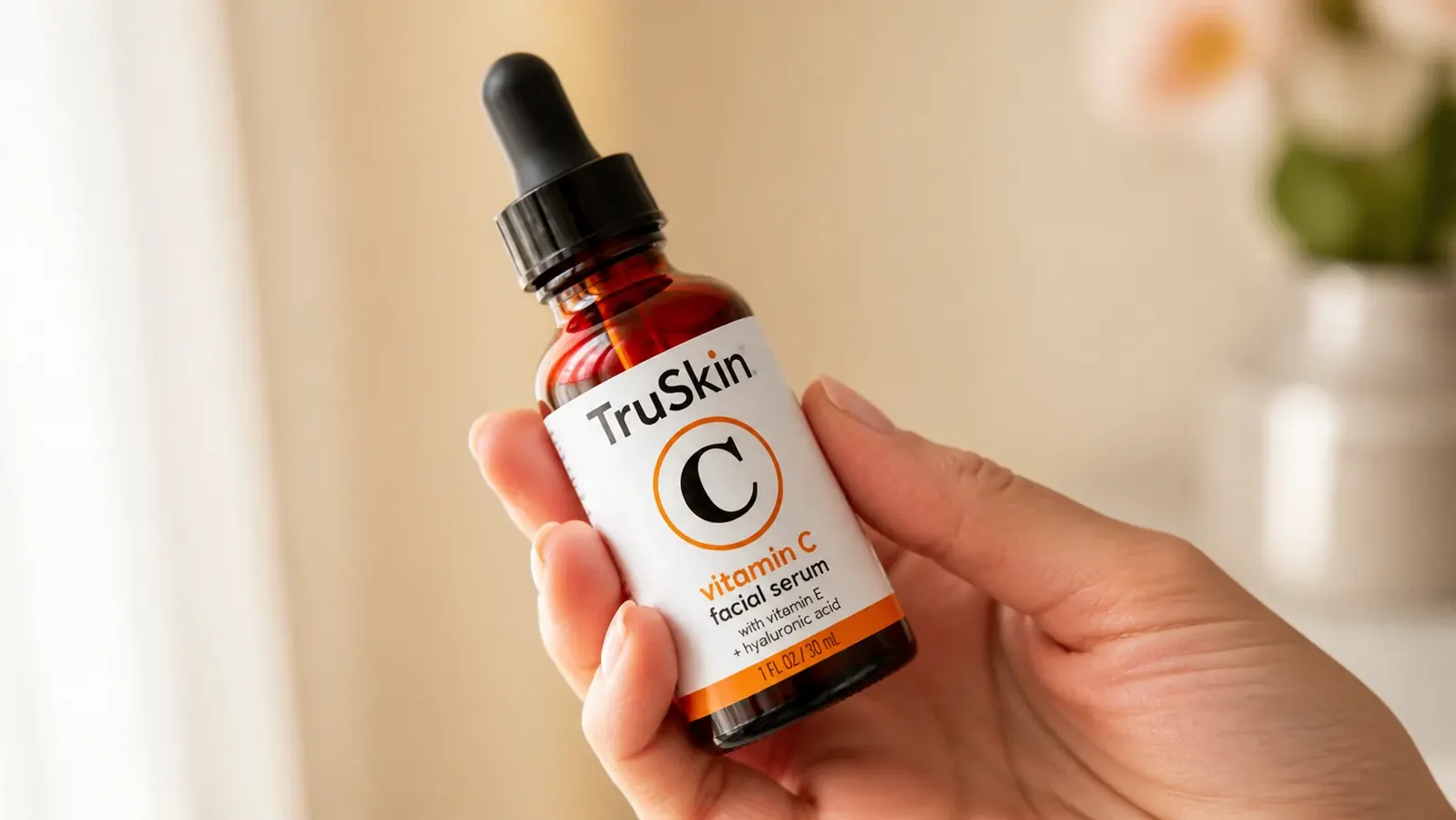
TruSkin uses L-ascorbic acid as its vitamin C form, which is the most studied and most potent form available. That matters because not all vitamin C serums are equal on this front. Some brands use vitamin C derivatives like ascorbyl glucoside or sodium ascorbyl phosphate, which are more stable but less effective at the concentrations typically used in drugstore products. L-ascorbic acid is the gold standard, and it is what the clinical research on brightening and collagen support is built on.
The formula also includes vitamin E and ferulic acid, a pairing that extends the stability of L-ascorbic acid and enhances its antioxidant effect. Hyaluronic acid is in there as well, which matters for mature skin that tends to drink up moisture faster than it retains it. The full formulation runs to about fifteen ingredients, which is a modest list for this category. There is no fragrance listed, though the serum does have a faint natural citrus-adjacent scent from the L-ascorbic acid itself. That note is relevant and I will come back to it.
The concentration of L-ascorbic acid is not disclosed on the label, which is a common frustration with this category. Based on the pH and the mild-to-moderate tingle I noticed in weeks one and two, I would estimate it sits somewhere in the ten to fifteen percent range. That is appropriate for mature skin. The twenty percent serums that are common in enthusiast skincare communities are quite aggressive for skin that has thinned after menopause.
What I Noticed Week by Week
Weeks one and two: a mild tingle for the first few days, which faded completely by day five. No redness, no flaking, no irritation beyond that initial sensation. The serum absorbs quickly, faster than I expected for something described as brightening. There is no sticky residue, which makes layering sunscreen a practical exercise rather than a frustrating one.
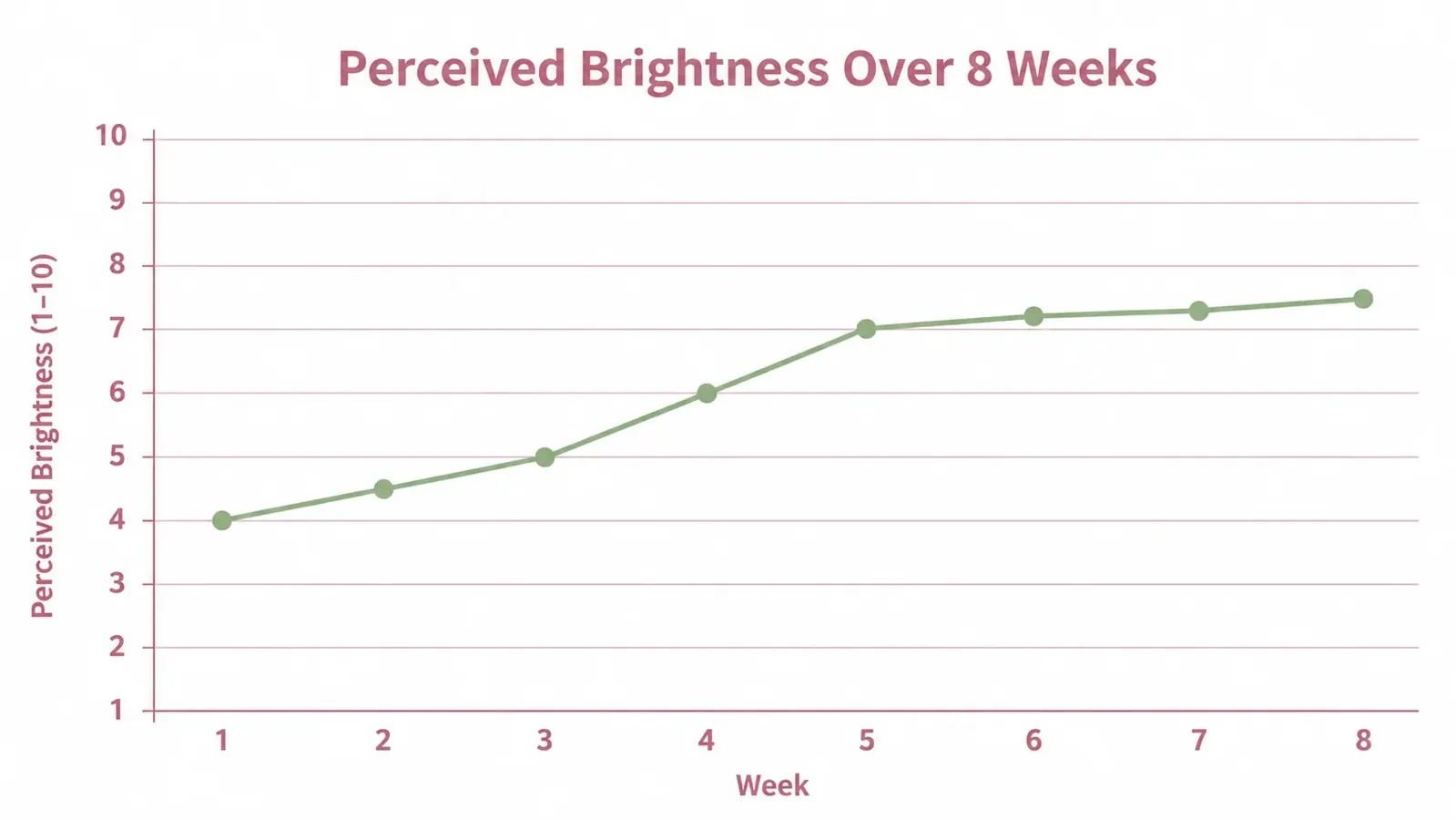
By week three, I noticed something I initially dismissed as a change in light: my skin looked less flat in the mornings. Not dramatically brighter in the way a flash or a highlighter produces, but a quieter, more even quality to the surface. Less grey. My husband, who notices nothing about skincare and would not know a vitamin C serum from a moisturizer, mentioned that I looked less tired. He did not know I was testing anything. That observation I noted carefully.
By week three, my husband, who notices nothing about skincare, mentioned I looked less tired. He did not know I was testing anything.
Weeks four through six were the most visibly productive period. The three brown spots on my left cheek did not disappear, but they lightened noticeably. Not to the point of invisibility, but enough that I was not reaching for concealer every morning the way I had been. The overall sallowness improved more than the spots did, which is consistent with what vitamin C does well: it addresses surface oxidation and uneven tone across the whole face rather than acting as a targeted spot treatment.
Weeks seven and eight showed continued but slower improvement. The brightness gains appeared to plateau around week six, which is roughly what the research literature would predict for a moderate-concentration vitamin C serum. My skin texture felt smoother, not dramatically so, but I noticed it when applying moisturizer. Whether that is attributable to the serum or just the additional morning hydration step is hard to say.
The Scent and Oxidation Issue
This is the part most reviews skip because it is unflattering. L-ascorbic acid oxidizes when exposed to air and light, and when it does, the serum turns from pale yellow to orange or brown and the scent becomes more pronounced, moving from faint citrus toward something closer to metallic. My first bottle lasted forty-two days before I noticed the color had shifted and the smell had changed.
An oxidized vitamin C serum is not dangerous to use, but it has lost a significant portion of its efficacy. To get the best results from this serum, or any L-ascorbic acid product, you need to use it up within thirty to forty-five days of opening, store it away from direct light and heat, and check the color before applying. The packaging here is a dark amber glass bottle with a pump, which helps. But if you are not a consistent daily user, you may find the bottle goes off before you finish it. This is a real limitation.
I opened my second bottle on day forty-three and kept it in a small cosmetic bag in my bathroom cabinet rather than on the counter. That seemed to slow the oxidation noticeably. By the end of week eight, the second bottle still looked pale yellow.
What I Liked
- Genuine improvement in dullness and skin evenness visible by week three
- Uses L-ascorbic acid, the most research-backed vitamin C form
- Absorbs quickly without stickiness, layers well under moisturizer and SPF
- Mild enough for mature skin that is not suited to high-concentration formulas
- Hyaluronic acid adds surface hydration without making the formula heavy
- Modest ingredient list with no added fragrance
Where It Falls Short
- L-ascorbic acid concentration not disclosed on the label
- Oxidizes within four to six weeks of opening if stored poorly
- Scent is noticeable, especially in the first few minutes after application
- Brown spots lightened but did not disappear in eight weeks
- Results plateau around week six, suggesting this is a maintenance tool, not a corrective one
How It Layers with the Rest of a Mature Skin Routine
Vitamin C serum goes on before moisturizer and before SPF, and always in the morning, not at night. L-ascorbic acid is a morning antioxidant: its job is partly to neutralize free radicals from UV exposure throughout the day. Using it at night is not harmful, but you are not getting its primary benefit. The morning slot also avoids any interaction with a retinol or retinoid product you might be using in the evening.
One thing I want to be clear about: this serum should not be layered directly with niacinamide in most cases. Niacinamide is common in moisturizers and toners marketed to mature skin, and some formulations react with L-ascorbic acid in ways that can reduce the efficacy of both. If your moisturizer contains niacinamide, apply the vitamin C serum, wait two to three minutes for full absorption, then follow with the moisturizer. That gap is enough to prevent the interaction for most people.
I also noticed the serum layered well under my mineral SPF, which some vitamin C serums do not. The texture is lightweight enough that there is no pilling, and the moisturizer sits smoothly on top. For reference, I use a basic ceramide moisturizer, not one with active ingredients, which makes the layering test relatively clean. If you want a more detailed guide to sequencing this product with the rest of your morning routine, I have written separately about how to layer vitamin C serum on mature skin.

Alternatives I Considered Before Settling on This One
Vibriance Super C Serum markets itself directly at women over fifty and costs around a hundred and nine dollars. I had tried it for six weeks the year before this test. The formulation uses a stabilized vitamin C derivative rather than L-ascorbic acid, which makes it gentler and less prone to oxidation. My skin tolerated it well. The results were mild. After six weeks I had some improvement in skin feel but less visible brightness change than I experienced with TruSkin in the same timeframe. Whether that is down to the vitamin C form, the concentration, or just individual skin variation is hard to say definitively. But I spent five times as much to get a result that was, for my skin, less visible.
I also tried a department store vitamin C serum at sixty-seven dollars before landing on this category at all. It was pleasant to use, absorbed beautifully, and smelled like a spa. After eight weeks I noticed almost nothing. When I looked at the ingredient list, vitamin C appeared about two-thirds of the way down, suggesting a concentration too low to do the job the marketing implied. Packaging and fragrance are not actives. If you are comparing vitamin C serums by price and presentation, you are likely optimizing for the wrong variables.
TruSkin sits in a useful middle position: it uses the most effective vitamin C form at an appropriate concentration for mature skin, it is affordable enough to replace consistently when oxidation becomes a concern, and it has a large enough pool of real user experience behind it that I was not navigating blind. The comparison with Vibriance is worth reading in more detail if you are undecided between the two.
Who This Is For
This serum is well suited to women in their fifties and sixties whose primary complaint is that their skin looks flat, tired, or dull, and who have not used a vitamin C serum before or want to move to a more affordable option after spending more on department store alternatives. The formulation is appropriate for dry and combination-dry skin types, which describes most women post-menopause. If you are looking for a first vitamin C serum and do not want to spend significantly on a brand that costs more for its packaging than its contents, this is a reasonable starting point with a genuine track record behind it.
Who Should Skip It
If your skin is sensitive or reactive, the L-ascorbic acid form may be too acidic for consistent use. A vitamin C derivative serum would be a gentler starting point. If your main concern is deep hyperpigmentation rather than general dullness, a serum formulated with niacinamide or tranexamic acid will do more targeted work. And if you know you are not a consistent daily user, the oxidation timeline means you may waste half the bottle before it does much. Consistency is not optional with this ingredient category.
Eight weeks of daily use made a visible difference to my skin's brightness. That is not a small thing.
TruSkin Vitamin C Serum is available on Amazon with free Prime shipping on most orders. Given the oxidation timeline, plan to use it within forty-five days of opening for best results. If you are comparing it with Vibriance, the price gap is real and the results, in my experience, did not justify it.
Amazon Check Today's Price on Amazon →