
The short answer is that TruSkin wins this comparison, and the gap between the two is wider than the price difference suggests. Vibriance Super C Serum has built an entire identity around being "made for women over 50," which is a savvy marketing angle. But when you look at what is actually inside the bottle, the formulation does not justify paying five times as much for something that delivers a less reliable form of vitamin C.
I spent several weeks comparing these two serums, applying each every morning on alternating weeks and paying close attention to texture, absorption, brightness results, and how each one behaved on my 56-year-old skin, which is combination-leaning-dry with some visible hyperpigmentation along my jaw from years of unprotected sun exposure. Here is what I found.
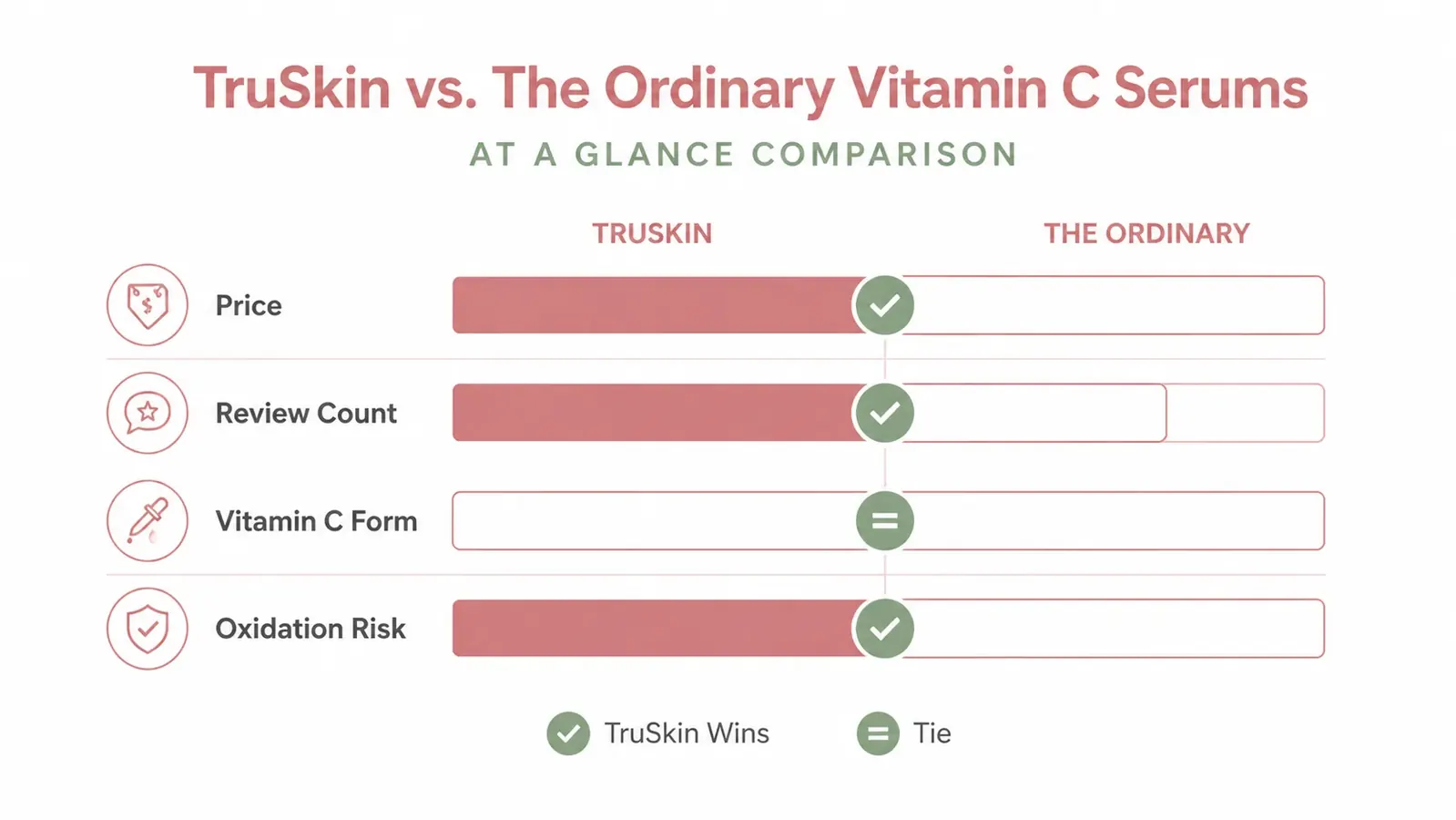
| Feature | TruSkin Vitamin C Serum | Vibriance Super C Serum |
|---|---|---|
| Current price | Check today's price on Amazon | Mid-range |
| Amazon reviews | 155,000+ | Not on Amazon (direct-to-consumer) |
| Vitamin C form | L-ascorbic acid | Sodium ascorbyl phosphate |
| Oxidation risk | Moderate (amber bottle helps) | Lower (more stable form) |
| Additional actives | Vitamin E, hyaluronic acid, aloe | Retinol, niacinamide, peptides |
| Texture | Lightweight, slightly tacky | Lightweight, non-tacky |
| Target audience claimed | All skin types | Women 50+ |
| Amazon affiliate link | Yes (see below) | No (buy direct from brand) |
Where TruSkin Wins
The active ingredient in TruSkin is L-ascorbic acid, which is the form of vitamin C with the strongest research backing for brightening and collagen support. Multiple peer-reviewed studies have used L-ascorbic acid as the benchmark. It is the form that has been around the longest and has the most clinical evidence behind it. That matters when you are deciding how to spend money on your skin. Vibriance uses sodium ascorbyl phosphate, which is more stable and less likely to oxidize, but converts to L-ascorbic acid in the skin at lower efficiency than using L-ascorbic acid directly.
The review pool is also meaningfully different. TruSkin has more than 155,000 verified Amazon reviews with a 4.4-star average. That is a large enough sample that the rating is statistically trustworthy rather than managed. Vibriance sells primarily through its own website and through television shopping channels, which means its review data is harder to verify independently. A brand controlling its own review environment is not automatically dishonest, but it is worth noting when you are comparing social proof.
Then there is the value question. At a modest price for one fluid ounce of TruSkin, you can run a consistent morning vitamin C routine for months before spending what you would pay for a single bottle of Vibriance. Vitamin C serum works through sustained, daily use over weeks and months. The product that is affordable enough to actually use every day is, for most people, the more effective product in practice. Skipping days because you are rationing an expensive bottle is not the same as following a consistent routine, and consistency is where most of the results come from.
You are spending five times more. Is the Vibriance formula five times better? It is not.
TruSkin Vitamin C Serum uses the same L-ascorbic acid form validated in clinical studies, pairs it with vitamin E and hyaluronic acid, and has 155,000 verified reviews behind it. Check today's price on Amazon.
Amazon Check Today's Price on Amazon →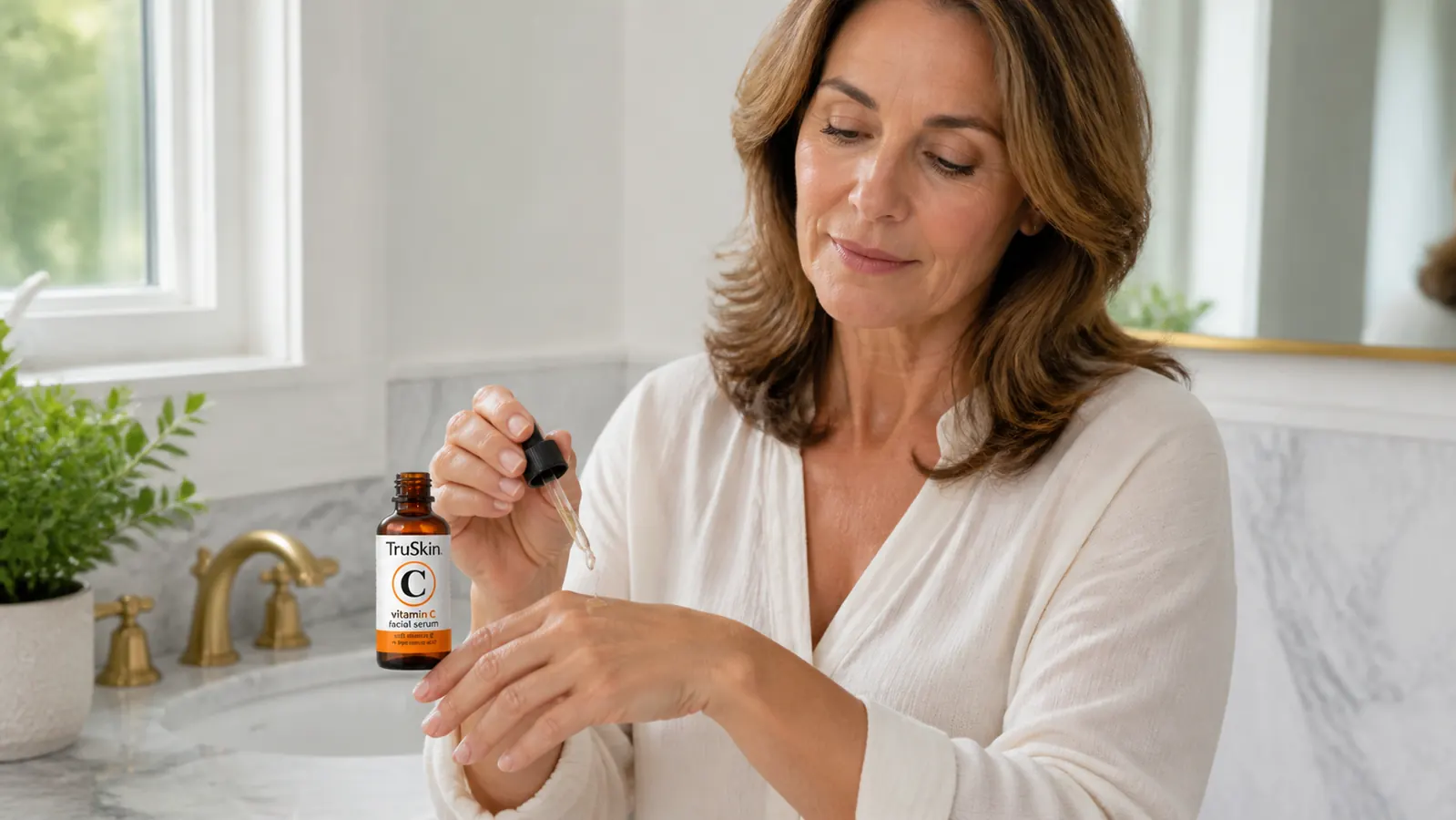
Where Vibriance Wins
Vibriance does one thing meaningfully better: formulation stability. Sodium ascorbyl phosphate is significantly more resistant to oxidation than L-ascorbic acid. If you live somewhere hot, keep your skincare in a humid bathroom, or tend to leave bottles open longer than you should, a more stable vitamin C form will stay active for longer. L-ascorbic acid in an improperly stored serum can oxidize within weeks, turning orange-brown and losing most of its efficacy. TruSkin's amber bottle and vitamin E inclusion help with this, but the chemistry still favors Vibriance on raw stability.
The ingredient list on Vibriance is also broader. It includes retinol, niacinamide, and peptides alongside vitamin C, which means you are getting a multi-active serum rather than a focused vitamin C formula. If you are not currently using retinol in your routine and you want a single product to address brightness, texture, and firmness together, Vibriance does combine several steps into one. Whether you actually want retinol and vitamin C in the same morning product is worth considering separately, since most dermatologists recommend using L-ascorbic acid in the morning and retinol in the evening due to pH interactions. The Vibriance formulation partially sidesteps that concern by using a more pH-tolerant vitamin C form, but the retinol concentration is not disclosed on the label.
Vibriance is not a bad product. It is a well-marketed product at a price that does not reflect a proportional improvement in what it delivers on your skin.
How Each Serum Actually Feels in Practice
On my skin, TruSkin applies as a clear, slightly amber-tinted liquid that absorbs in roughly thirty seconds. There is a faint tackiness for the first minute or two, which disappears entirely once I follow with SPF. The scent is mild and fades quickly. I noticed no irritation during my test weeks, though my skin has adapted to active ingredients over years of regular use. If you have sensitive or recently disrupted skin, the L-ascorbic acid could sting slightly at first, particularly if your skin barrier is thin from retinol use or hormone-related dryness.
Vibriance felt noticeably smoother on application, with no tackiness at all and a texture that sits closer to a thin gel. That is a texture advantage, and I noticed it. The non-tacky finish layered cleanly under SPF without any pilling. For women whose morning routine involves multiple steps, that application experience genuinely makes Vibriance more pleasant to use. But application texture, however lovely, does not change what the active ingredient does once it has absorbed. By forty minutes post-application, you cannot tell any difference from the outside.
How to Know If Your Vitamin C Serum Has Gone Off
This applies specifically to TruSkin and any L-ascorbic acid formula. A fresh bottle should be pale yellow to colorless. If your serum has turned deep amber, orange, or brown, it has oxidized and the vitamin C is no longer working effectively. This happens faster in warm, humid environments. The rule I follow: buy in small quantities, store it in a cool drawer away from the shower, and use it within three months of opening. If you travel frequently, decant into a smaller bottle to limit air exposure. A bottle you are rationing to make last eight months is very likely not delivering what it promised.
Sodium ascorbyl phosphate in Vibriance does not oxidize this way. The formula stays visually stable for longer, which is one reason it appeals to people who use serums slowly. If you tend to open a bottle and revisit it six months later, the Vibriance stability advantage is not theoretical. It is functional. That said, a skincare product you are using inconsistently over six months is still delivering fewer total doses of active ingredient than one you use every single day for two months and then replace. Consistency and freshness together beat either product used sporadically.
The Formulation Question in More Detail
Vitamin C serums fail most often for two reasons: they oxidize before they work, or they irritate the skin and get discontinued. TruSkin addresses both reasonably well for a product at its price point. The addition of vitamin E creates a synergistic antioxidant pairing that extends the stability of L-ascorbic acid, hyaluronic acid reduces the dehydrating effect that high-concentration vitamin C can have on drier mature skin, and the amber glass bottle limits light exposure. If you store it properly and use it consistently, you will get reliable performance from this serum.
Vibriance addresses the oxidation problem differently and effectively. But once you accept that stability advantage, the rest of its formula is not better enough to warrant the price difference. The retinol concentration is undisclosed, peptide blends vary widely in quality and actual skin penetration, and niacinamide at unspecified levels may or may not be doing meaningful work. TruSkin keeps its formulation focused on what it does well. That restraint is actually a strength in a market full of products that layer in active ingredients primarily to lengthen the ingredient list on the label.

What the Made-for-Mature-Skin Claim Actually Means
Vibriance has built its entire category positioning around speaking directly to women over 50. The website, the packaging, the testimonials, and the price point all signal that this is the premium solution for your specific skin stage. I understand the appeal of that messaging. When you have watched product after product aimed at your age group promise visible results and underdeliver, a brand that at least acknowledges the way post-menopausal skin behaves feels more considered than one targeting everyone from teenagers to retirees with the same formula.
The honest read, though, is that mature skin has specific needs that both of these products address only partially. What post-menopausal skin most needs from a vitamin C serum is consistent antioxidant defense, some support for the collagen production that slows after estrogen declines, and fading of the hyperpigmentation that decades of UV exposure leave behind. L-ascorbic acid supports all three of those goals with strong clinical backing. TruSkin delivers L-ascorbic acid in a stable, accessible form at a price that makes daily use easy to maintain. The "made for women over 50" label on Vibriance does not change the underlying biochemistry of what vitamin C does once it reaches your skin.
Who Should Buy TruSkin
TruSkin is the right choice if you want the best-evidenced form of vitamin C, want to afford consistent daily use without rationing, are comfortable storing it away from heat and humidity, and do not need a single product to replace multiple active steps in your routine. It is also the right choice if you want to find out what vitamin C actually does for your skin before committing more money to the category. At a low price, you can run a full eight-week test without significant financial risk. For more detail on what to expect over that time, my longer piece on TruSkin Vitamin C Serum after eight weeks on mature skin covers the results from my own experience.
Who Should Buy Vibriance
Vibriance makes more sense if you live in a warm climate, store your skincare in a steamy bathroom, use serums slowly over four to six months, or consistently find that L-ascorbic acid irritates your skin. In those specific circumstances, the stability advantage of sodium ascorbyl phosphate is real and the premium is easier to justify. It also makes sense if you want vitamin C, retinol, and niacinamide in a single morning step and are comfortable with undisclosed concentrations. What Vibriance does not justify is being chosen simply because its marketing speaks to your age group. If you want to understand what vitamin C is actually doing beneath the skin before committing to either product, my overview of the ways vitamin C supports skin after menopause lays out the mechanisms clearly.
Start with the serum that 155,000 reviewers have already tested on real skin.
TruSkin Vitamin C Serum gives you L-ascorbic acid, vitamin E, and hyaluronic acid in a formula that has been used and reviewed at a scale Vibriance cannot match. Check the current price on Amazon before you buy.
Amazon Check Today's Price on Amazon →