
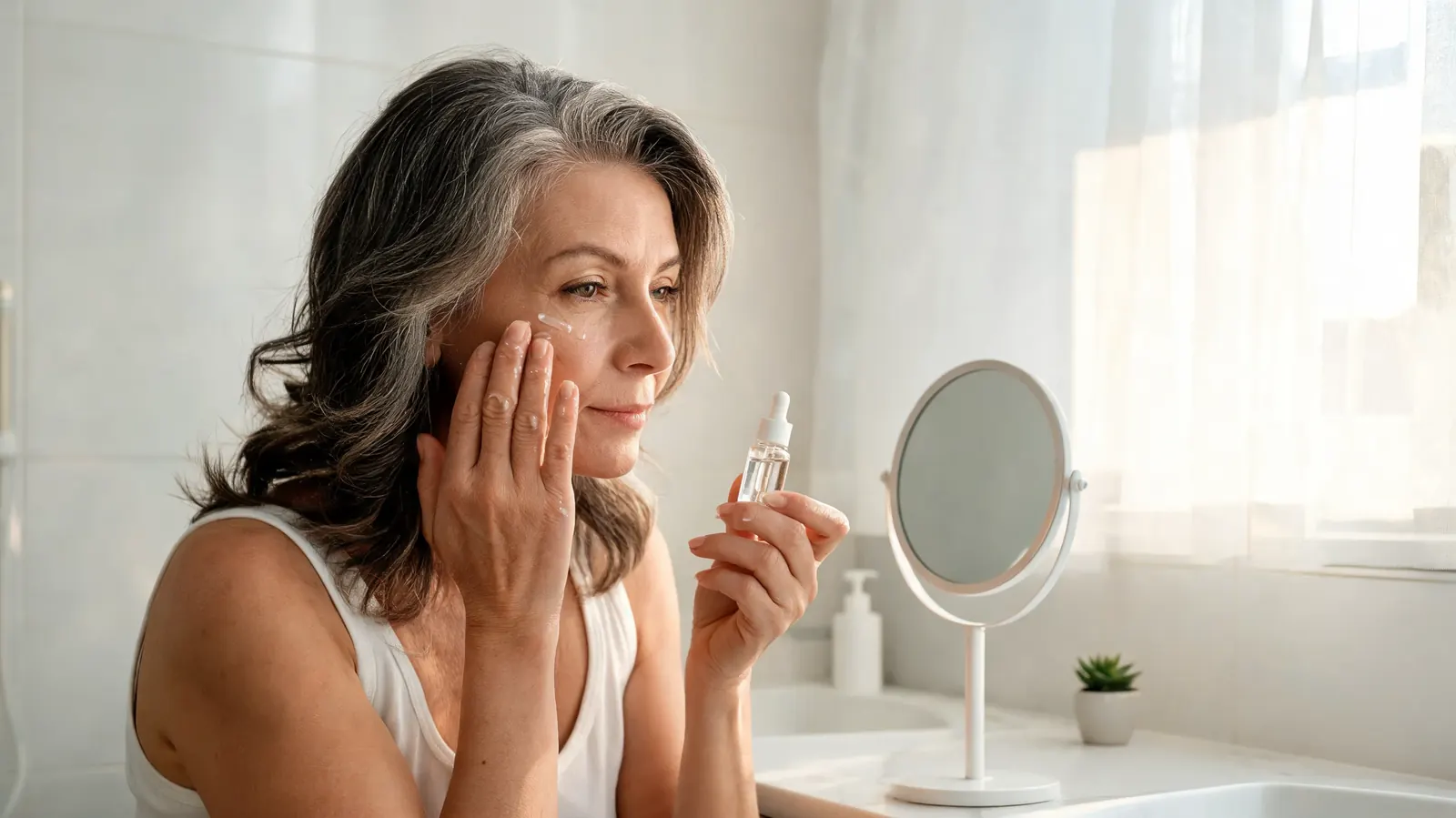
If your skin has dulled since menopause, you have probably already spent time and money on things that did not work as advertised. Brightening masks. Expensive department store serums in heavy glass jars. Exfoliating acids that left you red for two days. I tried most of them. What I had not tried, until about a year ago, was a simple vitamin C serum. Not because I doubted the ingredient. I had edited beauty pages for twenty years. I knew the research. I just assumed I needed something more sophisticated. It turns out I did not. TruSkin Vitamin C Serum costs less than a restaurant lunch, and after eight weeks I understood why it has over 155,000 reviews. What I want to do here is explain the ten actual mechanisms behind it, because 'brightening' barely scratches the surface.
Your skin lost its glow somewhere in your early fifties. Here is the one morning step most women skip.
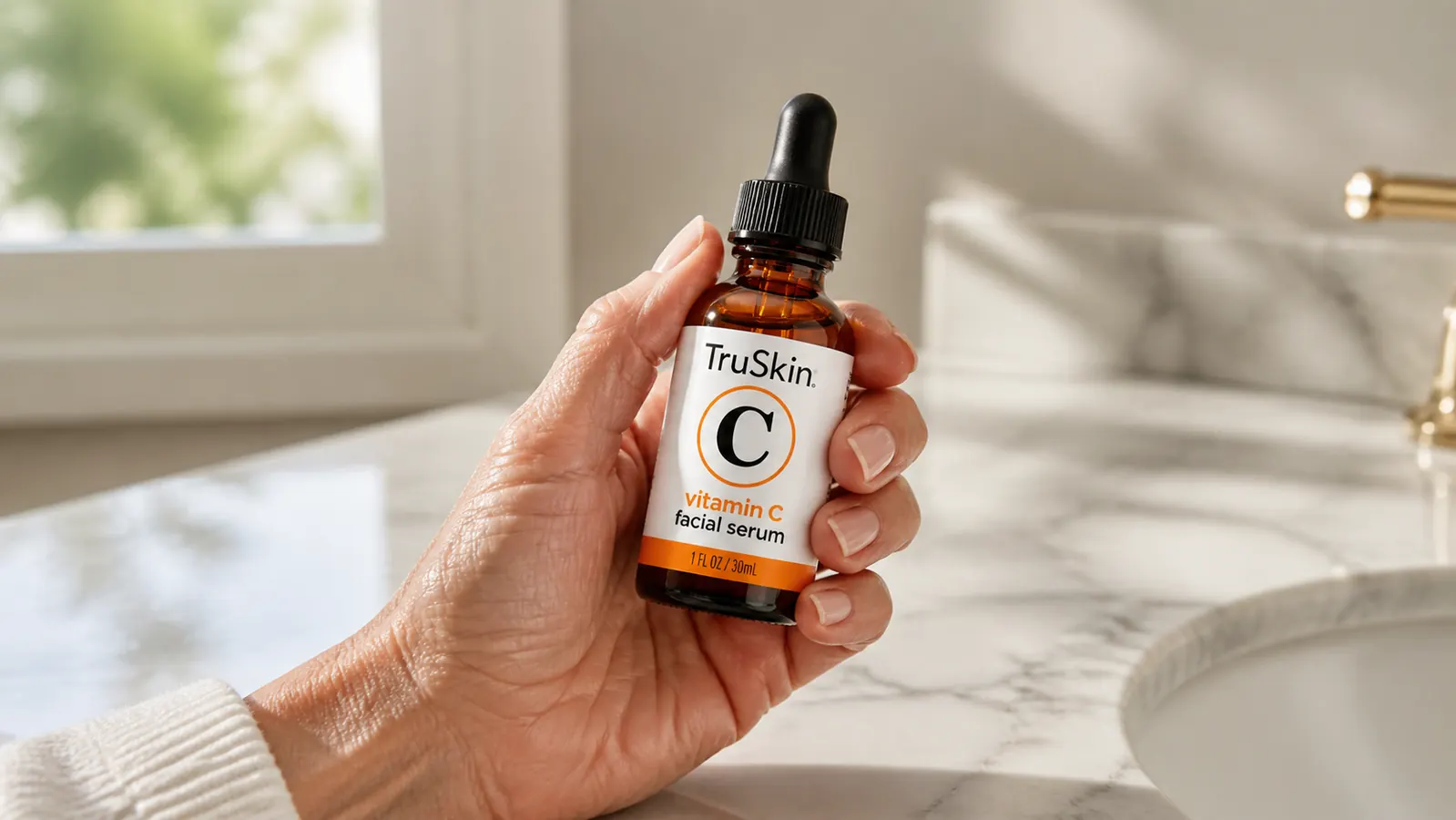
TruSkin Vitamin C Serum combines L-ascorbic acid with hyaluronic acid and vitamin E. It is formulated for all skin types, absorbs quickly, and has been independently reviewed by over 155,000 customers. Check the current price on Amazon before you read further.
Amazon Check Today's Price on Amazon →It Supports Collagen Production, Which Slows After Menopause
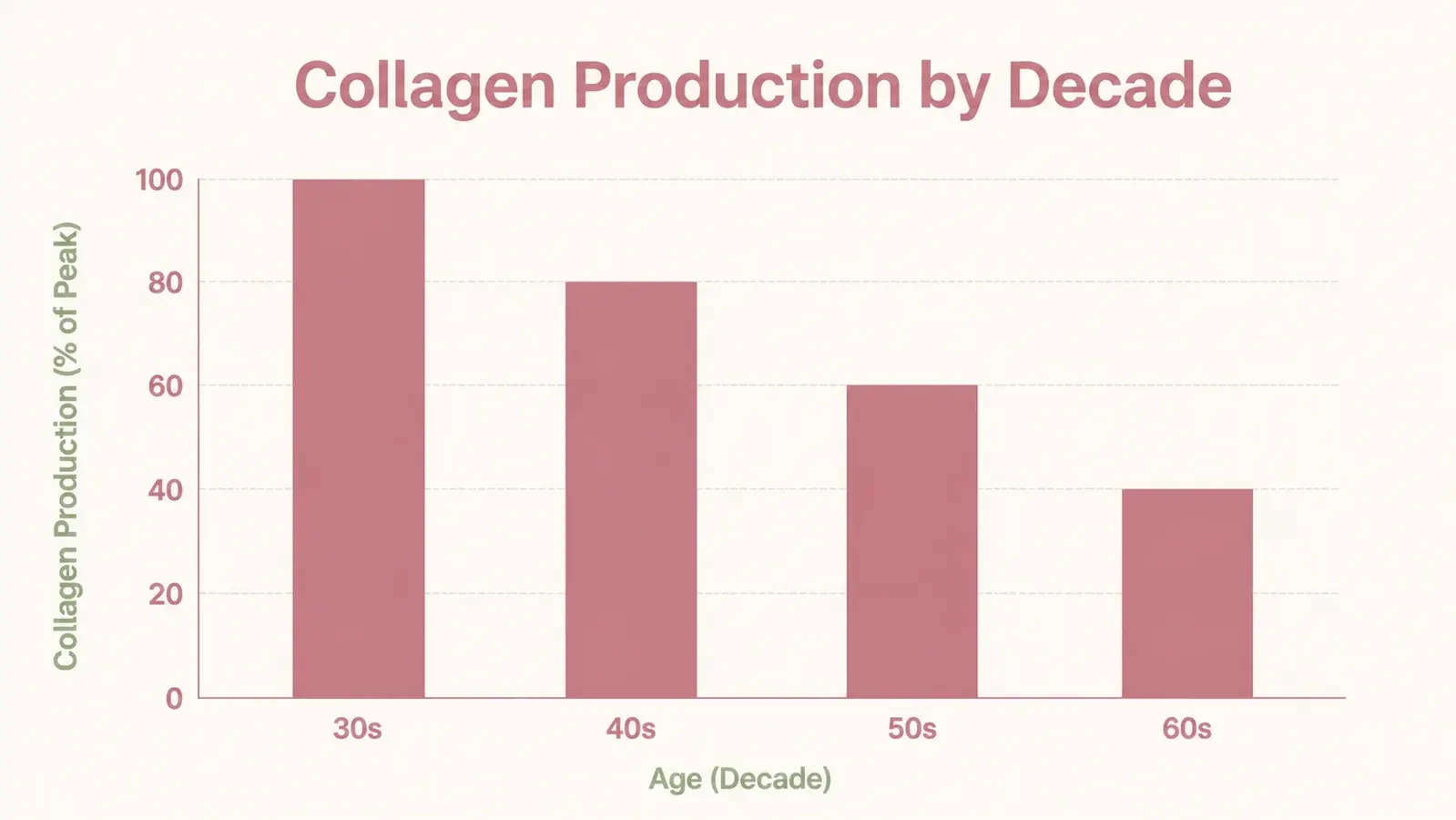
Collagen synthesis requires vitamin C as a co-factor. Without it, the process stalls. After menopause, estrogen decline accelerates collagen loss by roughly 30 percent in the first five years. Topical vitamin C does not replace that loss outright, but it gives the fibroblasts in your skin what they need to keep working. Applied daily, it is a reliable input into a process that your body has made harder to sustain on its own.
It Fades the Dark Spots That Appear After 50
Melanin overproduction is common in post-menopausal skin. Hormonal shifts, accumulated sun exposure, and slower cell turnover combine to leave patches that are darker than the surrounding skin. Vitamin C inhibits tyrosinase, the enzyme that drives melanin production. It does not bleach the skin. It interrupts the process that causes uneven pigment to accumulate. With consistent use, most people see gradual fading over six to eight weeks.
It Neutralizes Free Radicals From Daily UV Exposure
You are exposed to UV radiation every time you go outside, even on overcast days. Free radicals generated by UV damage DNA in skin cells and break down collagen over time. Vitamin C is a potent antioxidant that neutralizes these free radicals before they can do their work. Applied in the morning before sunscreen, it acts as a second line of defense. Sunscreen blocks UV. Vitamin C handles what gets through.
It Improves Skin Brightness Without Causing Irritation
The dullness that settles into mature skin is partly a cell turnover problem and partly a light-reflection problem. As skin thins after menopause, the uneven texture scatters light rather than reflecting it evenly. Vitamin C helps even out that texture gradually, which is what people describe as 'glow.' TruSkin's formulation includes hyaluronic acid, which keeps the skin hydrated during this process, which matters because dry mature skin is more reactive to active ingredients.
Dullness after 50 is not just a cosmetic issue. It is often a sign that the skin's repair processes are running low on raw materials. Vitamin C is one of those raw materials.
It Helps Repair Sun Damage That Has Accumulated Over Decades
Most of us spent our twenties and thirties without adequate sun protection. The damage from those years does not show up immediately. It surfaces in our fifties as discoloration, rough patches, and loss of elasticity. Vitamin C supports the skin's natural repair processes by stimulating collagen remodeling and reducing oxidative stress in existing cells. It will not undo forty years overnight, but applied consistently, it works with your skin rather than against it.
It Works Well Under SPF, Which Means You Will Actually Use Both
One of the practical arguments for vitamin C serum is that it layers cleanly under sunscreen. TruSkin's formula absorbs within a minute or two and does not pill or interfere with mineral or chemical SPF. That matters because the biggest obstacle to a consistent routine is friction. If your serum and sunscreen fight each other, you stop using one of them. A serum that disappears into the skin and lets your SPF sit properly removes that excuse.
It Adds Hydration Without Heaviness
TruSkin includes hyaluronic acid alongside the vitamin C, which means you are getting an antioxidant and a humectant in a single step. For mature skin that skews dry after menopause, this matters. Hyaluronic acid draws moisture into the skin from the environment and from the deeper layers of the dermis. The result is a serum that does not require you to chase it immediately with a moisturizer, though you can still do that if your skin needs it.

It May Reduce the Appearance of Fine Lines Over Time
The collagen support mechanism described in point one has a downstream effect on fine lines. As collagen synthesis is encouraged and oxidative stress is reduced, the skin can partially recover some of the firmness that was lost. 'Reduce the appearance of fine lines' is a phrase that gets used recklessly in beauty marketing, so I want to be precise: this is not a filler. It will not plump lines from below. What it does is improve the quality and organization of the collagen matrix around those lines over several months of consistent use.
It Is Affordable Enough to Use Without Rationing
This is not a trivial point. Department store vitamin C serums in heavy packaging often cost six or seven times what TruSkin costs. When something is expensive, you use less of it. You skip mornings. You water it down mentally. At the current price on Amazon, TruSkin is easy to use generously, every morning, without calculating whether you can afford to. Consistent daily application matters more than the prestige of the bottle.
It Has 155,000 Reviews, Which Means You Are Not Experimenting Blindly
I am generally skeptical of review counts as a quality signal, because survivorship bias is real and platforms game engagement. But 155,000 reviews for a serum at this price point, sustained over years, is different from a new product with a burst of incentivized feedback. The volume means you can read dozens of reviews from women in their fifties and sixties specifically, see what they noticed, and calibrate your expectations before you spend a dollar.
What I Would Skip
Vitamin C serum is not the answer to every skin concern. If your primary issue is deep crepiness around the neck and jaw, you need something that addresses elastin loss more directly, and no topical serum does that efficiently. If you have rosacea or significant sensitivity, even a well-formulated vitamin C can cause flushing or stinging, particularly if your skin barrier is compromised. Start with a patch test and use it every other morning before going daily. And if you are already using a retinol at night, do not use them at the same time. Morning for vitamin C, evening for retinol. They do not cancel each other out, but they work better when they are not competing for the same skin surface.
The most useful skincare habit is the one you actually maintain. A serum you use every morning beats a more sophisticated one sitting mostly full on your bathroom shelf.
Eight weeks is long enough to see whether vitamin C serum does anything for your skin. At this price, the only real cost is consistency.
TruSkin Vitamin C Serum is available on Amazon with free Prime shipping. It pairs well with a morning moisturizer and SPF. If you want to read more about how it performs over an extended period on mature skin specifically, see the full eight-week review.
Amazon Check Today's Price on Amazon →