
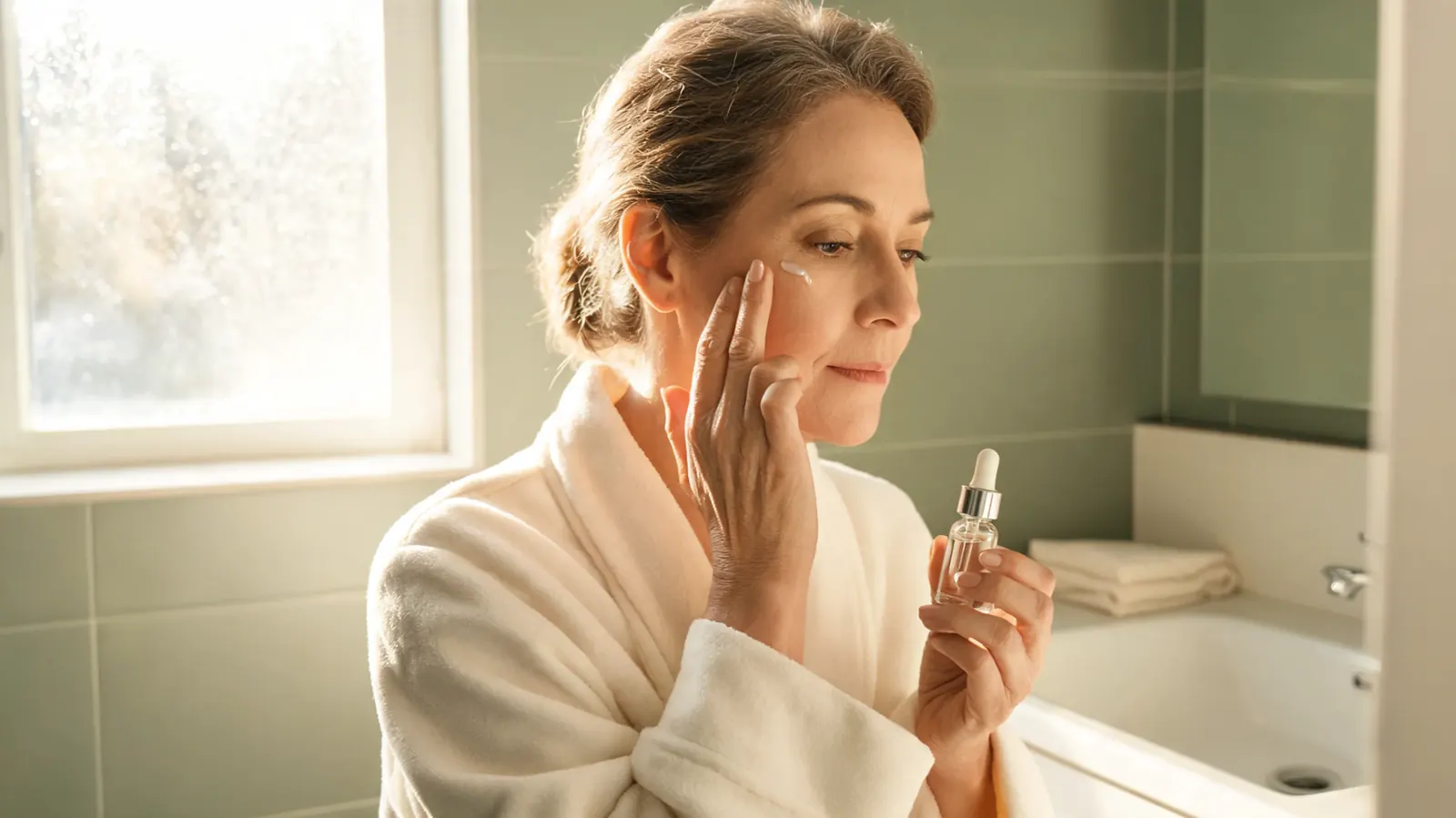
I spent two years buying vitamin C serums that either stung my face, turned orange in the bottle before I finished them, or seemed to do absolutely nothing. The formula was rarely the problem. The way I was using it almost always was.
Post-menopausal skin behaves differently from the skin you had at thirty-five. It is thinner, often more reactive, and its natural pH tends to run slightly higher than younger skin. Vitamin C serum, particularly the L-ascorbic acid form, is formulated to work at a low pH, around 2.5 to 3.5. Apply it after a product that has shifted your skin's surface pH upward, and you lose efficacy. Apply it on skin that is slightly raw or sensitized, and you will feel it sting. Neither outcome is what you paid for.
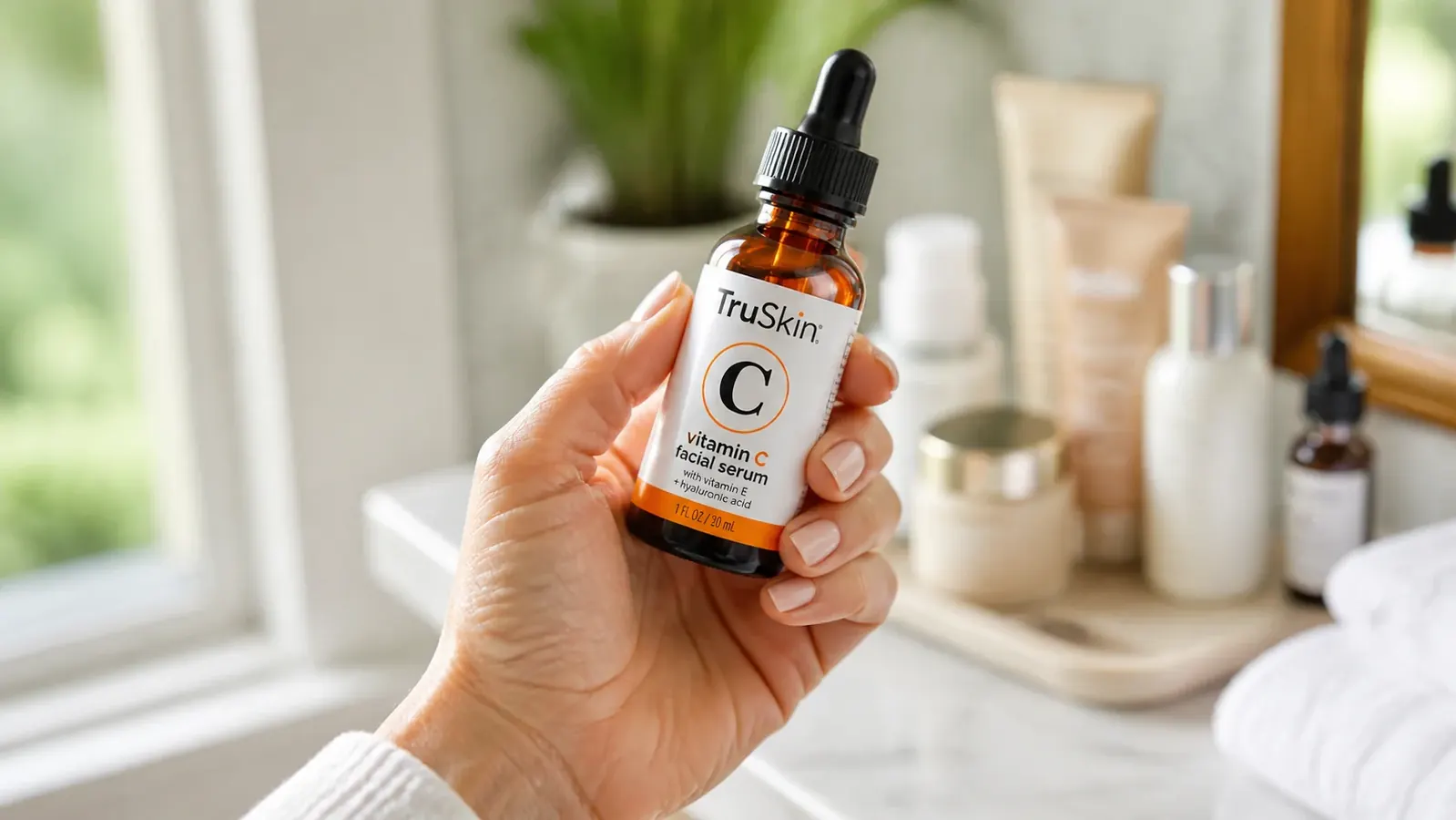
I have been using TruSkin Vitamin C Serum for the past four months, and it has become the product in my morning routine that I am most careful about sequencing. The formula combines L-ascorbic acid with vitamin E and hyaluronic acid, which helps with tolerability on drier mature skin. But none of that matters if you layer it incorrectly. This guide explains the exact order, the timing, and the combinations to avoid.
If your vitamin C serum stings or stops working, the layering is almost certainly the problem.
TruSkin Vitamin C Serum pairs L-ascorbic acid with hyaluronic acid and vitamin E, which makes it more tolerable on mature skin than most single-ingredient vitamin C formulas. Over 155,000 reviewers on Amazon. Check today's price before restocking.
Amazon Check Today's Price on Amazon →Step 1: Start With a Gentle, Low-pH Cleanser
Your cleanser sets the pH stage for everything that follows. Soap-based cleansers, including bar soaps, are alkaline. They raise the surface pH of your skin significantly, and a vitamin C serum applied to alkaline skin will not convert to its active form efficiently. For mature skin specifically, this matters more than it does for oily or younger skin, because we are not producing the sebum that helps restore pH balance as quickly.
Use a gentle gel or cream cleanser with a pH in the 4.5 to 5.5 range. You do not need to buy a pH-testing kit. As a rough proxy, if your skin feels tight or squeaky-clean after washing, the cleanser is too alkaline. It should feel comfortable and slightly skin-like within a minute of rinsing. Rinse with lukewarm water, not hot. Hot water dilates capillaries and leaves skin temporarily reactive, which is the last thing you want before applying an acid.
Pat dry with a clean towel. Then wait. One of the most commonly skipped steps in any vitamin C routine is simply letting your skin's pH settle after cleansing. A sixty-second pause is not dramatic, but it makes a difference.
Step 2: Apply Your Vitamin C Serum to Dry Skin
Apply the serum directly to dry skin, not damp. Damp application dilutes the formula and, counterintuitively, can increase the chance of stinging because water temporarily disrupts the skin's acid mantle. I use three to four drops of TruSkin Vitamin C Serum, warmed briefly between my palms, then pressed gently into my cheeks, forehead, and neck. I avoid the immediate eye area. I avoid my lips.
If you have never used a vitamin C serum before, start with two or three applications per week rather than daily. Mature skin that has been through hormonal shifts can react to new actives more intensely than it did in your forties. Once your skin is comfortable, daily morning use is ideal. Vitamin C is photoprotective and works best in the morning, when UV exposure is relevant.
A mild tingling when you first apply is common and usually fades within thirty seconds. Burning that persists, redness that develops, or a stinging that spreads to your whole face is not normal and means you should rinse and give the product more time before trying again, or check whether another product in your routine is sensitizing your skin first.
Vitamin C serum works best in the morning. It supports the skin's natural defense against UV exposure throughout the day, which is exactly when you need that protection most.
Step 3: Wait Two Minutes Before Layering Anything Over It
This is the step that most guides leave out, and it is the one that matters most for mature skin. Vitamin C serum needs a brief window to penetrate the upper layers of the epidermis before you layer something over it. If you apply moisturizer immediately, you are essentially diluting the serum and disrupting the thin layer the formula is trying to establish.
Two minutes is enough. I use the time to apply anything else to my neck and chest, check my phone, or drink a glass of water. The serum will feel dry to the touch when it has absorbed sufficiently. On dry mature skin, you may notice a very slight tightness at this stage. That is normal and resolves with the moisturizer step.
During this window, do not apply toner, essence, or any other active ingredient. Layering another acid, a retinol, or a niacinamide-heavy product directly over vitamin C can cause flushing or reduce the efficacy of both products. Keep this step simple. The serum, then a pause, then nothing except moisturizer.
Step 4: Apply a Fragrance-Free Moisturizer Over the Serum
The moisturizer seals in the serum and supplies the barrier support that mature skin needs year-round, not just in winter. Post-menopausal skin produces less ceramide and natural moisturizing factor than it did before the hormonal shift. A good moisturizer compensates for that. Choose one that is fragrance-free, because fragrance is the most common cause of low-level reactivity on sensitized skin. It rarely announces itself dramatically. It just keeps skin slightly more irritable than it would otherwise be.
Ceramide-containing moisturizers are a good match for vitamin C routines because they reinforce the skin barrier without interfering with the vitamin C that has already absorbed. Hyaluronic acid moisturizers also work well. Avoid products with high concentrations of niacinamide at this step if you are using an L-ascorbic acid vitamin C serum. There is some evidence that niacinamide and high-concentration L-ascorbic acid can form a compound called nicotinic acid, which may cause flushing in sensitive individuals. It is not a universal reaction and the research is contested, but if your skin tends to flush, separating these two ingredients is a reasonable precaution.

Step 5: Finish With Broad-Spectrum SPF 30 or Higher
Vitamin C serum is not a substitute for sunscreen. It is complementary. L-ascorbic acid is an antioxidant that neutralizes free radicals generated by UV exposure. Sunscreen physically or chemically blocks UVA and UVB rays from reaching the skin in the first place. You need both, not one or the other.
Apply SPF as the final step in your morning routine, after your moisturizer has had a moment to settle. Chemical sunscreens need about fifteen minutes to activate before sun exposure. Mineral sunscreens, which contain zinc oxide or titanium dioxide, work immediately and tend to be better tolerated on reactive mature skin. If you find most sunscreens pill under makeup, look for a moisturizer with SPF rather than a separate sunscreen product. Fewer layers means fewer opportunities for pilling.
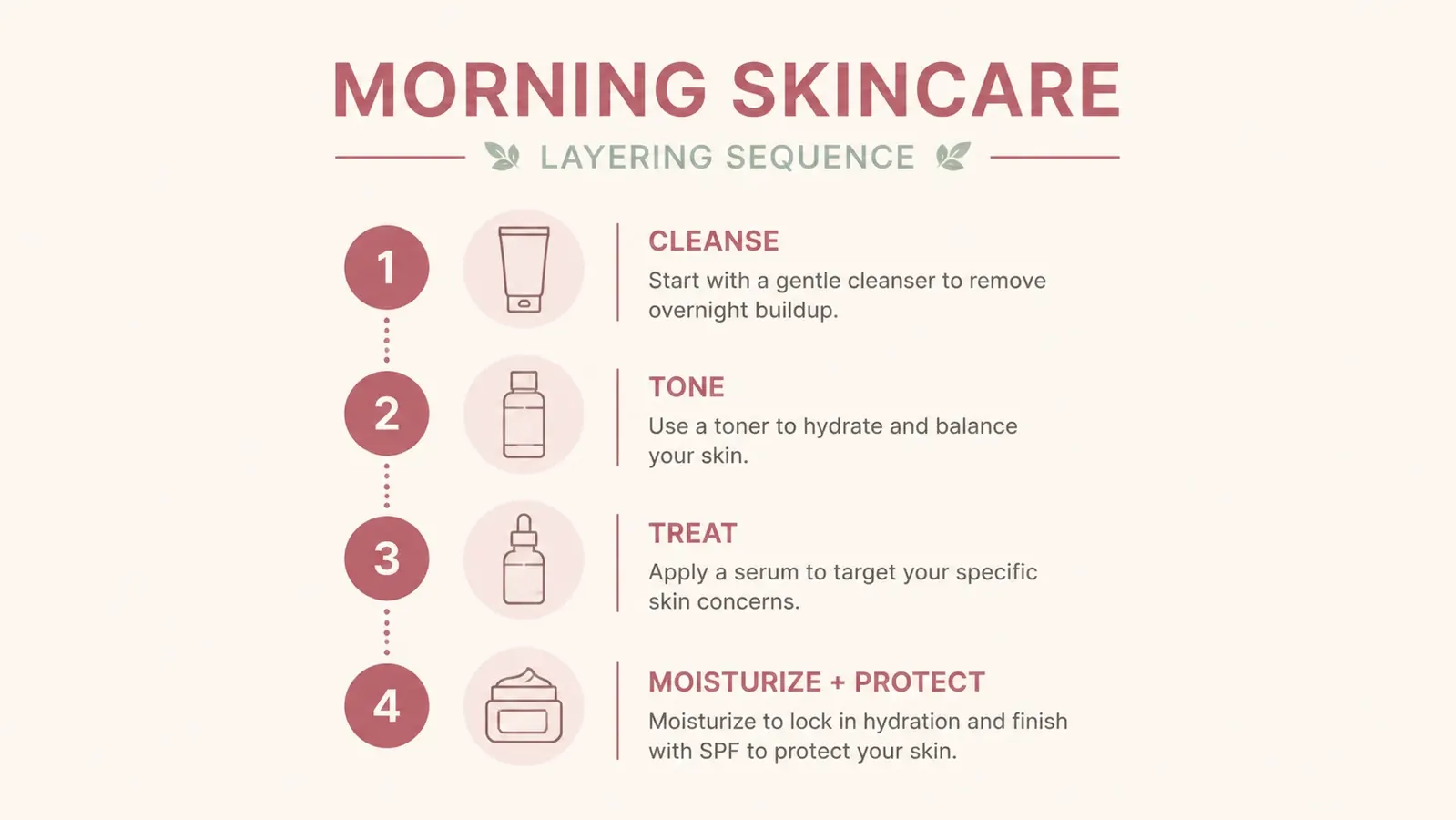
This is the complete morning sequence: cleanser, vitamin C serum, moisturizer, SPF. Four products. In that order. Nothing complicated.
What Else Helps: Keeping the Serum From Oxidizing
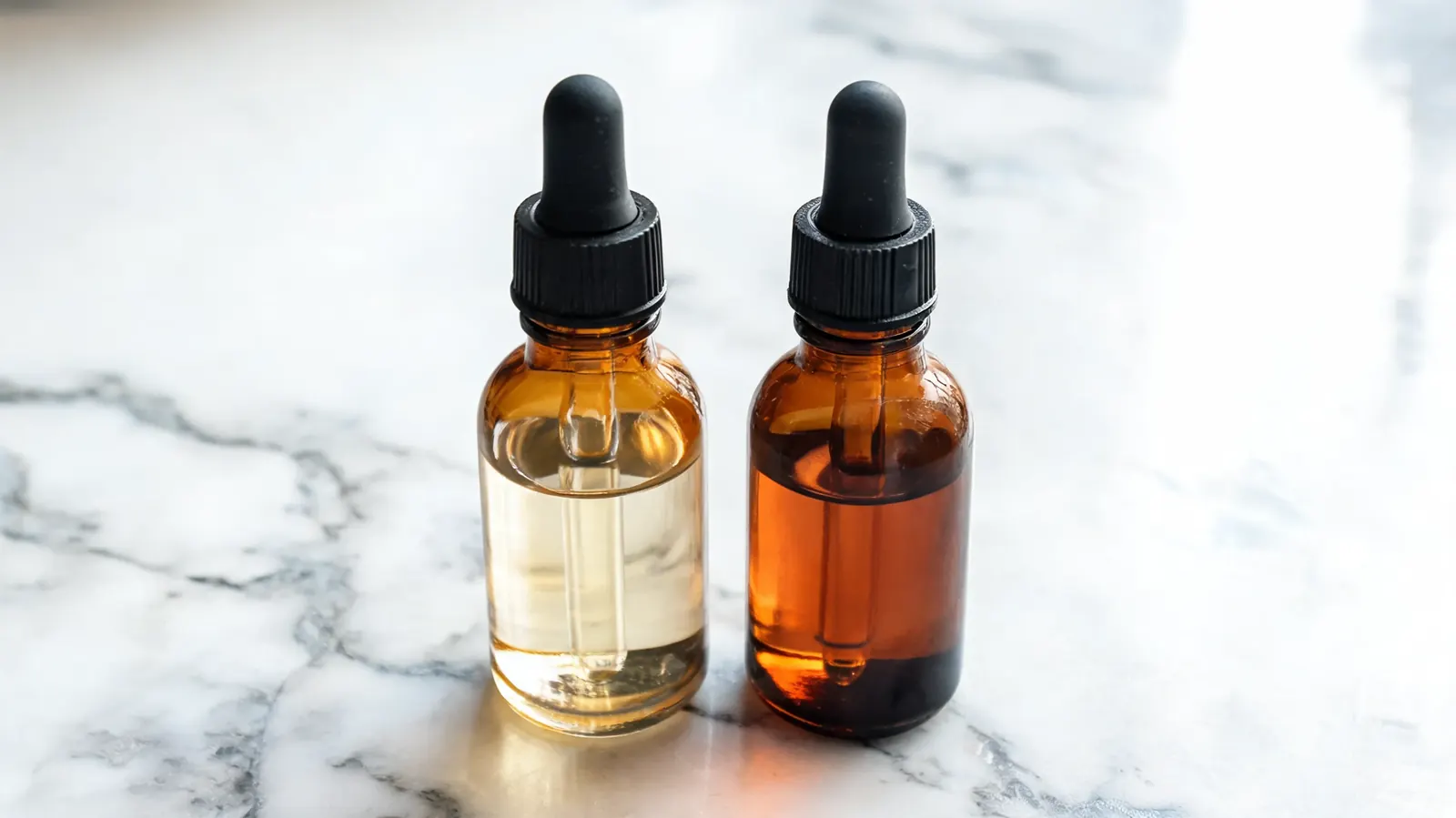
Vitamin C serum has a shelf life problem. L-ascorbic acid is unstable and oxidizes on contact with light, heat, and air. An oxidized serum turns from a pale gold or clear color to orange or brown. It is not dangerous to apply, but it has lost its efficacy. If the bottle in your cabinet looks noticeably darker than when you opened it, it is likely past its useful life.
Store your serum in a cool, dark location, not on a sunny bathroom windowsill or next to a radiator. If the bottle is opaque or amber-tinted, the brand has already accounted for light degradation. If it comes in a clear bottle, keeping it in a drawer or a medicine cabinet is more important. TruSkin uses an amber dropper bottle, which helps. Even so, I aim to finish each bottle within sixty to ninety days of opening. The typical 1 fl oz bottle at four drops per day lasts about seventy-five applications, which maps neatly to a daily routine over two and a half months.
If you want a more detailed look at how TruSkin Vitamin C Serum performs over eight weeks on mature skin, including what I noticed about brightness and dark spot fading, I covered that in a full review that goes into far more detail than a routine guide allows. And if you are still on the fence about whether vitamin C serum is worth adding at all, the piece on what vitamin C actually does for skin over 50 addresses the evidence and sets realistic expectations.
The routine only works if the serum does not go off before you use it. A 1 oz bottle at four drops per morning lasts about 75 days.
TruSkin Vitamin C Serum comes in an amber dropper bottle that reduces oxidation. With 155,000-plus Amazon reviews and hyaluronic acid in the formula for mature skin comfort, it is a reasonable starting point for women in midlife adding vitamin C to a morning routine. Check today's price before your next order.
Amazon Check Today's Price on Amazon →