
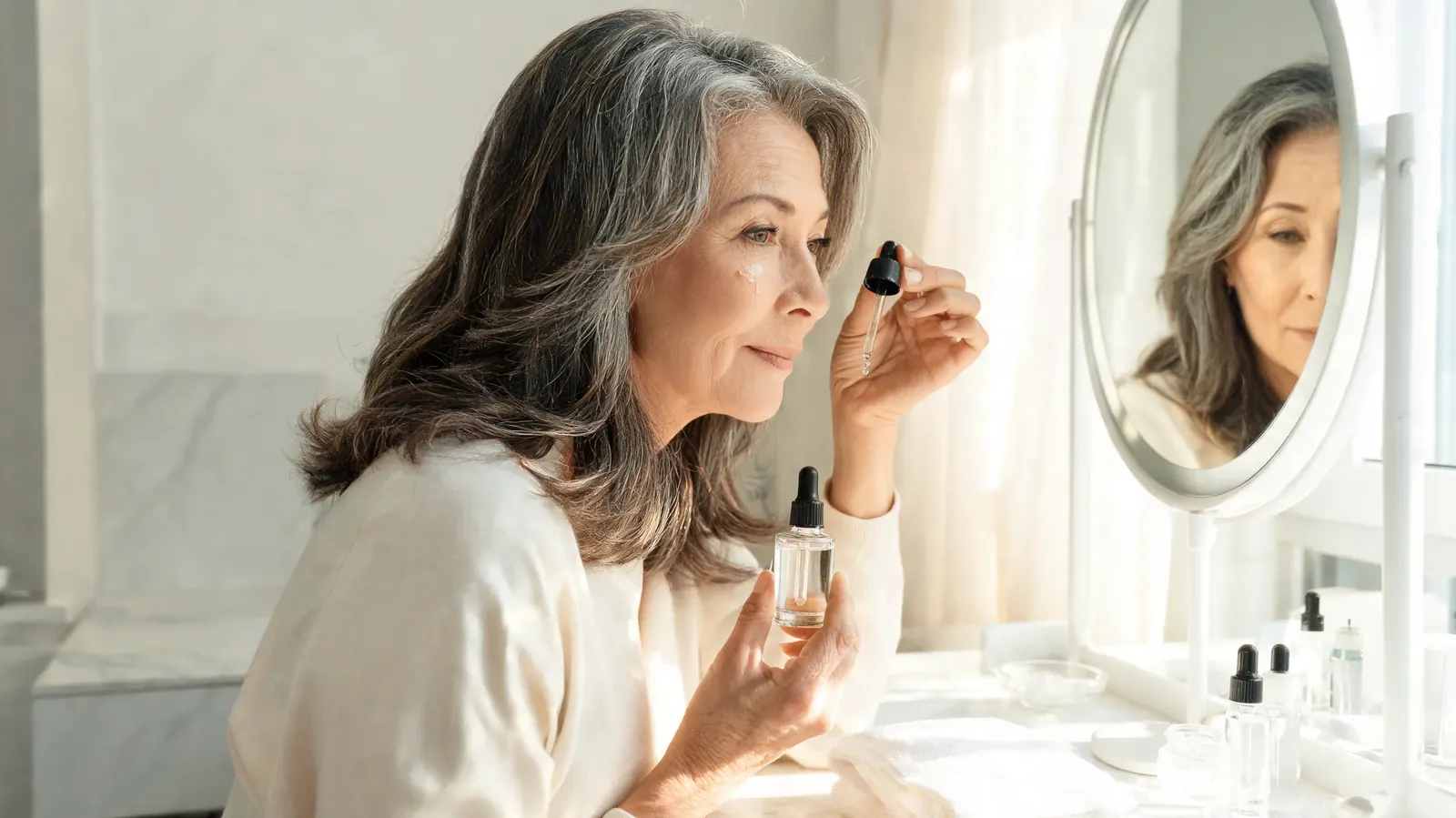
I spent three years telling myself retinol was for other people. My skin had thinned noticeably since menopause. It was drier, more reactive, and the thought of adding a vitamin A derivative that was famous for flaking and redness felt like a bad idea dressed up as science. Then I read enough dermatology literature to understand that nearly all the horror stories come from people who introduced it too fast, at too high a concentration, on skin that was not properly moisturized. The approach, not the ingredient, was the problem.
If you are 50 or older and thinking about starting retinol, the evidence still strongly supports using it. Retinol stimulates collagen production, accelerates cell turnover, and reduces the appearance of fine lines over time. Post-menopausal skin, which is producing less collagen and turning over more slowly than it did a decade ago, stands to benefit considerably. But the protocol matters enormously. What works for a 34-year-old with oily skin is likely to irritate a 57-year-old with a compromised moisture barrier. This guide walks through the specific steps I used, and what I would tell any woman in her fifties who is starting from scratch.
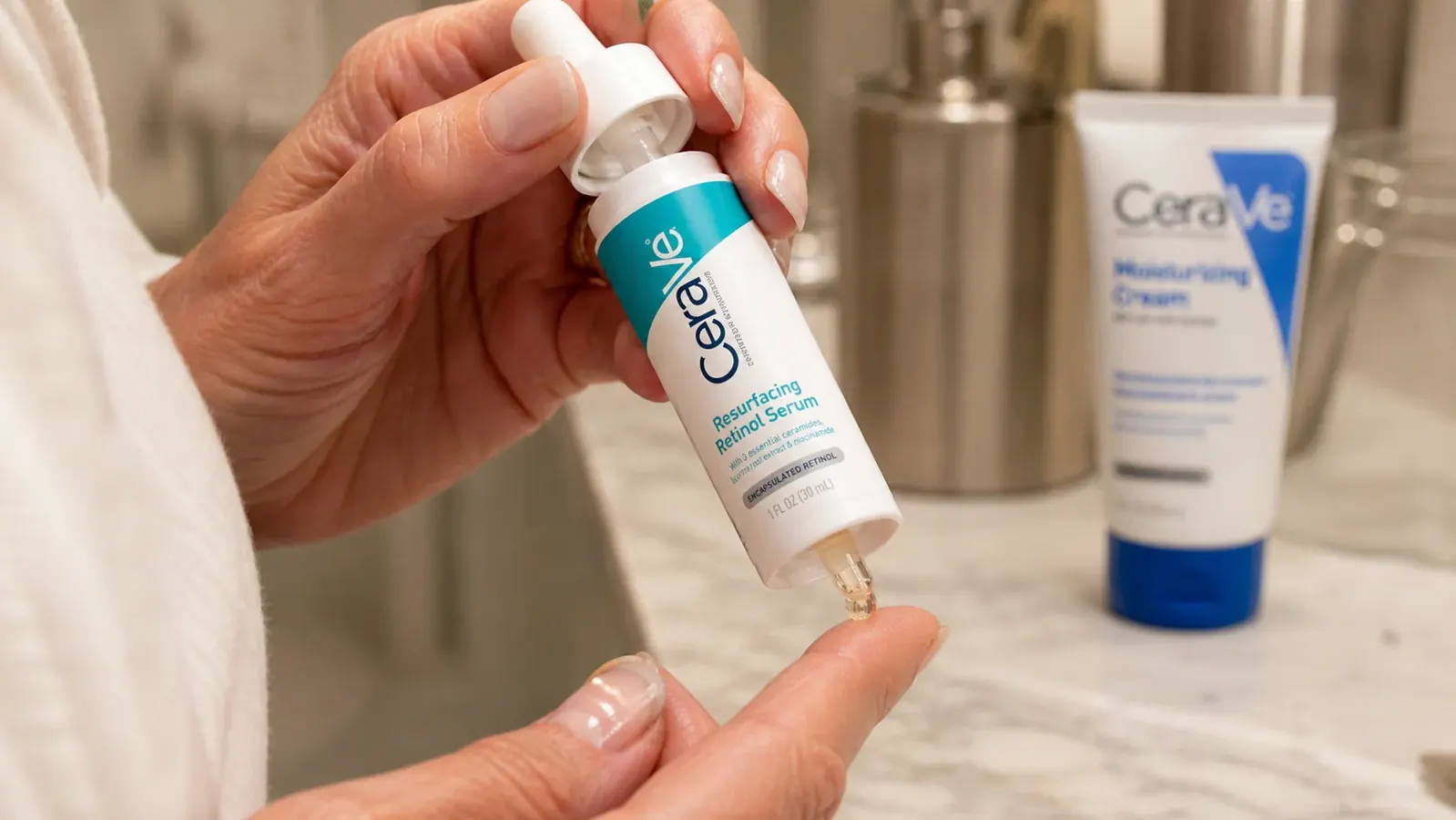
If you want a retinol formulated for sensitive and mature skin, CeraVe Resurfacing Retinol Serum is the one I started with and still use.
It is a low-concentration formula encapsulated for slower release, which reduces the peak irritation that causes most beginners to quit. It also contains niacinamide and hyaluronic acid, which actively support the barrier while the retinol works. At current pricing it costs less than most cleansers.
Amazon Check Today's Price on Amazon →Step 1: Choose the Right Starting Concentration
Retinol concentrations in over-the-counter products typically range from 0.025 percent at the low end to around 1 percent at the upper limit of what is available without a prescription. For women over 50 who are starting for the first time, I would not go above 0.1 percent in the first eight weeks. Ideally, start at 0.025 or 0.05 percent. The reason is not that stronger is better later, necessarily, but that your skin needs time to upregulate the retinol-binding proteins that process the ingredient efficiently. Push too hard too soon and you will irritate the skin before those pathways are established, which means you are getting inflammation without benefit.
CeraVe Resurfacing Retinol Serum sits in the low-concentration range, which is why it is a useful starting formulation. It also uses encapsulated retinol, meaning the active ingredient is released gradually rather than delivering a full dose at once. That slower release profile is genuinely kinder to mature skin. Higher-concentration retinols have their place, but not in the first three months for most women in this age group.
If you have previously tried retinol and experienced significant irritation, start even lower and consider discussing a prescription retinoid with your dermatologist. Prescription tretinoin, while more potent, also comes in very low concentrations and can be compounded to a level that mature skin tolerates well. But for a first attempt, an over-the-counter low-dose encapsulated retinol is the logical entry point.
Step 2: Build Up Frequency Slowly, Not Concentration
The most common mistake is applying retinol every night from the first week. That is what the label technically allows. It is also how you end up with a red, flaking face two weeks in and a bottle you never open again. For women over 50, the frequency ramp matters more than the concentration question. Here is the schedule that worked for me and that I have seen recommended consistently by dermatologists who specialize in mature skin.
Weeks one and two: apply retinol once per week, always in the evening on clean, completely dry skin. Weeks three and four: increase to twice per week, spacing the nights apart (say, Tuesday and Friday). Weeks five through eight: every other night if your skin is tolerating it without significant redness or peeling. After eight weeks: nightly use is reasonable if your skin has shown no persistent reactivity. Most women in their fifties find that every other night remains their comfortable long-term frequency. That is not failure. It is appropriate calibration.
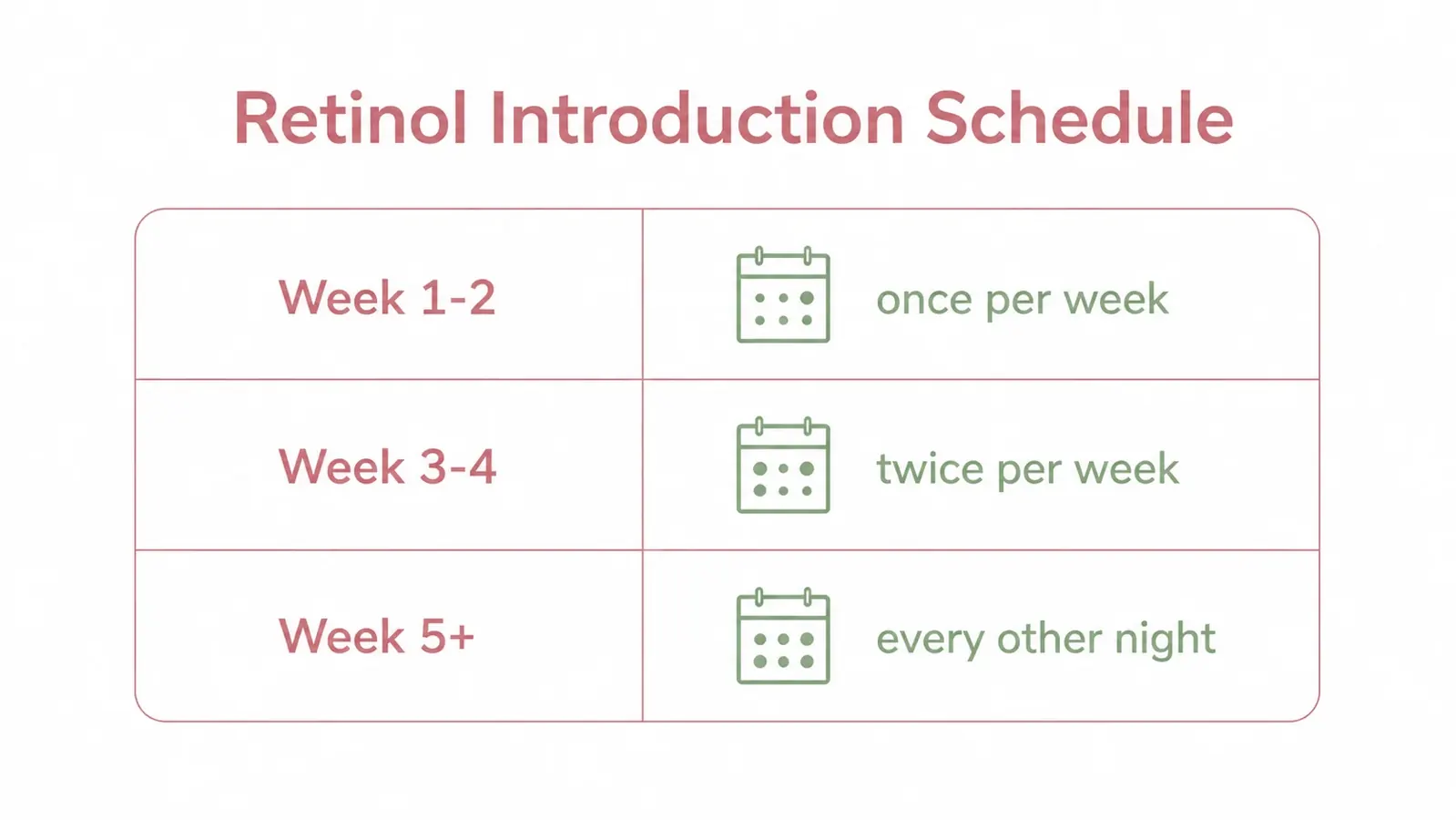
If at any point you see redness that lasts more than 48 hours, or peeling that goes beyond minor flakiness, scale back by one step. Your skin is telling you something real. The goal is consistent, sustainable use over months, not a heroic first week followed by weeks of recovery.
Step 3: Apply to Dry Skin, Not Damp Skin
This is a detail that makes a measurable difference on mature skin, and it is one most retinol guides gloss over. Retinol penetrates more deeply and more quickly when applied to damp skin. On younger, thicker, oilier skin, that enhanced penetration is fine. On post-menopausal skin, which is thinner and has a compromised moisture barrier, it pushes the irritation risk significantly higher. Wait ten to fifteen minutes after washing your face before applying retinol. The skin should feel dry to the touch, not tacky.
This is counterintuitive because you may have heard that serums absorb better on slightly damp skin, which is true for hydrating serums with humectants. Retinol is a different category entirely. Damp application is a frequent source of the burning, tightness, and overnight irritation that leads people to conclude retinol is simply too harsh for their skin. Often it is the application timing, not the ingredient, that is the actual problem.
Step 4: Buffer with Moisturizer
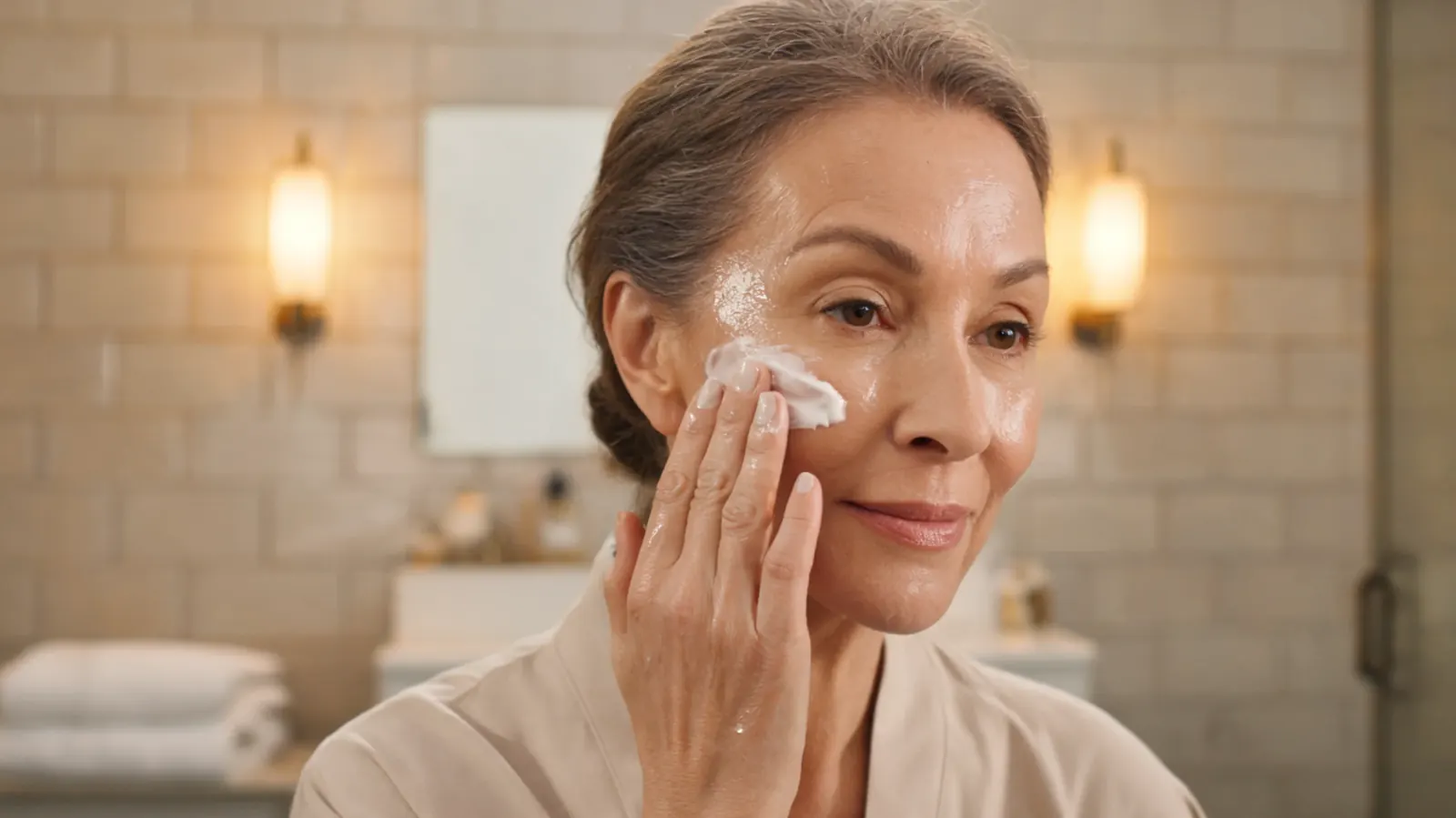
Buffering means applying a layer of moisturizer either before the retinol, after it, or both. This reduces the speed of absorption slightly and acts as a barrier between the retinol and your skin's surface cells. For women over 50 with reactive or dry skin, the sandwich method, moisturizer first, then retinol, then moisturizer again, is the most protective option. For skin that has built up reasonable retinol tolerance, moisturizer after retinol alone is usually sufficient.
The moisturizer you buffer with matters. Look for formulas with ceramides, hyaluronic acid, or glycerin. You want something that reinforces the skin barrier rather than one with active acids or fragrance that could compound any irritation. CeraVe's own moisturizing cream, or their PM facial moisturizing lotion, pairs logically with their retinol serum because the ceramide formulation in the moisturizer actively repairs the same barrier the retinol is working against.
In the first four weeks especially, err toward more moisturizer rather than less. Some women in their fifties find they need a richer moisturizer in the areas where they have the most sensitivity, typically the chin, sides of the nose, and under the eyes. Apply retinol away from the immediate eye area and apply your eye cream separately after everything else has absorbed.
The goal of the first three months is to teach your skin to tolerate retinol without inflammation. The brightening and texture changes come later. You cannot rush the foundation.
Step 5: Manage the Purging Phase Without Panic
Purging is real but widely misunderstood. When retinol accelerates cell turnover, it can bring congestion and clogged pores to the surface faster than they would have cleared on their own. For some women this looks like a brief breakout or texture roughness in the first four to six weeks. That is different from irritation, which presents as redness, tightness, burning, or visible peeling in areas where you do not normally have congestion.
If you have purging, which is more common in women who still experience occasional breakouts or have naturally congested skin, it typically resolves within six weeks. Do not stop using retinol because of purging. Do stop, or scale back significantly, if you have persistent redness, a burning sensation, or compromised skin that starts to feel raw. These are signs of irritation rather than purging, and they require you to give your barrier time to recover before continuing.
Women in their fifties are more likely to experience dryness and flaking than traditional purging, because the skin is already on the drier end of the spectrum. The remedy is the same: more moisturizer, less retinol frequency, and patience. The flakiness is annoying but it is not skin damage. It is a normal early-stage response to an accelerated cell turnover rate your skin has not experienced in years.
What Else Helps
Three supporting habits make a significant difference when you are introducing retinol to mature skin. First, sunscreen every morning without exception. Retinol increases photosensitivity by accelerating the turnover of protective surface cells. Skipping SPF while using retinol is the kind of error that produces the hyperpigmentation you were trying to address in the first place. An SPF 30 or higher, broad spectrum, every morning, applied as the final step before any makeup.
Second, simplify the rest of your routine while you are building retinol tolerance. This is not the time to also add glycolic acid, a new vitamin C serum, and a clay mask. Each new active ingredient is a variable, and you want to be able to identify what is causing any reaction. Keep the rest of your routine stable, minimal, and barrier-supportive for the first eight to twelve weeks. Once retinol is established, you can gradually reintroduce other actives.
Third, stay consistent with your water intake and sleep. Neither is a skincare product, but both affect skin barrier function measurably. Post-menopausal skin already has a reduced capacity to retain moisture. Poor sleep and dehydration compound that. You are not going to moisturize your way around chronic dehydration. The topical work and the internal conditions are not separate variables.
If you want to read more about why retinol remains one of the best-supported ingredients for women in this age group, I have written about the research in more detail in my piece on the 10 reasons retinol serum is worth using in your fifties. And if you want to understand how the CeraVe serum specifically performs over a longer use period, my six-week review of the CeraVe Resurfacing Retinol Serum covers what I noticed, week by week, on skin that had changed substantially since menopause.
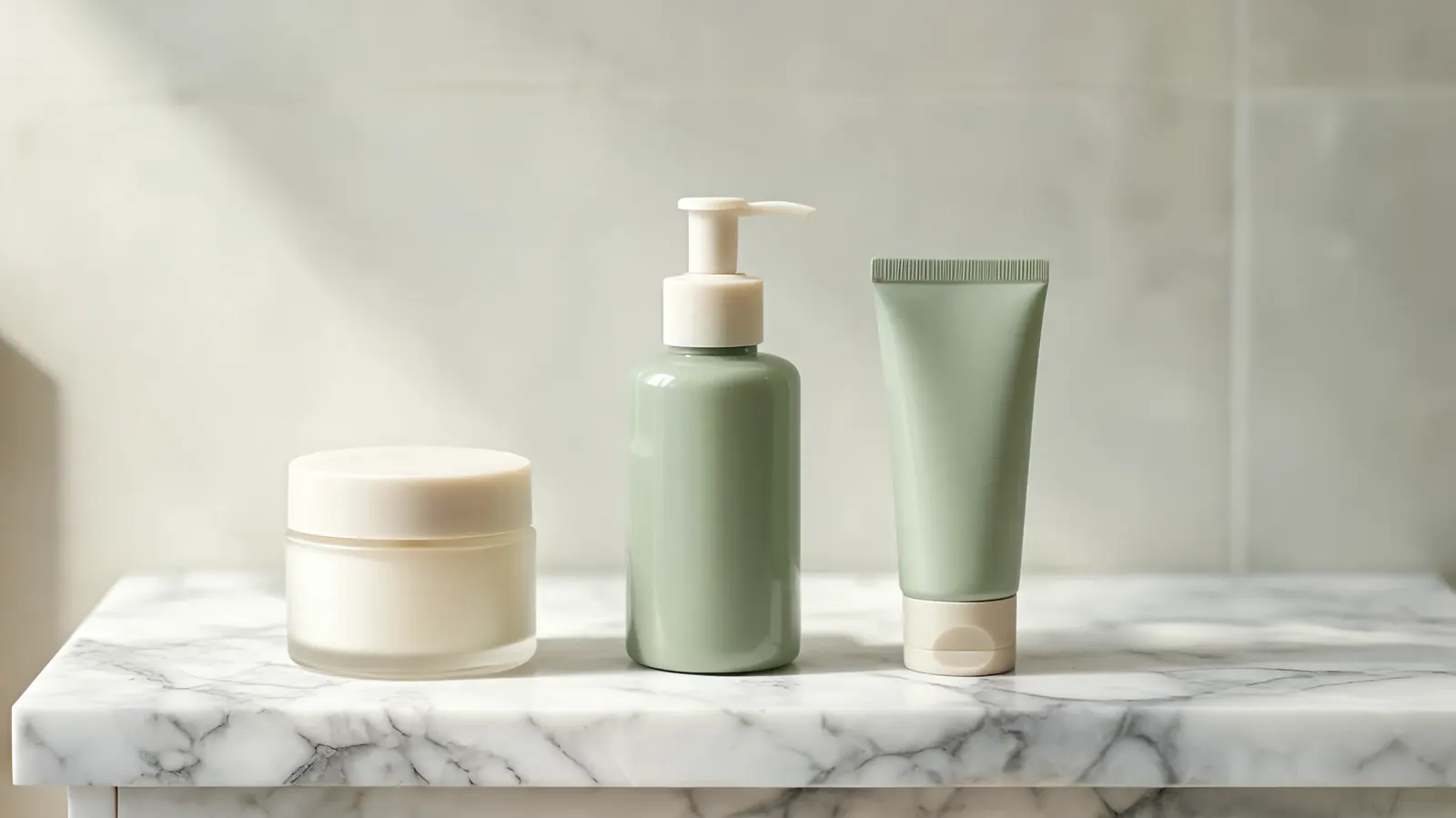
Starting slow with a low-concentration, encapsulated retinol is the most reliable way to build tolerance without setbacks.
CeraVe Resurfacing Retinol Serum is the formulation I recommend for women over 50 who are introducing retinol for the first time. The encapsulated retinol, niacinamide, and ceramide combination is specifically designed to support rather than compromise the skin barrier during the adaptation period.
Amazon Check Today's Price on Amazon →