
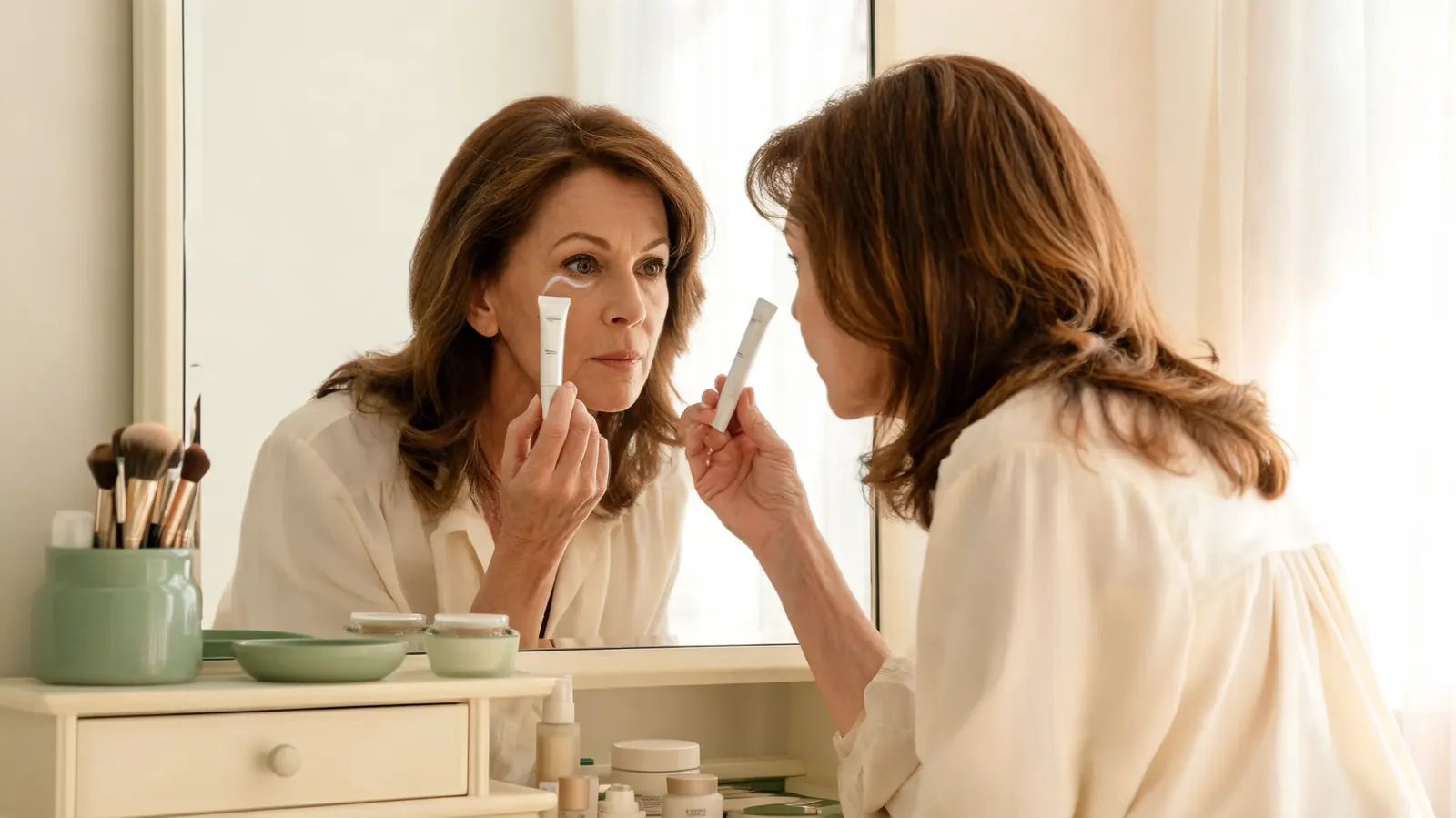
If your dark circles have been getting worse since perimenopause, you have probably already tried a caffeine eye gel that did nothing, a department store cream priced at two figures that did slightly more nothing, and at least one product that promised peptides and brightening and "visibly renewed" under-eye skin. The RoC Retinol Correxion Under Eye Cream is different from those, but not always in the way the marketing implies. It contains retinol, which is one of the few ingredients in skincare with genuine long-term evidence behind it. That is both its strength and the source of most of the confusion about what it will actually do for you. The reviews skew overwhelmingly positive. They also skew young. What follows is the review I wanted to read and could not find when I started using this product on skin that had already been reshaped by a decade of hormonal change. This honest review of the RoC retinol eye cream covers what the marketing leaves out.
The honest version starts with a question the product page does not answer: what concentration of retinol is in this tube? RoC does not disclose the percentage. The ingredient list reads "retinol" in the active position, but no number is attached. This is legal, common in the drugstore category, and worth knowing before you start comparing it to serums that advertise 0.1% or 0.25% on the label. The encapsulated delivery system RoC uses, which they call Retinol Correxion Complex, is designed to release retinol gradually to reduce irritation. What we do not know is the starting concentration. For most women using this on mature, thinned under-eye skin, that gradual release is an advantage. But if you are trying to compare this to a product with a disclosed percentage, you cannot. That missing number matters less than most people think and more than RoC would prefer to acknowledge.
The Quick Verdict
A reliable slow-burn maintenance product for fine lines and mild surface texture. Oversold as a dark circle fix. The irritation in weeks two and three is real and most reviews do not mention it. Worth it for the right problem, wasteful for the wrong one.
Amazon Check Today's Price →Your dark circles are not a product problem. Your fine lines and crepiness might be.
If the texture and surface quality of your under-eye skin is the concern, RoC Retinol Correxion has the right formulation approach at a reasonable price. Check today's price before deciding whether the experiment makes sense for your specific situation.
Amazon Check Today's Price on Amazon →The Weeks Two and Three Problem Nobody Warns You About
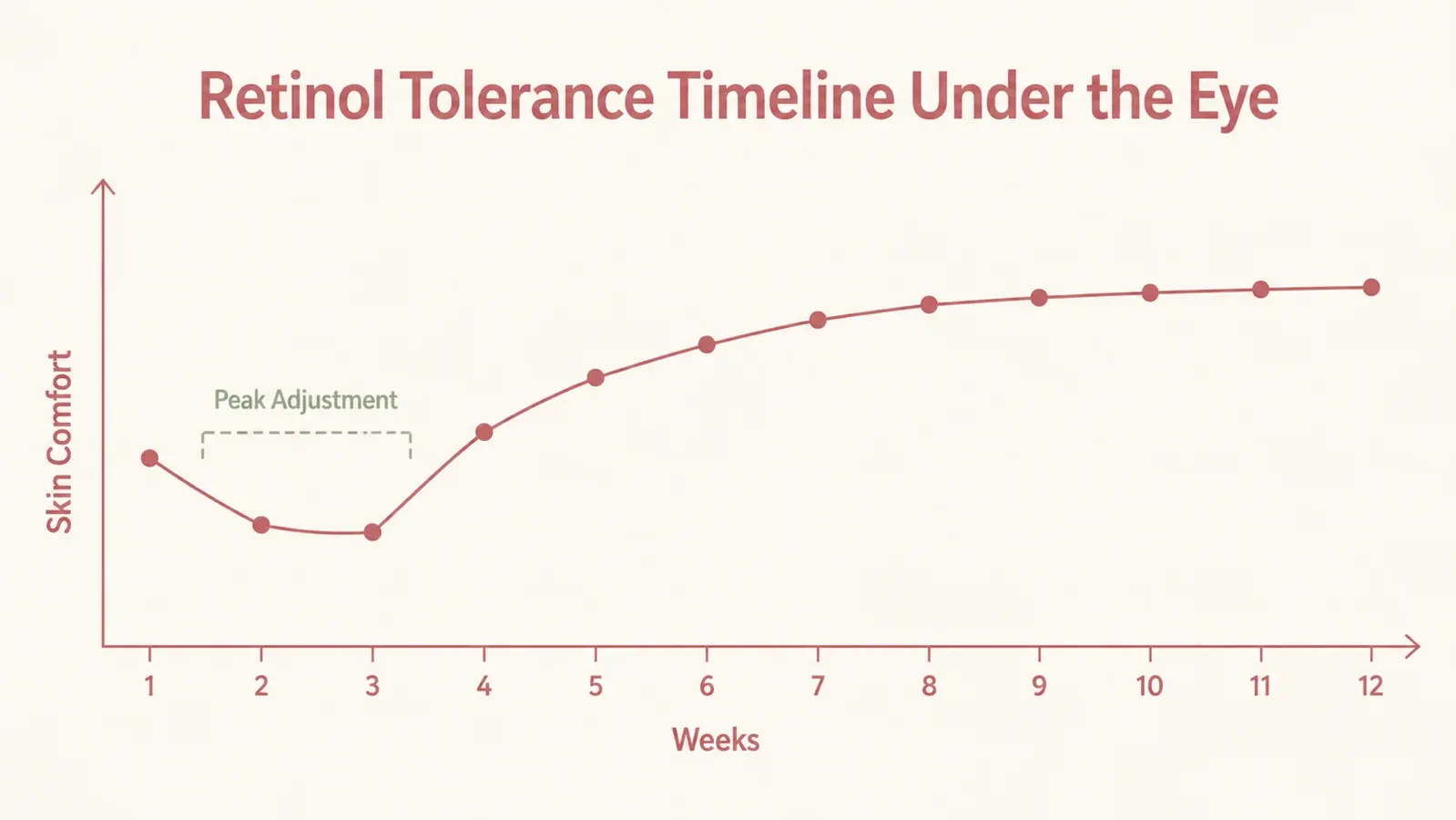
Here is what consistently does not appear in the five-star reviews: around days ten through twenty-one of using a retinol product near the eye, a significant portion of users experience a localized adjustment period. The skin at the orbital rim becomes mildly red. There may be slight flaking, the kind you feel when you touch the skin rather than the kind you see dramatically in a mirror. The eye itself may feel mildly irritated in the mornings, not painful, but present. This is not an allergic reaction. It is the predictable response of thin under-eye skin to a cell-turnover accelerant it has not encountered before.
The reason the reviews underreport this is twofold. First, people who experience this phase often stop using the product during it and leave a negative review or simply move on. Their experience disappears from the dataset of continuing users. Second, women with thicker, younger skin genuinely do not experience it as acutely. If most reviewers are in their thirties with normal skin thickness, the adjustment period is milder and more easily overlooked. On skin that has thinned after menopause, the same two-to-three week window is more noticeable. The fix is not to stop. It is to slow the introduction. Every other night for the first four weeks, then nightly. A thin layer of plain moisturizer applied first buffers the activity further. Do not let weeks two and three trick you into abandoning a product that would have worked by week six.
I have spoken with three readers who returned this product after about two weeks because their eyes looked red and felt dry. Each of them was using it nightly from the first day, without a buffer, on skin that had not been exposed to retinol before. All three were in their mid-fifties. The product did not fail them. The introduction protocol did. The marketing does not explain this clearly, and the packaging instructions are inadequate for a retinol-naive user with mature skin. That is a genuine criticism of how RoC positions this product.
The Dark Circle Claim: What Marketing Hides and Dermatology Explains
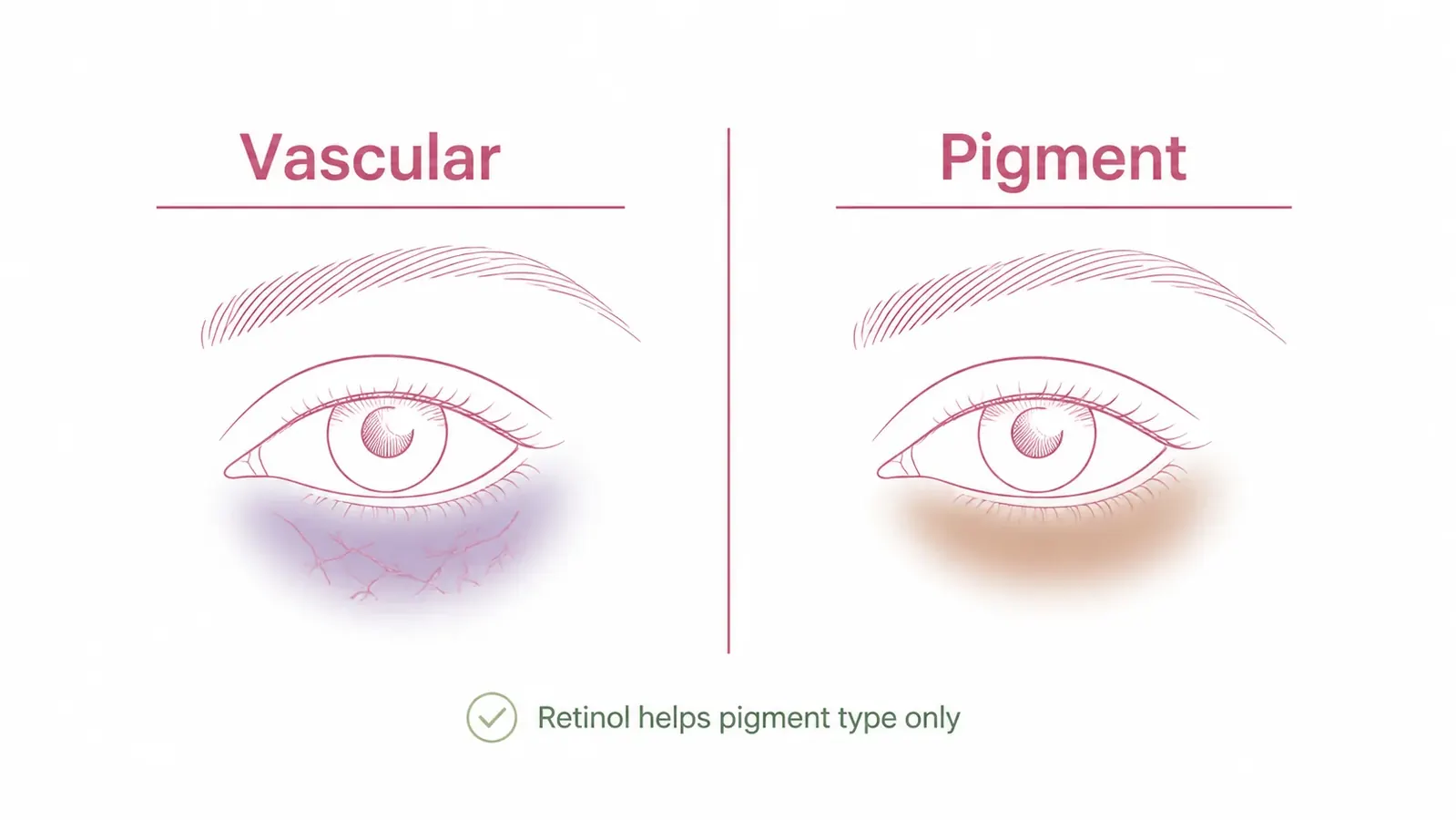
The product name includes the phrase "for Dark Circles and Puffiness." Let me be direct about what this means in clinical reality. Dark circles in women over fifty are, in the vast majority of cases, either vascular or structural in origin. Vascular dark circles occur because the skin under the eye has become translucent enough to reveal the underlying blood vessels. The tone is bluish or purple. Structural dark circles occur because volume loss in the mid-face and tear trough creates a shadow regardless of pigmentation. The tone appears darker simply because the light hits the hollow at an angle that creates shadow. Neither of these responds to retinol. Retinol works on the surface layers of the skin. It cannot reduce blood vessel visibility, and it cannot restore volume.
The third type of dark circle, which is less common in post-menopausal women but does exist, is pigment-based. This type is brownish rather than blue-purple, does not worsen significantly with fatigue, and is associated with sun damage and post-inflammatory hyperpigmentation. Retinol can modestly address this type by accelerating cell turnover and gradually surfacing the pigmented cells faster. If your dark circles are warm brown in tone and worsen after sun exposure, retinol has a plausible mechanism to help you. If they are blue-purple and look worse when you are tired, no topical retinol product is going to change that. You are looking at a structural or vascular issue that requires different interventions, among them more sleep, cold compresses for temporary vascular constriction, and, for significant cases, professional options.
The marketing for this product gestures at dark circles because dark circles are the number-one reason women over fifty seek out an eye cream. Acknowledging that the product cannot address the most common type of dark circle in this age group would be commercially inconvenient. It would also be honest, and I prefer honest. Buy this for texture improvement, for fine line softening, for the slow surface-quality changes retinol genuinely delivers over eight to twelve weeks. Do not buy it because you want your dark circles to fade. They probably will not.
The Fragrance Question: A Small Point That May Not Be Small for You
The RoC Retinol Correxion Under Eye Cream is not fragrance-free. It has a faint scent, medicinal rather than floral, noticeable when the tube is open and briefly after application. The ingredient list includes "fragrance" near the lower end, suggesting a small amount. For most users this is negligible. For women with reactive skin or fragrance sensitivity, it is worth knowing before purchase. Fragrance as a category is one of the more common contact sensitizers, and the under-eye area is the last place you want to discover a sensitivity. If you have had reactions to fragrance in other skincare products, check the ingredients before committing.
This is not a dealbreaker in a product where fragrance is a low-level ingredient, but it is a detail that several reviews simply do not mention. The omission is probably because most reviewers are not fragrance-sensitive. If you are, it matters. There are fragrance-free retinol eye options on the market, and I would steer you toward those if sensitivity is part of your history.
The Airless Packaging: Genuinely Good, With One Real Drawback
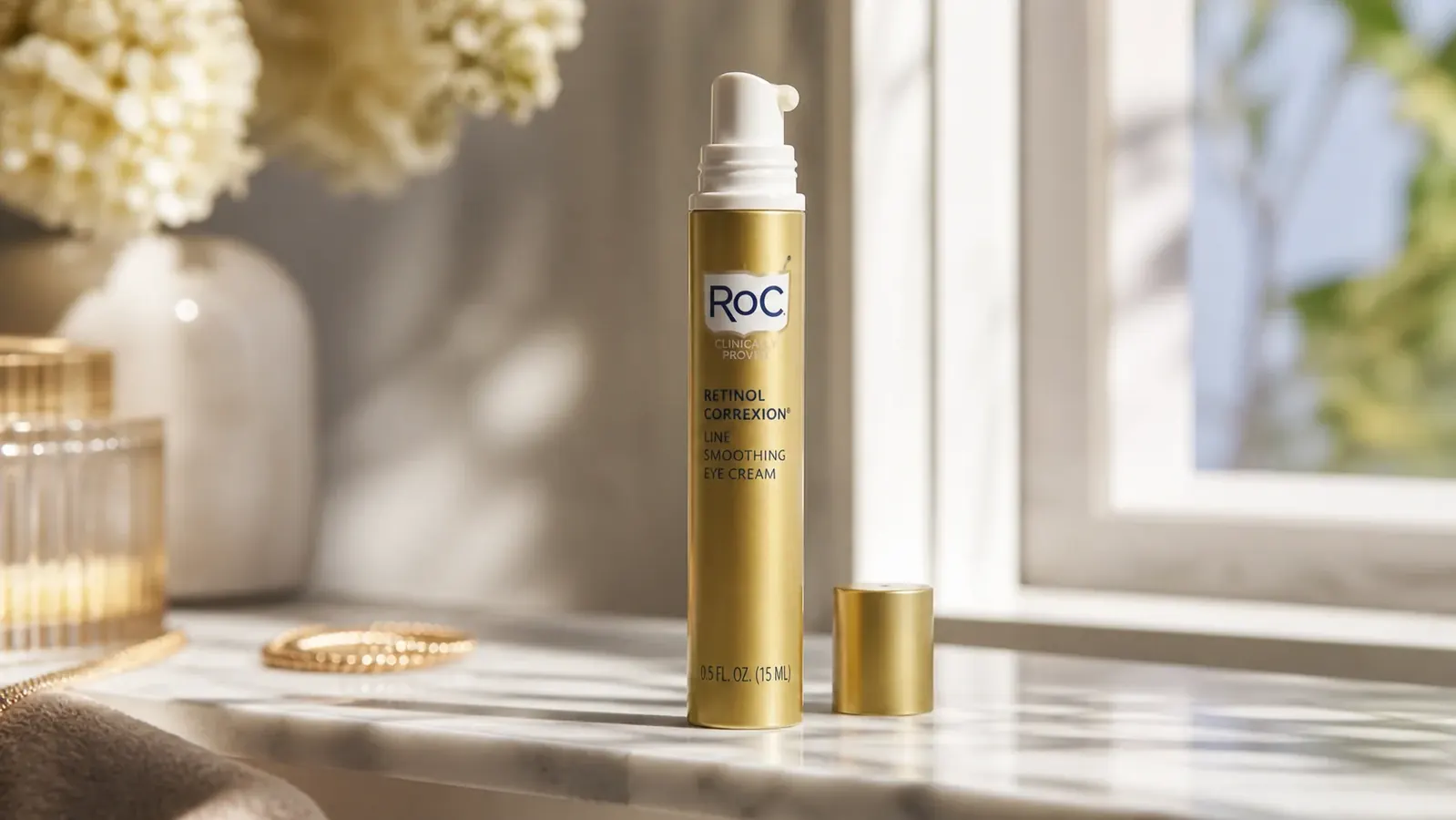
The RoC tube uses an airless pump mechanism. This is a genuine advantage for a retinol product. Retinol degrades when exposed to air and light repeatedly over time. Jar packaging, where you dip a finger into the product every night, exposes the entire batch to air and introduces bacteria with each use. The airless pump dispenses a controlled amount, seals the remaining product from air contact, and keeps the retinol more stable through the life of the tube. This is not just a marketing detail. Retinol that has degraded through repeated air exposure does less of what you are paying for it to do. The packaging is meaningfully better than a jar, and the cost difference between a jar and an airless pump format does not fully account for the stability advantage.
The drawback, and it is a real one, is that airless pumps reach a point where they stop dispensing but still contain product. The internal bladder that collapses as you use the cream does not evacuate completely. How much product is left stranded in the tube varies, but it is not nothing. With a jar, you can see when you are nearing the end and scrape the last uses from the sides. With an airless pump, the mechanism stops and you are left with the slightly unsatisfying knowledge that you paid for product you cannot access. This is a minor irritation in the context of a well-functioning packaging format, but it is worth naming rather than pretending the format is flawless.
This is a maintenance product for women who understand what maintenance means. It will not reverse ten years in ten weeks. It will, used correctly and consistently, improve the quality of your under-eye skin over months. That is a meaningful thing. It is also a very different thing from what the marketing suggests.
The Miracle Cream Misconception: What This Product Actually Is
Eye creams are misused more often than almost any other product in skincare. The misuse pattern is specific: a woman purchases an eye cream because she is bothered by something acute, applies it for two to four weeks, does not see a dramatic change, and concludes either that the product failed or that eye creams in general do not work. This pattern is so common that it has become a kind of received wisdom in certain corners of skincare commentary. The received wisdom is wrong, but it is understandable given how the products are marketed.
Retinol works through a slow mechanism. It binds to nuclear receptors in skin cells, shifts gene expression over repeated applications, and gradually alters how new skin cells are formed. This takes time measured in weeks to months, not days. The changes it produces are most visible in comparison photographs taken six to eight weeks apart, not in the mirror on a Tuesday morning after ten days of use. Women in their fifties and sixties, whose cell turnover is already slower than it was at thirty-five, need to give the process more time, not less. If you use this cream for three weeks, find it disappointing, and stop, you have done the skincare equivalent of starting an exercise program and quitting before adaptation sets in.
The correct framing for this product is maintenance. You are maintaining the quality of your under-eye skin over time, slowing the rate at which fine lines deepen, keeping the surface texture smoother than it would otherwise become. That is a genuinely useful thing. It is also unglamorous, invisible in the short term, and almost impossible to market effectively without implying something more dramatic. The gap between what this product does and what the marketing implies is the space where most of the frustration lives.
What I Liked
- Encapsulated retinol delivery reduces irritation risk on delicate under-eye skin compared to unencapsulated formats
- Airless pump packaging genuinely preserves retinol stability better than jar alternatives
- Emollient-rich formula provides moisture and active benefit in one step, with no additional eye moisturizer needed
- Visible texture and fine line improvement for women whose primary concern is surface quality, not dark circles
- Long product lifespan with correct dosing makes the per-use cost lower than the upfront price suggests
- Widely available and easy to repurchase consistently, which matters for a product that requires months of use
Where It Falls Short
- Retinol concentration is undisclosed, making it impossible to compare against serums with labeled percentages
- The weeks-two-to-three adjustment period on mature skin is real and consistently underreported in reviews
- The dark circle claim is misleading for the majority of women over fifty whose circles are vascular or structural
- Contains fragrance, which is a concern for women with known contact sensitization
- Airless pump mechanism strands a portion of product that cannot be recovered when it stops dispensing
- Marketed as a problem-solver when it functions more accurately as a slow-burn maintenance product
Who This Is For
This product suits women in their fifties and sixties who understand what retinol actually does, have surface texture and fine line quality as their primary concern, are willing to introduce it slowly over the first four weeks, and are prepared to wait eight to twelve weeks for visible results. If you have fragrance-sensitive skin or a history of contact reactions, choose a fragrance-free alternative. If your primary concern is dark circles with a blue-purple tone, spend your time and money differently. If you are a retinol-naive user who wants to start with something lower-risk than a face serum for the orbital area, this is a sensible entry point provided you do not rush the introduction. The product itself is well formulated. The relationship most people have with it is not.
Who Should Skip It
Skip it if you have convinced yourself that an eye cream will resolve dark circles that have been present for years and worsen when you are tired or stressed. That is almost certainly a vascular or volume issue, and no amount of retinol will address it. Skip it if you want to see results within a month and will lose confidence if you do not. Skip it if you have known fragrance sensitivity, since the ingredient list includes it. Skip it if you tend to apply eye products directly under the lash line rather than on the orbital bone: this product, like any retinol near the eye, belongs well away from the lash line to prevent migration onto the lid and potential irritation of the mucous membrane. And skip it if you are looking for something that will make a noticeable difference before a significant event in three weeks. For that, look at a good concealer and a cold jade roller in the morning. This cream operates on a completely different timescale.
The eight-week version of your under-eye skin looks better with consistent retinol than without it. The two-week version looks identical.
If you are buying this with the right expectations, fine line texture and long-term surface quality maintenance, it is a reasonable product at a reasonable price. Check today's price and make sure the tube size matches your commitment level before adding it to your routine.
Amazon Check Today's Price on Amazon →Affiliate disclosure: This site earns a small commission on purchases made through Amazon links at no additional cost to you. Products are tested and reviewed independently. Brand relationships do not influence conclusions.