
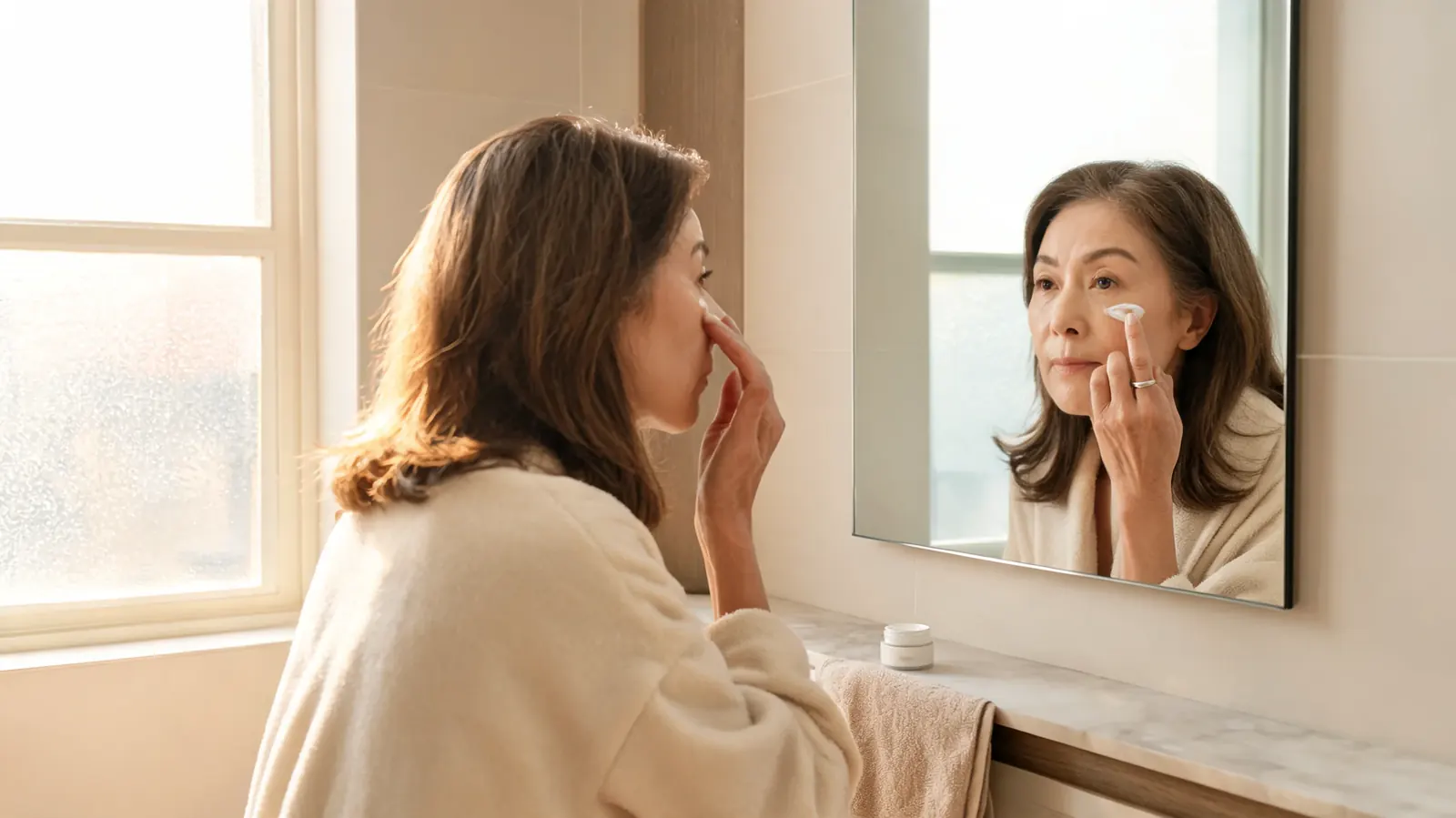
By 55, the under-eye area carries a particular kind of history. Mine carries two decades of magazine deadlines, several years of perimenopause-era insomnia, and what my dermatologist calls "significant dermal thinning." When I started using the RoC Retinol Correxion Under Eye Cream ten weeks ago, I was not looking for a dramatic fix. I was looking for something honest: a retinol-based formula that would not inflame the most delicate skin on my face, and that might, over time, make a visible difference in the texture I see in the mirror most mornings.
What I found was more nuanced than the product page suggests and less dramatic than the five-star reviews imply. That is usually where the useful information lives.
The Quick Verdict
A well-formulated, properly dosed retinol eye cream that delivers real but modest results over eight to twelve weeks. Best for crepey texture and fine lines. Not a fix for structural dark circles or significant puffiness.
Amazon Check Today's Price →If your under-eye skin has thinned and creped, this is the retinol concentration that will not punish you for using it.
RoC Retinol Correxion has been in this category for decades. The formula is stable, the tube lasts longer than you expect, and at the current price it is a reasonable ten-week experiment. Check today's price before it changes.
Amazon Check Today's Price on Amazon →Why the Under-Eye Area Is Its Own Problem in Midlife
The skin directly beneath the eye is four to five times thinner than the skin on your cheeks. After menopause, estrogen decline accelerates the loss of collagen and hyaluronic acid in this tissue specifically. The result is a cluster of changes that tend to arrive together: increased translucency (which makes the underlying blood vessels more visible, creating the bruised-blue appearance of dark circles), a fine crepe texture at the orbital rim, morning puffiness that takes longer and longer to resolve as lymphatic drainage slows with age, and a deepening of the tear trough that creates a shadowed, hollow look.
The reason I bring this up before discussing the product is that many eye cream reviews treat the under-eye as a single problem. It is not. It is four or five distinct problems with different causes. A retinol-based cream addresses some of them, mostly the texture and fine line category. It does not address structural issues, vascular pigmentation, or the volume loss that creates the hollow tear trough. If you are buying this expecting all five problems to resolve, you will be disappointed. If you are buying it for the texture issues, you have a reasonable chance of success.
I spent a fair amount of time talking to my dermatologist about the under-eye specifically when I was in my early fifties. Her framing stuck with me: the under-eye is a high-traffic area on a thin road. It does more expressive work than almost anywhere else on the face, it is exposed to the same cumulative sun damage as the rest of the skin, and it has the fewest resources to repair itself. That context is worth holding when you evaluate any product in this category.
How I Used It Over Ten Weeks
I applied the RoC Retinol Correxion cream every night for ten weeks, starting on a Tuesday in late winter. My routine was: gentle cleanse, let the skin dry completely for two to three minutes, then a rice-grain amount of the eye cream tapped along the orbital bone, not directly under the lash line. I use my ring finger, always, which delivers the lightest possible pressure. Ring fingers cannot apply strong pressure even when you try. On nights when I used a retinol serum on the rest of my face, I applied the face serum first, waited five minutes, then added the eye cream. This staggered approach kept the concentrations from compounding on the delicate zone.
For the first two weeks, I used it every other night. My skin around the eye area is not especially sensitive, but I have seen what happens when someone introduces retinol too quickly on thinned post-menopausal skin: a red, flaking, inflamed under-eye that takes three weeks to calm down. I was not willing to spend three weeks on that detour. From week three onward, I used it nightly with no irritation issues at all.
The texture of the cream is thicker than I expected from a drugstore formula. It is not greasy, but it is genuinely emollient. It sits on the skin rather than sinking in the way a serum would. That thickness is deliberate: the under-eye needs both the retinol and a moisture barrier, and this formula delivers both in one step. I did not need an additional eye moisturizer on top of it. I will note that in humid climates or for women who sleep hot, this richness might feel like too much. For my dry, post-menopausal skin in a climate-controlled apartment, it was right.
What the Ten Weeks Looked Like, Week by Week
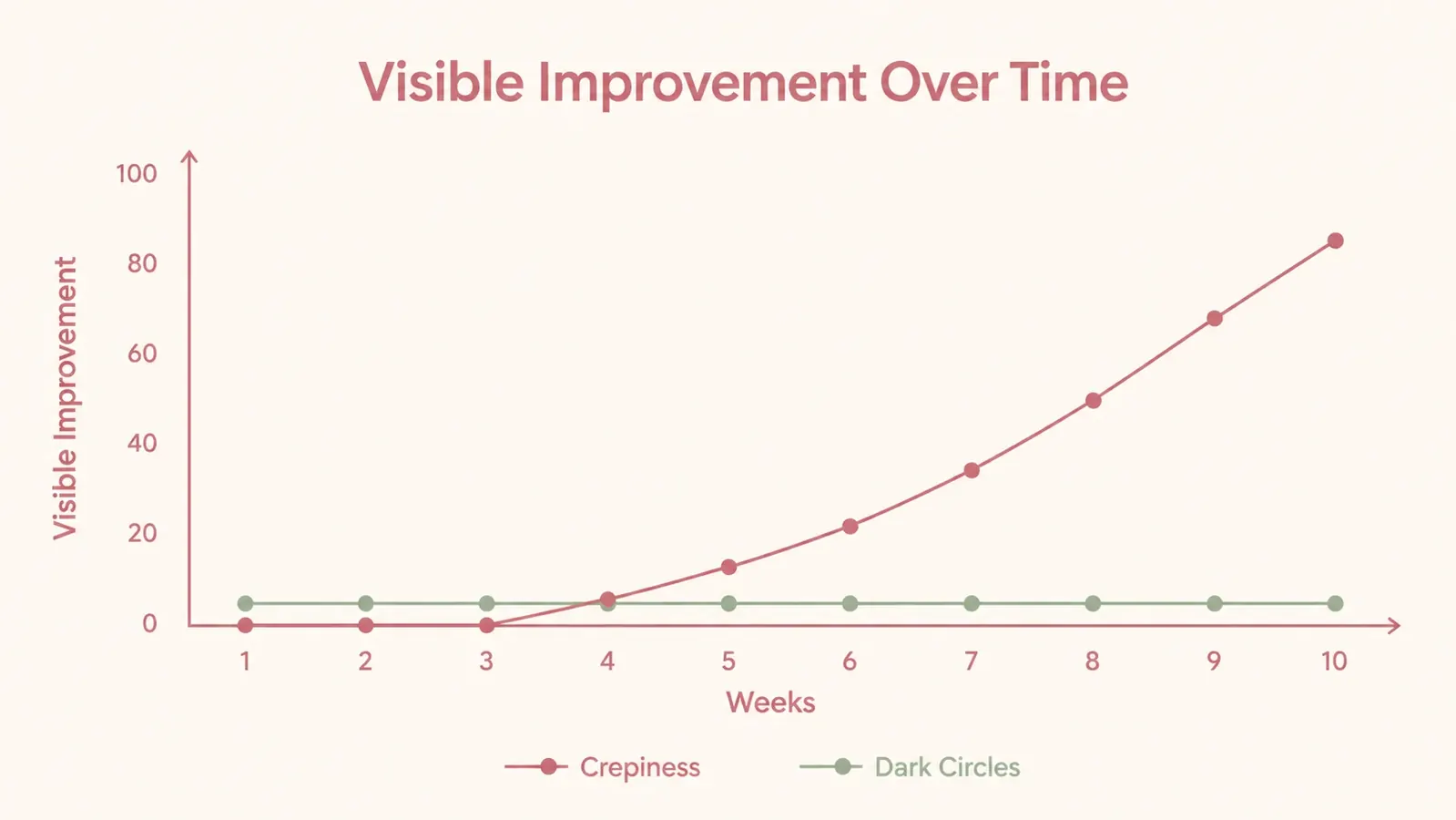
Weeks one and two: Nothing. I expected this and was not alarmed. Retinol does not produce visible results in fourteen days on anyone over fifty. Anyone who tells you otherwise is selling you something. What I did notice was that the skin did not react negatively, which is itself useful information about tolerability.
Weeks three and four: I noticed a very slight reduction in the crepey texture at the outer corner of my left eye, which is always worse than my right. It is possible this was confirmation bias. I took a photograph in identical lighting and compared it to my week-one photograph. The texture did appear slightly smoother in the photo. Not dramatically, but discernibly. The skin also felt fractionally more plump to the touch, though I would not have been comfortable reporting that without the photographic comparison to back it up.
Weeks five through eight: This is where the results became unambiguous. The fine horizontal lines that sit directly on the under-eye skin softened noticeably. Not erased, but softened. The skin felt noticeably more supple when I pressed gently with one fingertip. My morning puffiness seemed slightly less persistent, though I cannot attribute this solely to the cream since I also reduced salt intake during this period. The improvement was gradual enough that I would not have spotted it day to day. The week-one to week-seven photograph comparison made it clear.
Weeks nine and ten: I reached what felt like a plateau. The improvement from week five was holding steady but not deepening significantly. The dark circles were unchanged. I knew they would be: my dark circles are primarily vascular and structural, not pigment-related, so a retinol was never going to touch them. The crepey texture improvement was real and maintained. The fine lines at the outer corners were softer. My under-eye area looked less tired overall, though I would describe the improvement as refinement rather than transformation.
The Retinol Concentration Question: Eye Cream vs. Face Retinol Near the Eyes
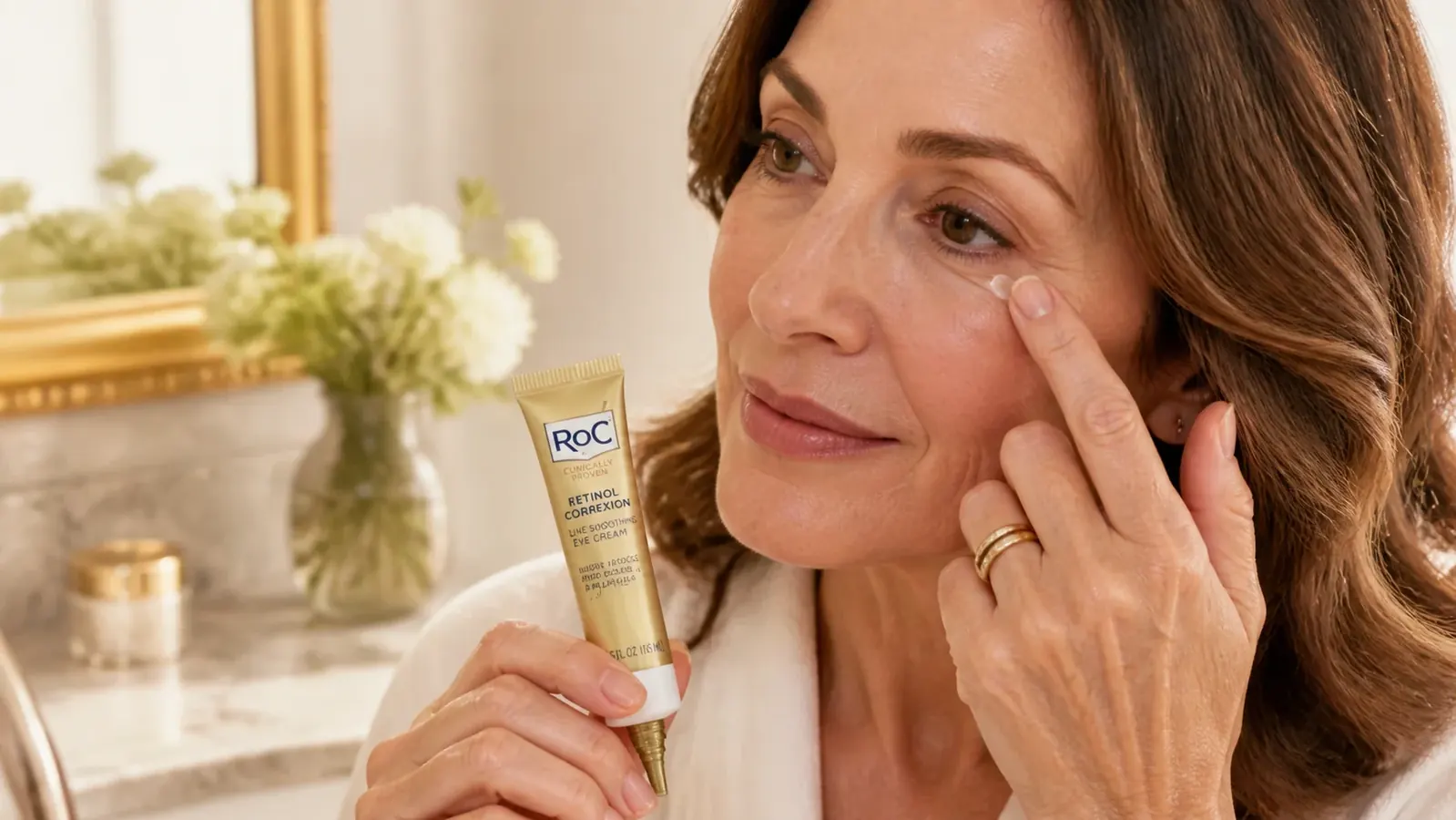
One question I get from readers is whether they can simply use their face retinol around the eye area. The answer depends on what face retinol you use and how tolerant your skin is. A 0.1% retinol serum applied directly under the eye on post-menopausal skin is a reasonable experiment for some people. For others, it is an experiment that ends with inflamed, peeling tissue and a two-week recovery. The under-eye skin is simply thinner and less able to tolerate the same concentrations that work fine on cheeks or forehead.
The RoC formula uses a lower concentration of retinol than most face serums, paired with emollients that buffer the potential for irritation. This is not a limitation. It is the correct formulation approach for the application site. If you use a 0.3% or 0.5% retinol serum on your face, you would not apply it directly under the eye without expecting some reaction. The RoC eye cream is specifically dosed for a zone where more is not better.
That said, I have spoken to women who do use their regular face retinol around the eye with no issue, applying it to the orbital bone rather than the lid itself and relying on migration. This works for some people, particularly those whose skin has retained reasonable thickness. If you have significant dermal thinning under the eyes, a dedicated eye formula is the wiser choice. The price difference between the two approaches is modest, and the risk of getting it wrong is not.
What I Liked
- Properly dosed retinol concentration for the under-eye area, tolerant even on post-menopausal skin
- Emollient texture provides both active and moisturizing benefit in one step
- Visible improvement in fine line texture and crepiness from weeks four through six onward
- Stable retinol ester formulation stays effective throughout the tube's use
- Tube format is hygienic and prevents oxidation better than jar packaging
- The 0.5 oz size lasts four to five months with correct usage, making the cost per use very reasonable
Where It Falls Short
- No meaningful effect on structural dark circles or deep tear trough shadowing
- Puffiness reduction is modest at best and hard to isolate from other lifestyle factors
- Results plateau around weeks eight to ten rather than continuing to improve
- The thick cream texture may feel heavy for those who run warm or live in humid climates
- SPF is not included, which means a dedicated morning eye-area sunscreen is non-negotiable
The under-eye area in midlife is not one problem. It is five separate problems. A retinol eye cream addresses two of them. Buy it knowing that, and you will not be disappointed.
The Sun Protection Issue Nobody Mentions in Eye Cream Reviews
Retinol increases photosensitivity. This is true whether you apply it to your cheeks or to the under-eye area. Because the eye cream is applied at night, most people assume sun protection is not their concern. It is. Retinol applied at night still affects cell turnover the following day, leaving new skin cells at the surface that are more vulnerable to UV damage than the older cells they replaced. The under-eye area, which already suffers from pigmentation and vascular issues aggravated by decades of cumulative sun exposure, is particularly worth protecting.
My morning routine includes an SPF 30 mineral sunscreen on the face, which I take up close to the orbital rim but not onto the lid itself. I also wear SPF-rated sunglasses year-round, not just in summer. This is not optional if you are using retinol anywhere on the face. It is the difference between retinol working as intended and retinol accelerating the UV damage you are trying to address. The packaging tells you to apply at night. It does not tell you that what you do in the morning matters just as much.

Who This Is For
The RoC Retinol Correxion Eye Cream is well suited for women in their fifties and sixties dealing primarily with fine line texture and crepiness in the under-eye area. If your main concern is the crepe-paper quality of the skin when you squint, or the fine horizontal lines that appear directly on the under-eye tissue, this is a reasonable, properly formulated option with thirty-plus years of market history behind it. It is also a sensible choice for someone who wants to introduce retinol near the eyes for the first time without the risk of using a face-level concentration. Women who already use a retinol serum on the rest of their face and want a complementary, correctly dosed product for the orbital area will find this fits naturally alongside their existing routine.
Who Should Skip It
If your primary concern is dark circles, skip it. Not because it is a poor product, but because dark circles in women over fifty are almost always vascular, structural, or a combination of the two. Retinol does not address blood vessel visibility, and it does not restore volume to a hollow tear trough. You would be spending ten weeks on a treatment aimed at the wrong problem. Similarly, if your concern is significant morning puffiness, the evidence that retinol eye creams address lymphatic drainage is thin. A cold roller, more sleep, and less sodium will do more for puffiness than any topical. If you have very reactive skin, even on the rest of your face, or have had contact dermatitis from skincare products before, get a dermatologist opinion before starting any retinol product near the eye.
Ten weeks of consistent use gave me cleaner texture and softer fine lines at a price that makes it easy to keep going.
The tube lasts longer than you think with proper dosing. A rice-grain amount per eye, nightly, from a 0.5 oz tube gives you four to five months of use. Check today's price and decide whether a ten-week experiment makes sense for your skin.
Amazon Check Today's Price on Amazon →Affiliate disclosure: This site earns a small commission on purchases made through Amazon links at no additional cost to you. I test products independently and am not compensated by brands to write about them.