
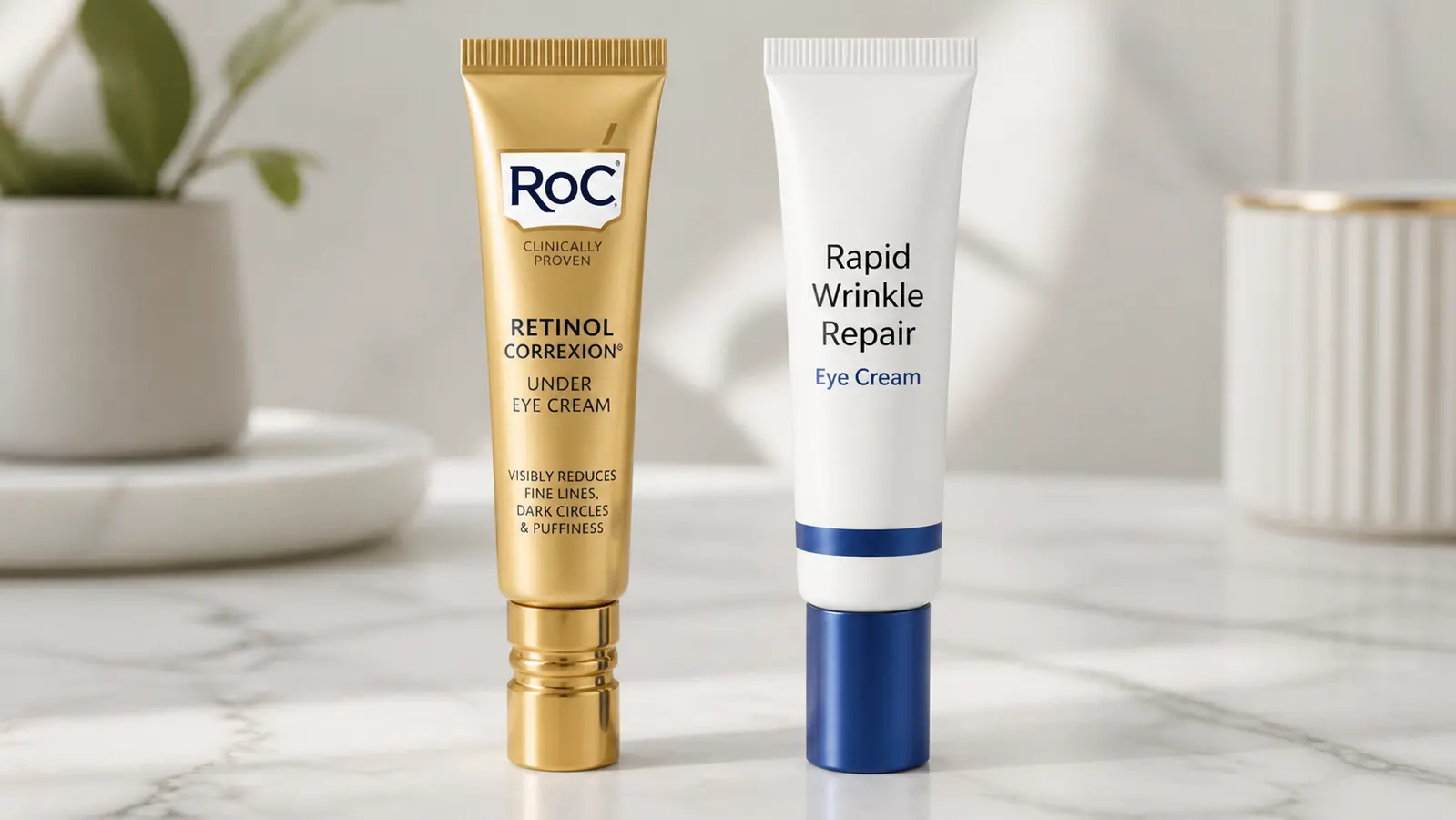
The honest short answer is this: if your under-eye skin has thinned noticeably since menopause, RoC Retinol Correxion Under Eye Cream is the more considered choice. That is not because Neutrogena Rapid Wrinkle Repair Eye Cream is a bad product. It is because the two products deliver retinol differently, sit differently on the skin, and present different irritation profiles for the orbital area, which is already the thinnest skin on your face. Once you understand those differences, the choice becomes fairly obvious.
I have used both of these creams, not in some abstract test-and-review format, but in actual rotation over the past several years as someone who has been studying skincare ingredients since the late 1990s. I know what encapsulated retinol means on paper. I also know what it feels like at 11 p.m. when you are just trying to get your routine done without wrecking the thin skin below your eyes. Here is what I found.
| RoC Retinol Eye Cream | Neutrogena Rapid Wrinkle Repair Eye Cream | |
|---|---|---|
| Retinol Form | Encapsulated retinol (slow-release, stabilized) | Retinol SA (bound to retinyl propionate + salicylic acid complex) |
| Delivery System | Airless tube (no oxygen exposure, no contamination) | Standard screw-top jar (oxidation risk after opening) |
| Texture | Rich but non-greasy cream, absorbs within 60-90 seconds | Lighter, slightly gel-like cream, absorbs quickly |
| Irritation Profile | Lower, encapsulation slows retinol release and reduces transient irritation | Moderate, retinol SA designed to work faster which can increase sensitivity on thin orbital skin |
| Fragrance / Dyes | Fragrance-free, no dyes | Lightly fragranced in some formulations, check label |
| Price Per Ounce | Half-ounce tube | Half-ounce jar |
| Longevity of Effect | Sustained over time, encapsulation supports consistent retinol activity | Can feel more immediate but efficacy may diminish as product oxidizes in jar |
| Formulation Purity | Fragrance-free, dermatologist-developed, no unnecessary actives near the orbital rim | Includes salicylic acid component which adds exfoliation but also potential irritation |
Where RoC Wins: Retinol Delivery and Skin Tolerance
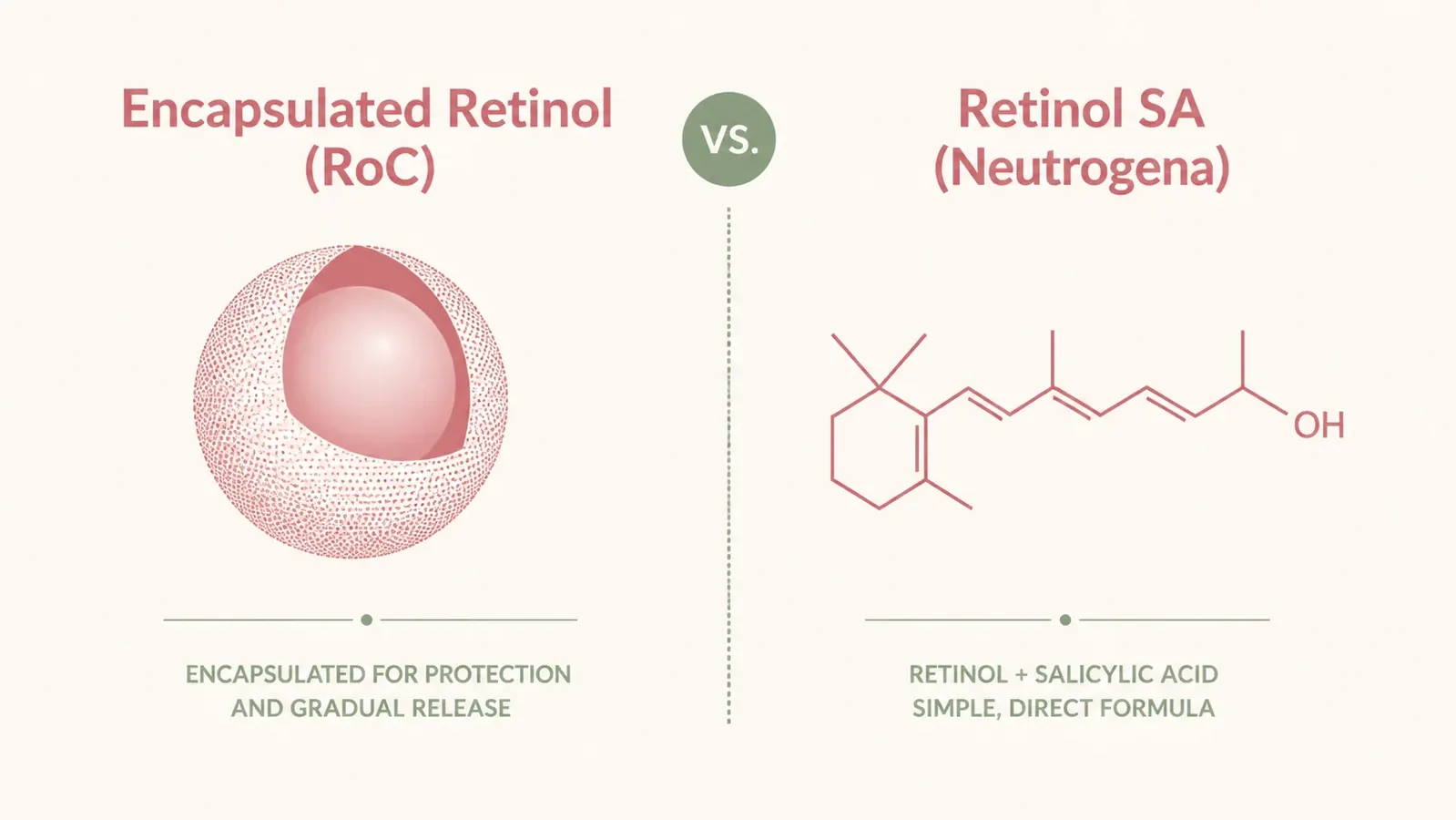
The central difference between these two products is not the retinol itself. Both contain it. The difference is in how the retinol reaches your skin. RoC uses an encapsulated retinol system, which means the retinol molecules are enclosed in a protective shell that breaks down gradually once applied. This slows the release of active retinol into the skin, which does two things. First, it reduces the transient irritation that retinol is known to cause on thin or sensitized skin. Second, it protects the retinol from degradation before it reaches the skin. The capsules effectively keep the molecule stable until it is actually needed.
For the under-eye area specifically, this matters in a way that it might not matter quite as much on your forehead or cheeks. The skin around the orbital rim is three to five times thinner than the skin on the rest of your face. After menopause, it thins further as estrogen declines and collagen production slows. That thinner skin barrier is more permeable, which means ingredients penetrate faster and more intensely. A retinol formulation designed to release slowly is genuinely kinder to that area than one designed to act quickly. With RoC, I have never experienced the flaking, tightness, or overnight redness that some retinol products provoke near the eyes, even when I was using it four or five nights a week.
Where RoC Wins: The Airless Tube
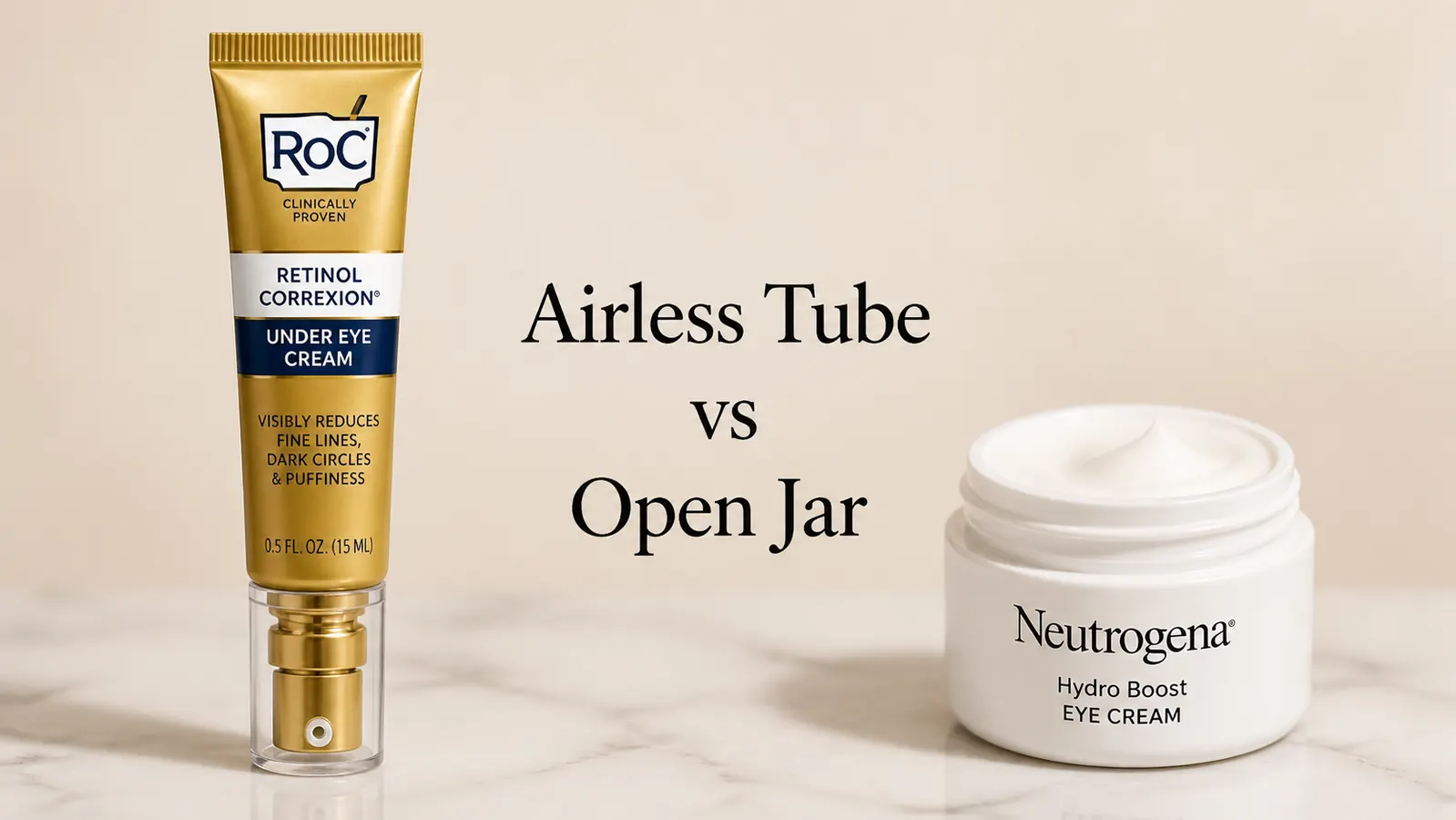
This is the packaging point that never gets the attention it deserves. RoC comes in an airless tube. Neutrogena Rapid Wrinkle Repair Eye Cream comes in a standard screw-top jar. Retinol is notoriously unstable in the presence of light and oxygen. Every time you open a jar, you expose the entire product surface to both. After four to six weeks of daily use, the retinol in an open jar has measurably degraded. You are not getting the same active product at week eight that you got on day one. An airless tube dispenses from the bottom and seals between uses, which means the formula stays protected for the entire life of the product. That is not a minor formulation detail. It is the reason a product that costs slightly more per ounce may actually deliver more consistent results over time.
There is also a hygiene consideration that matters more than most of us like to admit. When you dip your finger into a jar, you introduce whatever is on your finger into the product, even if your hands are clean. Over weeks, that adds up. An airless tube dispenses a metered dose without contact contamination. For a product you are applying near your eyes, that is a reasonable thing to care about.
Your eye cream should still be working on week eight, not oxidizing in a jar.
RoC Retinol Correxion Under Eye Cream uses an airless tube and encapsulated retinol to keep the formula stable and effective from the first use to the last. It has 33,500 reviews and a 4.3-star rating for a reason.
Amazon Check Today's Price on Amazon →Where Neutrogena Wins: Speed and Price
Neutrogena Rapid Wrinkle Repair Eye Cream has two genuine advantages. The first is speed of initial results. The accelerated retinol SA complex, which combines retinyl propionate with salicylic acid, is designed to act more quickly than standard retinol. If you are new to retinol eye cream and want to see something happen in the first two to three weeks, Neutrogena may show visible texture changes sooner. That is a real benefit, not a marketing claim. The formulation is designed to accelerate penetration and surface turnover, and it does. The tradeoff is that the very mechanism making it faster also makes it more likely to cause sensitivity on thin or already-reactive skin.
The second advantage is cost. At roughly per ounce versus RoC's per ounce, Neutrogena is cheaper. Given that both are drugstore products in a similar price range overall, this difference amounts to a few dollars per tube. But if you are on a strict budget or testing the category for the first time and do not want to commit, Neutrogena is a reasonable lower-stakes entry point. Just be aware that the jar packaging means your effective cost per dose of active retinol may be higher than the sticker price implies once you account for oxidation loss.
The jar costs less on the shelf. But retinol that has oxidized in an open container is not doing much for your skin. The tube you pay more for may actually be the better value.
Texture on the Orbital Area: A Meaningful Difference
Texture sounds like a frivolous consideration until you have dealt with a cream that migrates into your eyes overnight or sits so heavily on the orbital bone that it contributes to morning puffiness. Both of these products are designed for the eye area and neither is egregiously thick, but they feel different on the skin. RoC has what I would describe as a substantive but not occlusive cream texture. It absorbs within 60 to 90 seconds and leaves the under-eye area feeling settled rather than coated. Neutrogena's formula is lighter and more gel-like, which some women prefer, particularly those who find rich creams migrate toward the lash line.
For women whose under-eye skin has become noticeably crepey, the richer texture of RoC tends to be more supportive. Crepey skin has less natural lipid content and tends to benefit from the additional emolliency. For women whose primary concern is fine lines at the outer corner rather than deep under-eye creasing, Neutrogena's lighter texture may be a more comfortable daily-wear choice, particularly under makeup.
Formulation Purity: What Else Is in the Tube
RoC Retinol Correxion Under Eye Cream is fragrance-free and contains no dyes. The formula centers on the encapsulated retinol system alongside a basic emollient base. There are no unnecessary actives layered in near the orbital rim, which is exactly what you want from an eye cream. The eye area is not the place to stack multiple acids, brighteners, and fragrance compounds. Simplicity here is a feature.
Neutrogena Rapid Wrinkle Repair Eye Cream varies slightly by batch and market, but some versions contain fragrance. For post-menopausal skin that has become more reactive, fragrance near the eyes is a sensible thing to avoid. The salicylic acid component in the retinol SA complex also adds a low-level exfoliation effect that can be useful on thicker skin but is somewhat redundant and potentially irritating on the already-thin orbital area. It is not a disqualifying ingredient, but it is one that women with sensitive or reactive eyes should note.
Who Should Buy RoC
RoC Retinol Correxion Under Eye Cream is the right choice if you have been using retinol for at least a few months and are specifically looking to address the under-eye area with a formulation that will stay active throughout the tube's life. It suits women whose skin has become thinner or more reactive since menopause, who have experienced irritation from other retinol products, or who have crepey under-eye texture that benefits from a richer emollient base. It is also the better choice if you are using the product year-round rather than seasonally, because the stable delivery system means consistent results regardless of how long the tube has been open. If you want to read a longer account of using this product over ten weeks, the full review is here: RoC Retinol Correxion Eye Cream Review.
Who Should Buy Neutrogena
Neutrogena Rapid Wrinkle Repair Eye Cream makes sense if you are new to retinol eye creams and want to see results quickly before committing to a longer-term routine. It also suits women with slightly oilier under-eye skin who find rich creams too heavy, or those who are primarily addressing fine lines at the outer corners rather than deep crepiness under the eye. It is worth replacing the jar every two to three months rather than using it until it is empty, since the open-jar format does allow gradual oxidation. If you finish a tube relatively quickly, the oxidation concern is less significant. Use it within 60 days of opening and the formula should still be largely effective.
What I Liked
- Encapsulated retinol releases gradually, reducing irritation on thin orbital skin
- Airless tube protects formula from oxidation for the life of the product
- Fragrance-free and dye-free, no unnecessary actives near the eye
- Rich but non-occlusive texture supports crepey under-eye skin
- Consistent results from first use to last without degradation
- Dermatologist-developed formula with 33,500-plus reviews across the full product line
Where It Falls Short
- Higher price per ounce than Neutrogena
- Richer texture may feel heavy under makeup for some women
- Results build over time rather than appearing in the first week
- Small tube size (0.5 oz) requires repurchase more frequently
If you have been frustrated by eye creams that irritate or fade before the tube is empty, this is worth trying.
RoC Retinol Correxion Under Eye Cream is rated 4.3 stars across more than 33,000 reviews. The airless tube and encapsulated retinol are not marketing language. They are the two formulation decisions that make this the more consistent choice for mature, thin under-eye skin.
Amazon Check Today's Price on Amazon →