
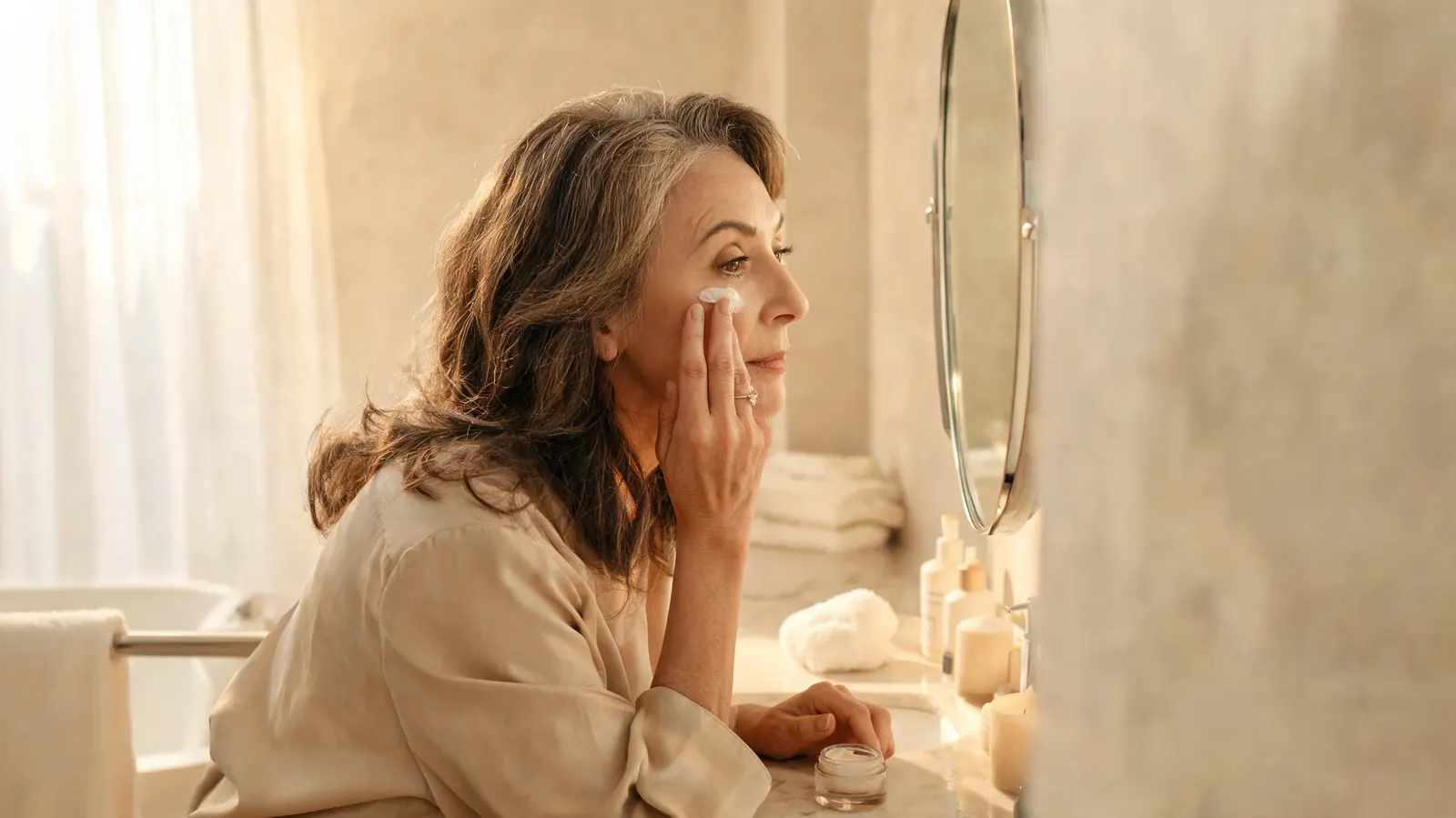
I spent most of my thirties reaching for the same remedy: cold spoon from the freezer, two cucumber slices, ten minutes lying still. It helped, marginally, on the mornings I could be bothered. What I did not know then is that under-eye puffiness and dark circles after fifty have different causes than they did at thirty-two, and the old fixes address almost none of them. The cold spoon was dealing with one variable. There are eight.
If you are waking up puffy consistently, or noticing that the darkness under your eyes has deepened over the past few years, this guide is for you. I am going to walk through each contributing factor in the order I have found most effective to address, and I will tell you honestly which steps produce visible results and which ones are just pleasant to do.
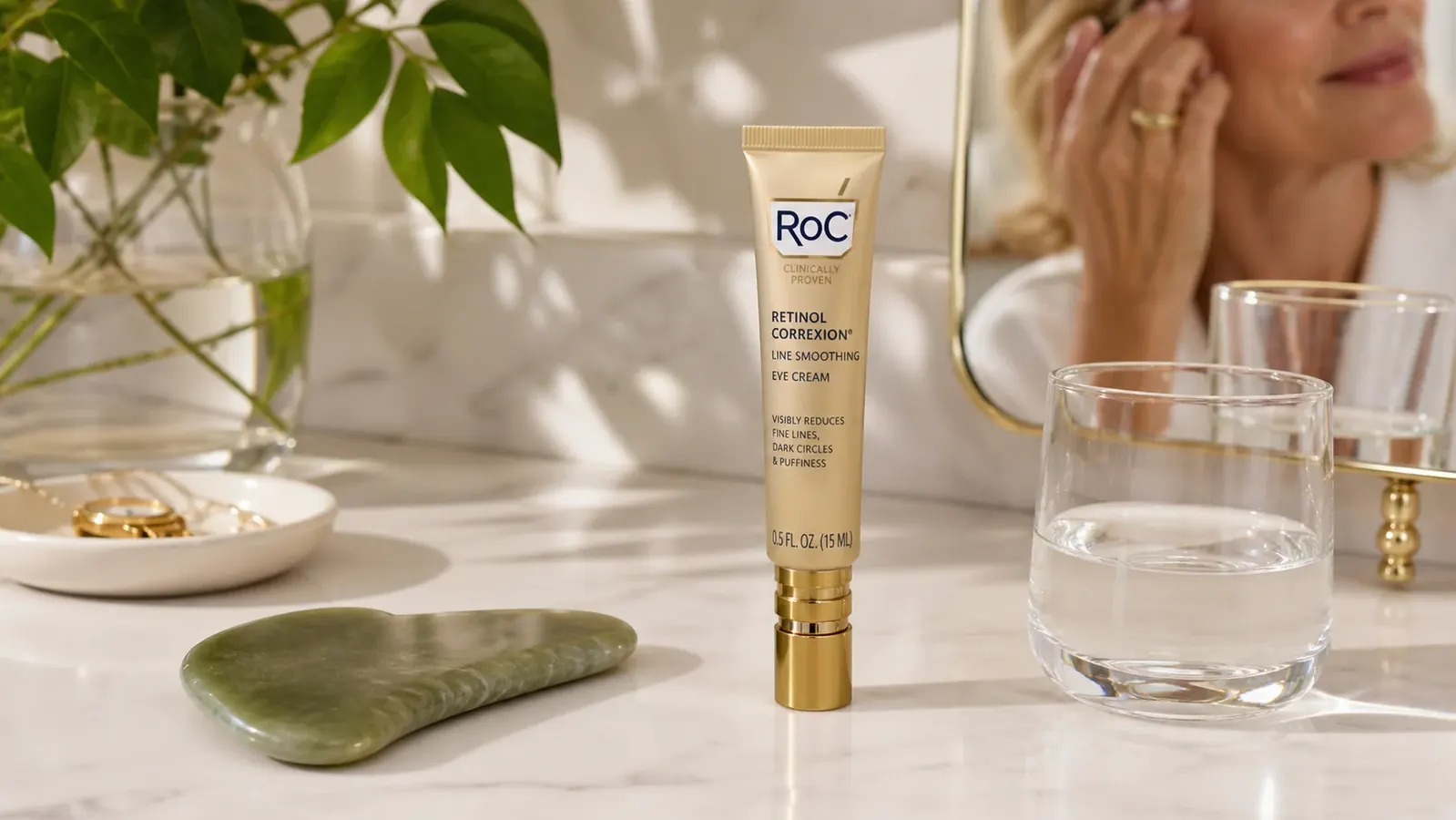
The step most under-eye routines skip: a retinol cream formulated specifically for the orbital area.
RoC Retinol Correxion Under Eye Cream (ASIN B0009RFB76) delivers retinol at a concentration the thin under-eye skin can actually tolerate. Most of us are applying face retinol and hoping it migrates. This is the version that stays where it belongs.
Amazon Check Today's Price on Amazon →Step 1: Elevate Your Head While You Sleep
Puffiness is, at its core, a fluid problem. Lymphatic fluid and venous blood pool in the loose skin below your eyes when you are horizontal. After fifty, skin laxity increases because estrogen decline reduces collagen and elastin production, and the fat pads that once sat neatly under your orbital rim begin to shift forward. You now have less structural support holding fluid in place. Adding even a slight elevation to your pillow stack creates just enough downhill gradient for drainage to happen overnight rather than accumulate.
You do not need a specially marketed wedge pillow. An extra standard pillow works. The angle does not need to be dramatic. Somewhere between fifteen and twenty degrees is enough. If you notice you are sleeping on your stomach or with your face pressed into the pillow, that position specifically worsens puffiness because it compresses the drainage pathways on one side. Back sleeping is the best position for under-eye concerns, which is easier to say than to do, but worth working toward.
Step 2: Look at Your Sodium Intake, Especially After 6pm
Sodium causes your body to retain water. If you eat a salty dinner or snack late in the evening, that retained fluid shows up in the most visible, least elastic tissue on your face the following morning. It is especially noticeable after fifty because thinner under-eye skin has less ability to mask even modest swelling. The fix is not to eliminate sodium, which is neither realistic nor necessary. The more practical move is to pay attention to what you eat in the three to four hours before bed. Restaurant meals, soups, processed snacks, and soy sauce are the main sources that surprise people.
Hydration also matters here, but in the opposite direction from what most people assume. Drinking enough water throughout the day actually reduces fluid retention because your kidneys release stored water when they sense adequate intake. It is when you are under-hydrated that your body holds onto water as a protective measure. Eight glasses is a rough guideline. What you notice in the morning is often a reflection of how well-hydrated you were the day before.
Step 3: Rule Out Allergens
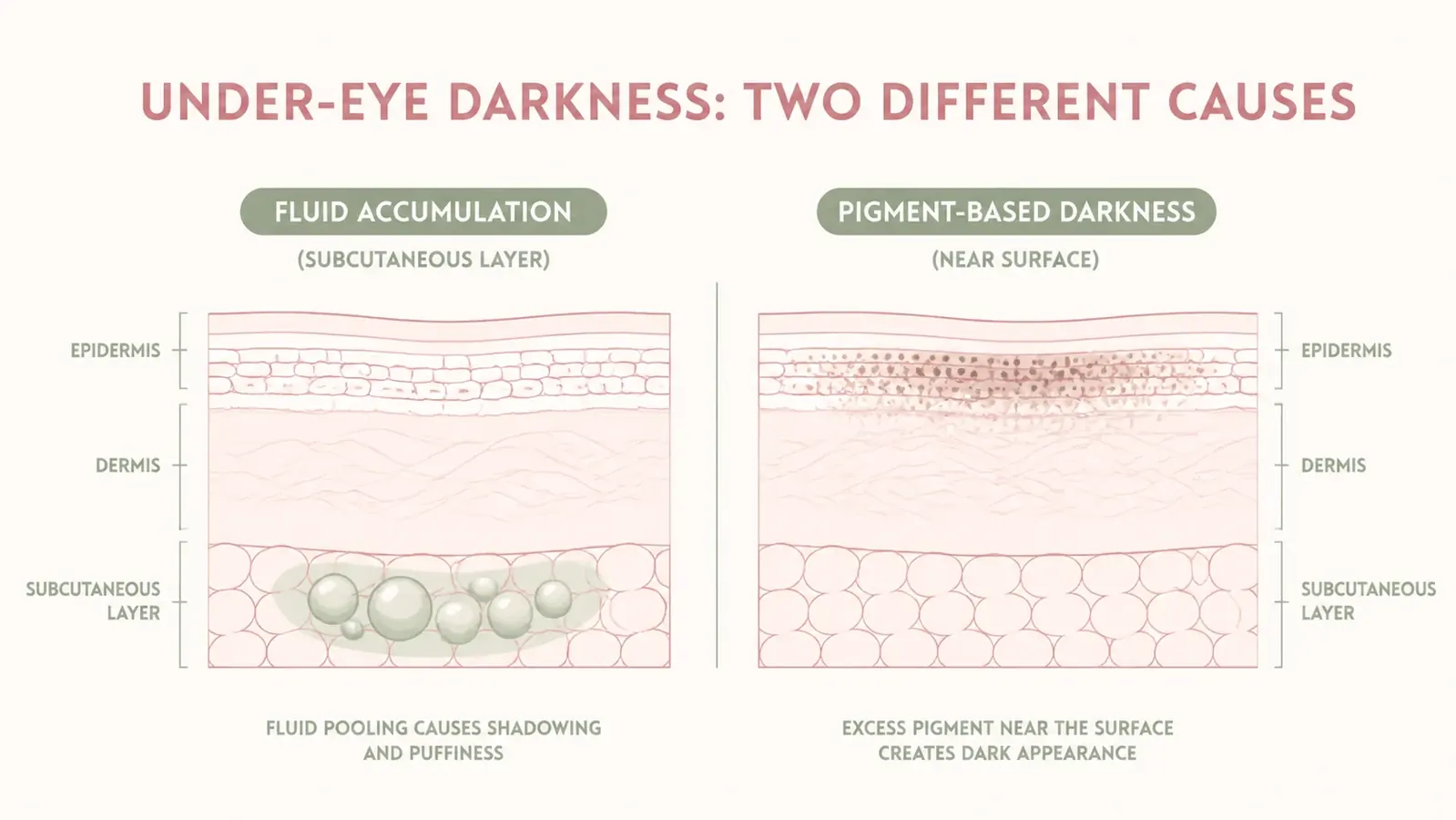
Allergic inflammation is one of the most underdiagnosed contributors to chronic dark circles, particularly in women who do not think of themselves as allergy sufferers. Allergic shiners, which are the bluish-purple discolorations that form under the eyes in people with nasal congestion or allergic inflammation, happen because congestion impedes venous drainage from the lower orbital area. Blood backs up slightly in the small vessels beneath the thin under-eye skin and shows through. In darker skin tones this may appear as deepened pigmentation rather than a blue-purple cast, and it is frequently misread as a cosmetic problem rather than an inflammation problem.
Common culprits are dust mites in bedding, pet dander, and seasonal pollen, but food sensitivities, particularly to dairy and gluten, can also contribute. If your under-eye darkness is significantly worse in certain seasons, or noticeably better when you have been away from home for a few days, that is useful information. An allergy evaluation is worth pursuing before investing heavily in topical treatments. No eye cream addresses the underlying circulation issue if the allergen is still present.
Step 4: Add a Daily Lymphatic Drainage Massage or Gua Sha
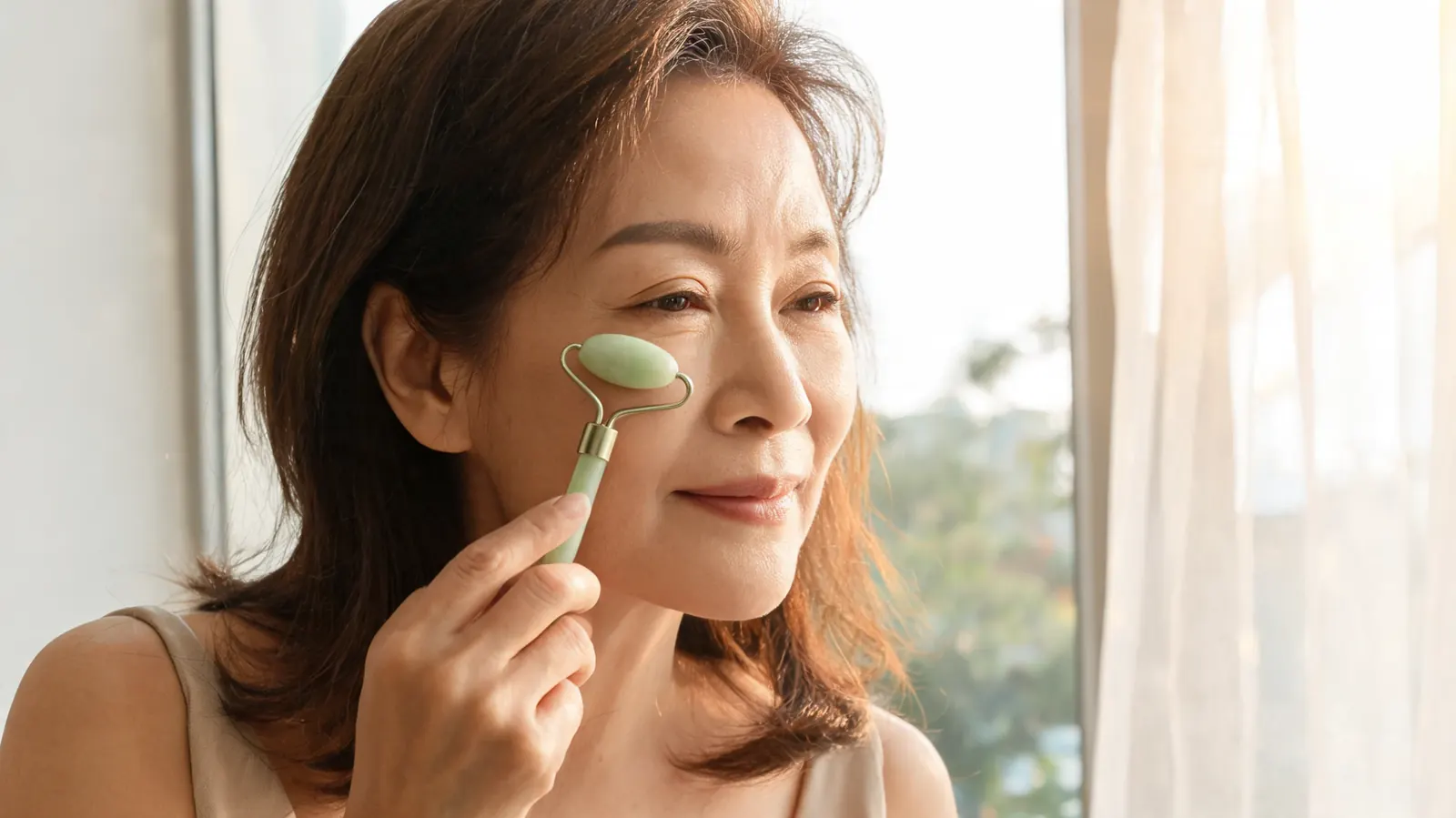
Lymphatic massage and gua sha are genuinely useful for puffiness, not because they are fashionable, but because they directly address the fluid accumulation that nighttime elevation alone does not fully clear. The lymphatic system in the face has no pump of its own. It relies on movement and gentle pressure to move fluid toward the lymph nodes at your collarbone and ears. After fifty, when skin is less taut and movement patterns during the day have settled into habits, this drainage slows.
The technique matters. For the under-eye area specifically, you want extremely light pressure, no heavier than the weight of a one-pound coin, using your ring finger or the curved end of a gua sha tool. Work from the inner corner of the eye outward and then sweep down toward the ear and then down the neck toward the collarbone. This follows the actual lymphatic pathway. Pressing hard in any direction does nothing useful and can cause broken capillaries. Two minutes in the morning, consistently, is more effective than a ten-minute session once a week.
Lymphatic massage works for puffiness because it follows a real anatomical pathway. Two minutes of light, consistent pressure every morning is more effective than occasional deep work.
Step 5: Use a Cold Compress Strategically
This is where the cold spoon finally earns its place. Cold constricts blood vessels and temporarily reduces inflammation, which makes it genuinely useful as a morning intervention, but its effects last roughly twenty minutes. Think of it as a starting point, not a solution. Used after your lymphatic massage while you drink your first cup of tea, the cold compress helps set the stage for products you apply afterward. Cold jade rollers and reusable gel eye masks kept in the refrigerator work well. The important word is refrigerator, not freezer. Frozen items applied directly to the orbital area can cause minor tissue damage and broken capillaries.
Chilled green tea bags are worth mentioning specifically. Caffeine constricts blood vessels, and the tannins in green tea have mild anti-inflammatory effects. Steep two bags, chill them in the refrigerator overnight, and use them as you would a cold compress. This is a measurably better cold compress than plain water or cucumber, which provide cold and hydration but no active circulation effects.
Step 6: Moisturize the Under-Eye Before Anything Else
After fifty, the under-eye area loses moisture faster than the rest of the face because it has fewer sebaceous glands and the skin is roughly 40 percent thinner than facial skin. Dehydrated skin amplifies the appearance of dark circles because the tissue becomes translucent and the underlying vasculature shows through more clearly. Before you reach for any treatment product, the area needs to be adequately hydrated.
What you are looking for here is a barrier-repairing humectant, something with hyaluronic acid, ceramides, or glycerin, applied to damp skin so the water has something to hold onto. A small amount of your regular face moisturizer works if it contains these ingredients. The under-eye itself is not complicated to moisturize. What complicates it is applying treatment actives on top of a compromised barrier, which causes irritation people then blame on the wrong product.
Step 7: Understand When Retinol Helps and When It Irritates
Retinol increases cellular turnover, which over time thickens the dermis and reduces the thin, translucent quality that makes under-eye skin show darkness through the surface. It also stimulates collagen production, which improves structural support for the fat pads that shift forward with age. This is a legitimate benefit, and the research behind retinol in the orbital area is reasonably solid for mature skin.
The caveat is sensitivity. The under-eye is the most reactive skin on the face, and the retinol concentration that causes no issues on your cheek can produce redness, peeling, and stinging around the eye. This is why the product you use matters. Applying your face retinol to the under-eye area is a common error that predictably causes irritation. You want a formulation where the concentration has been calibrated for the orbital area specifically. RoC Retinol Correxion Under Eye Cream does exactly this. It contains retinol in a concentration low enough that consistent nightly use is tolerable on most mature skin, combined with a moisturizing base that cushions the active. I have been using it nightly for ten weeks and have not experienced the peeling or redness that stopped me from using my face serum near my eyes. For a more detailed look at the product itself, my full review covers ten weeks of results.
If you have never used retinol near your eyes before, start by applying it every third night for the first two weeks. If your skin accepts it without irritation, move to every other night, then nightly. Do not apply it directly on the lash line or upper eyelid.
Step 8: Apply Sunscreen to the Orbital Area Every Morning
UV exposure directly worsens both dark circles and fine lines in the under-eye area, and most women apply their facial sunscreen up to but not under the eyes, either because it stings or because they are not in the habit of extending it there. This is a significant omission. Post-menopausal skin has less natural UV protection because melanocyte activity changes after estrogen decline, and hyperpigmentation triggered by cumulative UV exposure is one of the main reasons dark circles deepen in the fifties.
The practical issue is finding a sunscreen that does not migrate into the eyes and cause stinging. Mineral sunscreens, specifically those with zinc oxide, tend to be better tolerated around the orbital area than chemical UV filters. Apply it gently with your ring finger, stopping about a centimeter from the lash line, and allow it to set before applying eye makeup. If you are already using a tinted mineral SPF on your face and extending it under your eyes, that counts. Sunglasses with UV-protective lenses add a useful second layer of protection and reduce squinting, which contributes to crow's feet and orbital compression that can worsen venous pooling.
Step 9: Bring the Routine Together Into a Daily Habit
The steps above are most effective when they run in sequence rather than randomly. In the morning: cold compress or chilled tea bags for three to five minutes, followed by two minutes of gentle lymphatic massage sweeping outward and downward. Then apply your hydrating moisturizer to the under-eye on damp skin, let it absorb, and finish with mineral sunscreen. In the evening: cleanse, apply retinol eye cream to the under-eye on dry skin, and follow with a moisturizer over the rest of your face.
The lifestyle steps, elevation while sleeping, sodium timing, hydration, and allergen management, are what determine whether you wake up with a workable starting point or one that requires a lot of correction. The topical steps address what remains after the structural causes are managed. Trying to use topical products alone to solve a problem that is seventy percent lifestyle is why most eye cream experiences end in disappointment. This is not a failure of the products. It is a sequencing problem.
For a complete picture of what to look for in a dedicated eye cream before adding a retinol product to your orbital routine, the article on signs you need an eye cream after fifty is worth reading alongside this guide.
Once the lifestyle steps are in place, this is a low-stakes, well-researched addition to the evening routine.
RoC Retinol Correxion Under Eye Cream (4.3 stars, 33,505 reviews) is one of the few over-the-counter options with a retinol concentration calibrated for the orbital area. It fits into Step 7 of the routine above, applied nightly after moisturizing.
Amazon Check Today's Price on Amazon →