
If you read the reviews on Amazon for the CeraVe Resurfacing Retinol Serum, you will notice something. They skew young and they skew toward acne. The top comments are from people in their twenties and thirties who used it to fade post-breakout marks. The photography shows glowing, taut skin. The concerns are pores and dark spots on faces that have not yet been through the hormonal upheaval of menopause. That is fine. It is honest product feedback. But it is not feedback from someone whose skin has been through what yours has. The thinning. The dryness that arrived without warning. The way that products that worked at forty suddenly feel like they are doing nothing, or doing too much. Nobody writes that review, so I will.
I am 56. I spent two decades editing beauty pages at a national magazine, which means I have read more ingredient lists and dermatologist interviews than most people encounter in a lifetime. I am not easily impressed and I am not easily alarmed. What I am is curious about the gap between what a product promises and what it actually delivers on skin that has passed through menopause, thinned, dried out, and developed a new relationship with sensitivity. That gap is what this piece is about.
The Quick Verdict
Genuinely underrated for mature skin, but only if you understand what to expect during the first four weeks, which the product page and most reviews do not adequately prepare you for.
Amazon Check Today's Price →You have probably tried a retinol before and given up. The formula was likely the problem, not the ingredient.
CeraVe pairs encapsulated retinol with three ceramides and niacinamide, which is an unusual combination for a drugstore serum. It resurfaces without stripping, which matters considerably when your skin is producing less natural oil than it did ten years ago. Over 55,000 reviews. Under $20. Worth revisiting if previous retinol attempts left you with peeling and no patience.
Amazon Check Today's Price on Amazon →What the Marketing Copy Leaves Out
The product is marketed primarily as a post-acne serum. The official name includes the phrase 'for post acne marks.' The packaging highlights pore minimizing and skin resurfacing. These are real benefits, and they apply to some extent to mature skin concerns as well. But nobody on the CeraVe marketing team is writing copy for a 57-year-old whose skin barrier has been compromised by estrogen decline, who wakes up with tighter, flakier skin in winter, and whose biggest concern is not acne scarring but a general loss of radiance and a surface texture that feels perpetually dull. That woman is using this product by word of mouth and careful research, not because the label speaks to her.
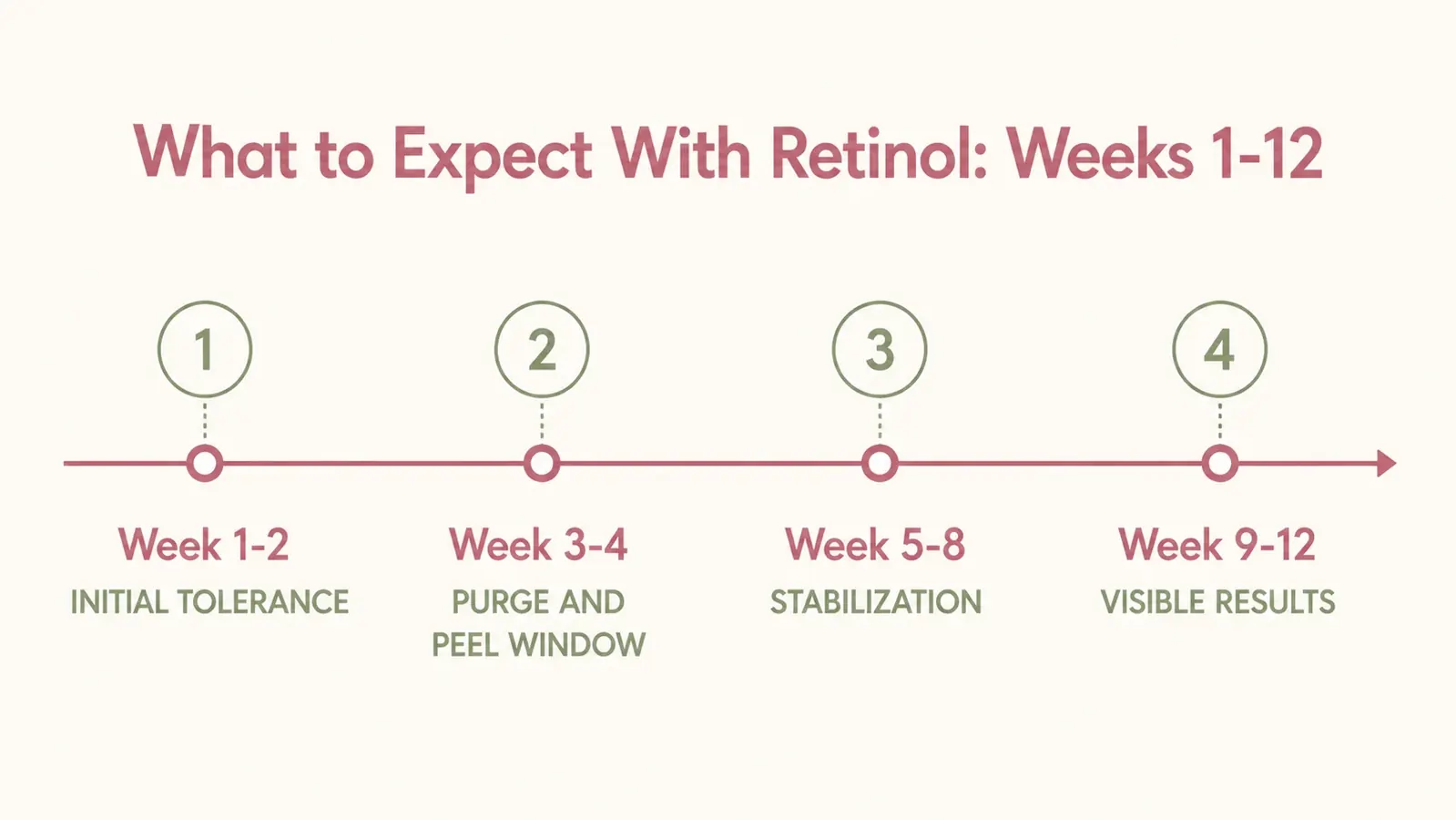
The other thing the marketing leaves out is the adjustment window. Every dermatologist knows that retinol, even in its gentler encapsulated form, causes a period of skin cell turnover acceleration that produces visible surface disruption. Redness. Flaking. Sometimes a temporary increase in surface congestion that looks, briefly, like your skin is getting worse. This is normal. It resolves. But if you are 55 and you have never used retinol before, and nobody tells you this is coming, you stop using it at week two and conclude the product damaged your skin. This happens constantly. The reviews that mention it are buried below dozens of enthusiastic five-star responses from people whose skin sailed through the adjustment phase without incident.
The Purging Window: What Actually Happens in Weeks Two Through Four
Retinol accelerates the rate at which skin cells turn over. Dead surface cells shed faster. New cells arrive at the surface more quickly. For most people, this ultimately improves texture, tone, and pore appearance. But during the transition, the accelerated cellular activity can push congestion and debris to the surface faster than your skin would naturally clear it. On younger skin with more sebaceous activity, this sometimes manifests as a breakout. On mature, drier skin over fifty, it more commonly looks like roughness, mild peeling, and an odd mottled texture on the cheeks and forehead.
I went through a period between weeks two and three where the skin on my forehead felt rough to the touch in a way it had not before I started the serum. Not raw, not sore, but textured in a way that makeup did not sit well over. I kept using the serum. I increased my moisturizer application. By week five the rough patch had resolved, and the texture underneath it was visibly smoother than it had been before I started. But I was prepared for it. If you are not, this is the point where most people put the serum in a drawer and do not retrieve it.
The peeling timeline on post-menopausal skin tends to be slightly more pronounced than on younger skin, and it takes slightly longer to resolve, because cellular turnover is already slower to begin with before the retinol intervenes. Give it eight weeks, not four, before you judge it.
Sun Sensitivity Is Not Optional. It Is Structural.
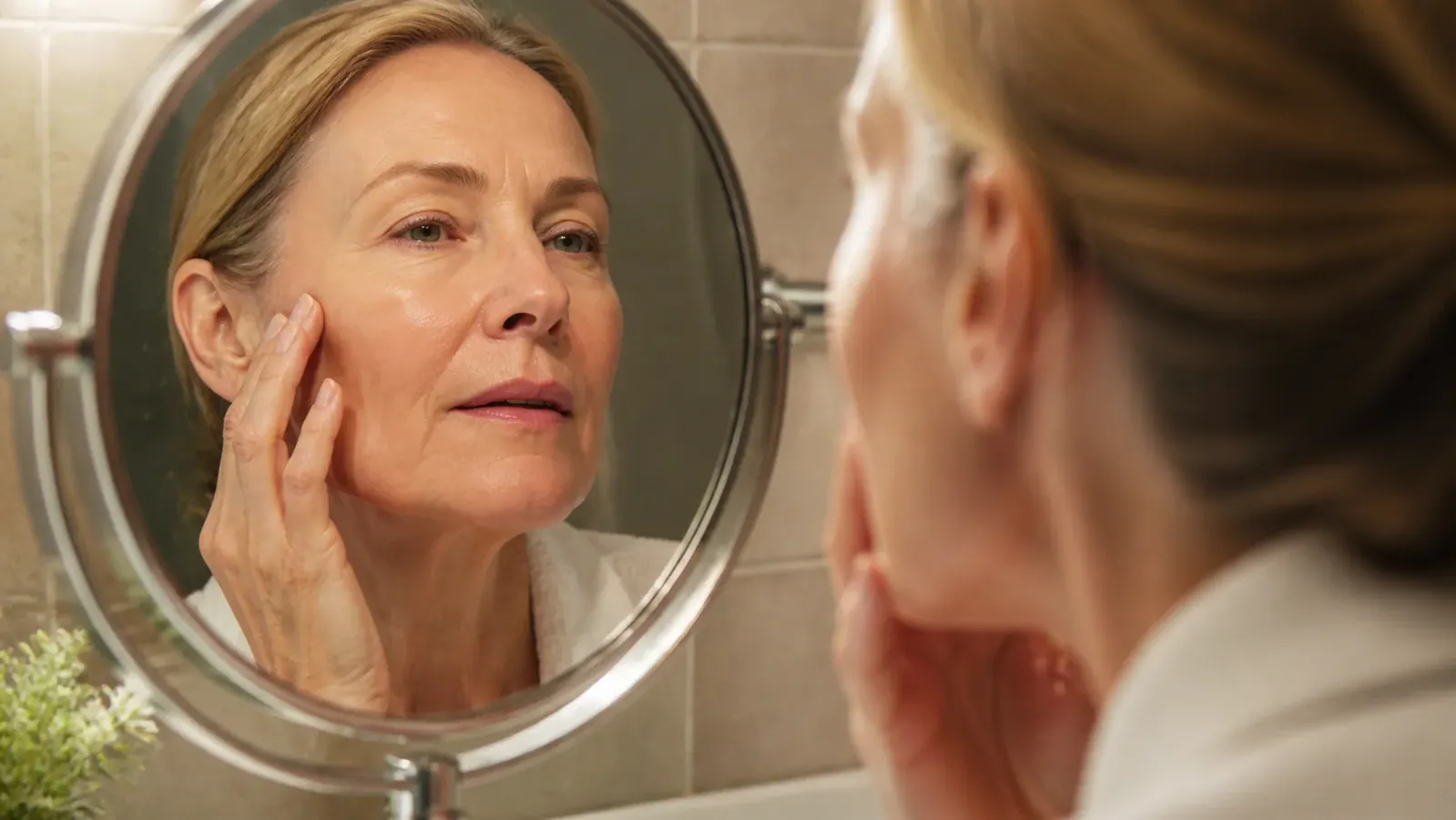
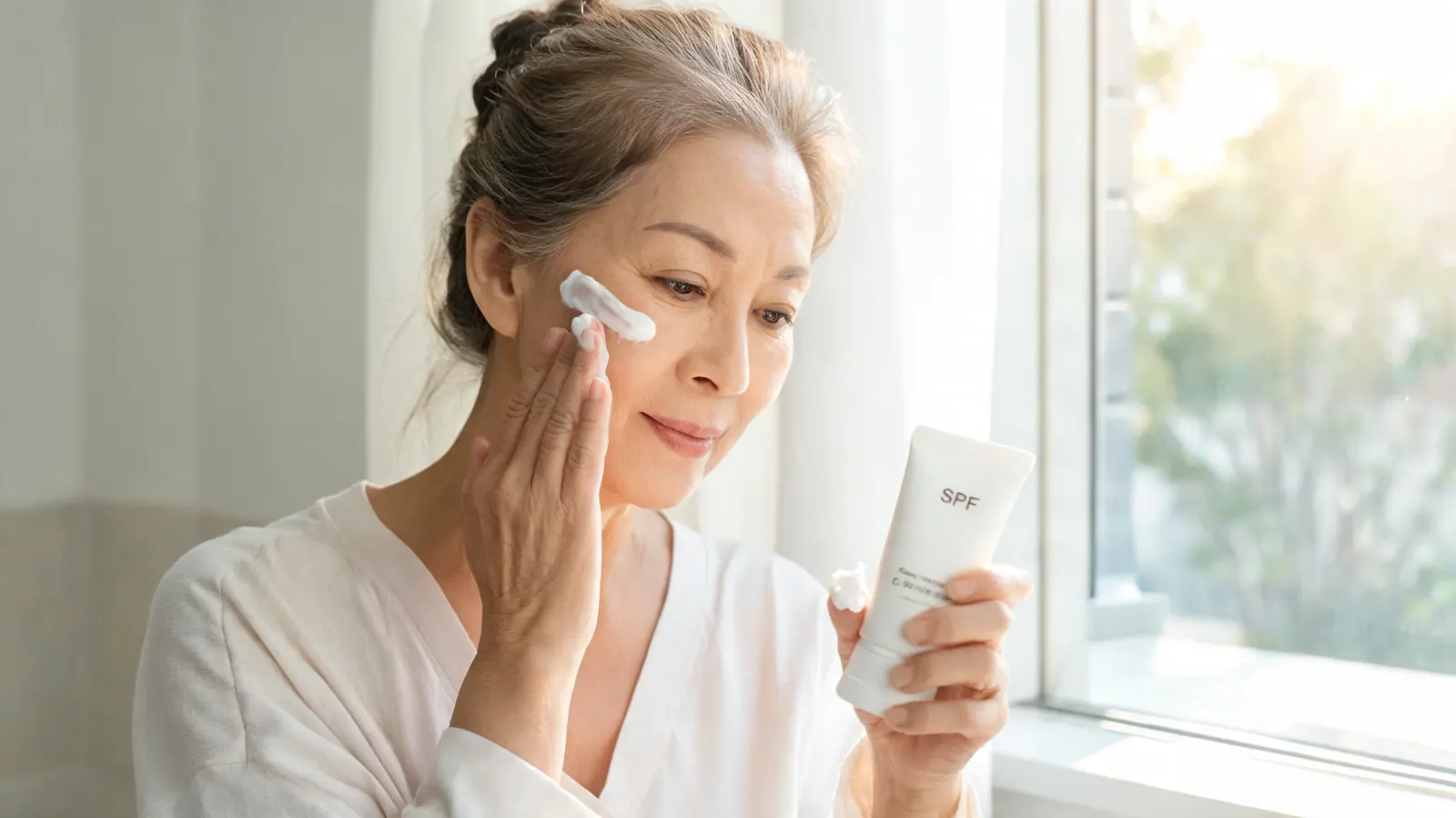
Retinol makes skin more photosensitive. This is not a precautionary statement on a label. It is a real physiological effect. When retinol is actively accelerating cell turnover, the newer, thinner skin cells at the surface have less natural UV protection. Spending time outdoors without proper broad-spectrum SPF while using retinol is one of the fastest ways to worsen the hyperpigmentation you are probably using the retinol to address in the first place.
For women over fifty, this matters even more than it does for younger users, for two reasons. First, the brown spots that commonly develop in your fifties are largely the cumulative result of decades of UV exposure, and any sun damage added now compounds on top of decades of existing damage. Second, post-menopausal skin has lost some of its natural repair capacity. A 32-year-old who forgets sunscreen for a long weekend will likely recover. The skin of a 58-year-old may not rebound in the same way. SPF 30 minimum, every morning, regardless of whether you plan to go outdoors. That is not a recommendation. It is a condition of using retinol responsibly.
The women who give up on this serum at week three are usually the ones nobody warned about the purging window. Give it eight weeks on mature skin, not four, before you draw any conclusions.
Why This Serum Is Underrated Relative to Prescription Tretinoin
Prescription tretinoin is the gold standard for retinoid therapy. Dermatologists have prescribed it for over fifty years. The research on its effects on collagen synthesis, fine lines, and pigmentation is extensive and compelling. If you can get a prescription, tolerate the adjustment period, and maintain it consistently, tretinoin produces faster and more dramatic results than any over-the-counter retinol product, including this one.
Here is what the tretinoin conversation usually omits. The adjustment period on prescription-strength tretinoin is considerably more disruptive than on a buffered, encapsulated drugstore retinol. Dermatologists who prescribe it routinely tell patients to expect six to twelve weeks of significant peeling, redness, and sensitivity. Many patients do not complete that adjustment. They stop, they conclude their skin cannot handle retinoids, and they abandon the category entirely. For some of those women, a gentler OTC formulation like this one would have delivered meaningful results without the barrier destruction that ended their tretinoin experiment.
The other consideration is access and cost. Tretinoin requires a prescription in most countries. Online prescription services have made it more accessible in recent years, but it still involves a consultation, a waiting period, and an ongoing cost that is higher than nineteen dollars. For a woman who simply wants visible improvement in skin texture and does not need dermatologist-level intervention, the CeraVe serum is a legitimate alternative. Not as fast, not as dramatic, but real and sustainable for skin that has already had enough disruption.
The Specific Things This Serum Does Not Do
It does not address jowls. It does not address the soft tissue volume loss that rearranges the lower face in your fifties. It does not significantly improve deep creasing around the mouth that has been established for more than a decade. It does not firm skin in the way that cosmetic procedures, radiofrequency treatments, or injectable collagen stimulators do. It will not restore the bone structure or fat pads that shift with age. None of these limitations are unique to CeraVe. They are the honest limitations of every topical retinol product at any price point.
What it does is more modest and more realistic: it improves surface texture, fades mild hyperpigmentation over several months of consistent use, mildly reduces pore visibility, and contributes to a general improvement in skin quality that photographs detect before you consciously notice it yourself. At its price point, that is a fair exchange. The problem is when the review ecosystem suggests more dramatic transformation than that, and women buy expecting something that no retinol serum can deliver.
If you want to understand how this product compares specifically to the RoC Correxion Retinol Serum, another widely recommended option, I have written that comparison in some detail: see how CeraVe compares to RoC Correxion for mature skin. The short version is that they suit different skin types and the differences come down to texture and irritation risk more than efficacy.
What I Liked
- Encapsulated retinol format is genuinely gentler on the thinned, drier skin that follows menopause, compared to unencapsulated alternatives at similar or higher concentrations
- The ceramide content in the serum itself provides barrier support during the adjustment window, reducing the severity and duration of the peeling phase
- Fragrance-free, alcohol-free formulation eliminates two common irritation triggers for sensitized mature skin
- Niacinamide contributes real brightening and barrier-supporting work alongside the retinol, not just label decoration
- Consistent availability and an accessible price point make long-term sustained use realistic, which is the only way retinol actually works
Where It Falls Short
- The product is marketed for acne and post-acne scarring, not mature skin, which means the on-label guidance and the review ecosystem are not written for the buyer over fifty
- The adjustment period of two to four weeks produces visible surface disruption that the packaging does not adequately warn about
- Sun sensitivity during active retinol use is real and requires daily SPF commitment that many buyers do not realize they are signing up for
- Meaningful improvement in hyperpigmentation takes three to four months of nightly use, not the four to six weeks that a casual reading of positive reviews might suggest
- The pump mechanism tends to dispense slightly more than a rice-grain amount, leading to product waste and potential over-application during the first few weeks
Who Should Not Use This Serum
If your skin barrier is currently compromised, stop. Overuse of exfoliating acids, recent chemical peels, active rosacea flares, eczema, perioral dermatitis, or any condition that has left your skin reactive and sensitized: these are reasons to let your barrier stabilize before adding retinol. Retinol is an active ingredient. It requires a functioning barrier to work as intended. Applied to already-disrupted skin, it does not accelerate healing. It compounds irritation.
Women who are currently using prescription retinoids should not add this. The goal with retinol is adequate delivery. More is not faster. Using both a prescription tretinoin and an OTC retinol simultaneously does not double your results. It doubles your irritation risk. If you are on prescription retinoids and curious whether this serum offers anything they do not, the answer is: not meaningfully. Stay with the prescription.
Women who are extremely reactive to almost every skincare product, including gentle cleansers and plain moisturizers, should approach retinol generally with caution and should consult a dermatologist before attempting any form of it. The CeraVe formulation is gentler than most. It is not gentle enough for every type of sensitized skin.
The Case For It, Honestly Stated
I want to be precise about what earns my cautious endorsement here. Retinol has more clinical research behind it than almost any other skincare ingredient category. The evidence for its effects on collagen synthesis, cellular turnover, and hyperpigmentation spans decades and multiple study types. The question for mature skin has never been whether retinol works. It is whether the available formulations are tolerable enough to use consistently, because consistency is the entire mechanism by which it produces results.
Most women over fifty who have tried retinol and abandoned it did so during a poorly managed adjustment window. Either they used a concentration too high for their current skin state, or they layered it with other actives that compounded the irritation, or they were not warned about the purging phase and interpreted it as damage. The CeraVe formulation is specifically designed to reduce the likelihood of that abandonment. Encapsulated retinol means slower release. Ceramides in the formula mean active barrier support during the adjustment. The fragrance-free, low-irritant base means fewer compounding variables.
None of that makes it perfect. It makes it one of the more thoughtfully formulated options for someone in our position. If you have never successfully maintained a retinol routine, this is probably the place to start. If you want the detailed week-by-week protocol I used, including how I handled the adjustment phase, you can read my full long-term experience with this serum over six weeks.
Who This Is For
You are a good candidate for this serum if you are post-menopausal, have dry-to-normal skin, have not been successful with higher-concentration retinol products in the past, and are prepared to give the adjustment period eight weeks of consistent use with daily SPF. You are also a good candidate if you are retinol-naive, meaning you have never tried it at all, and want to begin in the most tolerant way available at a drugstore price. And you are a good candidate if you have been curious about prescription tretinoin but are not ready for that level of disruption and commitment.
Who Should Skip It
Skip it if your skin is currently reactive or barrier-compromised. Skip it if you are not willing to wear sunscreen every day without exception. Skip it if your primary concern is volume, sagging, or structural facial changes, because no retinol serum will address those. And skip it if you are not prepared to commit to at least three months of nightly use, because the results you are looking for do not arrive in the first few weeks, regardless of what the enthusiastic short-term reviews suggest.
Three months of consistent use, daily SPF, and realistic expectations. That is the whole protocol.
The CeraVe Resurfacing Retinol Serum is not complicated. It is a well-formulated drugstore retinol that works better on mature skin than most alternatives at twice the price, if you use it correctly and give it time. The adjustment window is real. The sun sensitivity is real. The results, when you get there, are also real. Check today's price on Amazon, where it ships quickly and typically costs under twenty dollars.
Amazon Check Today's Price on Amazon →