

I bought my first bag of collagen peptides three years ago, put it in the cupboard next to the protein powder I had also never figured out how to use, and more or less forgot about it for six weeks. The problem was not the product. The problem was that I had no sensible routine for it. I did not know when to take it, what to mix it with, whether the coffee would destroy it, or when I was supposed to start noticing anything. So I am writing this guide as the person I wish had explained it to me: not the wellness influencer who makes it look effortless, but someone who had to figure it out through trial and error on a very ordinary Tuesday morning.
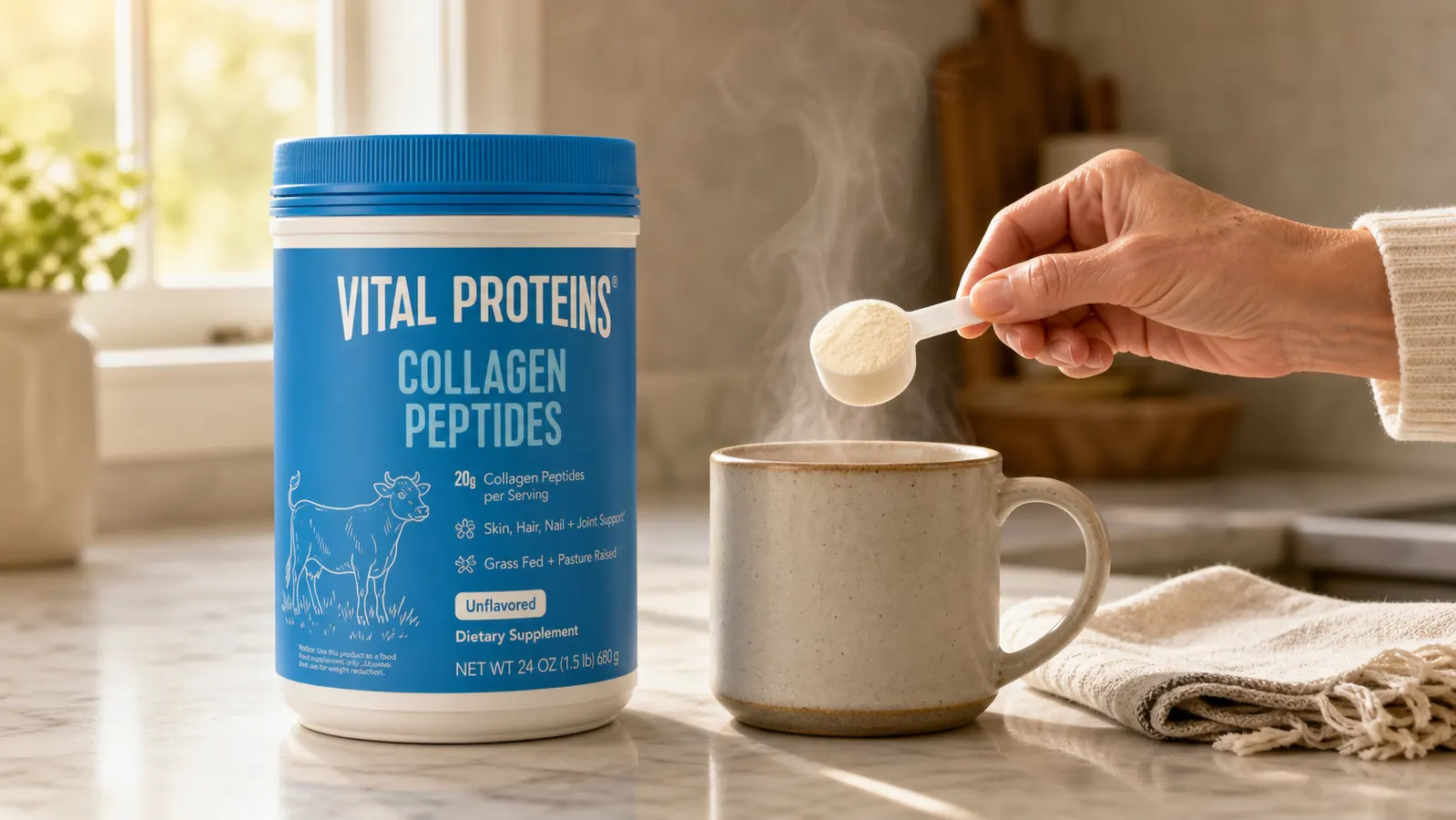
If you have collagen powder sitting in your kitchen and you are not taking it consistently, this is your guide. We are going to cover dose, timing, what to mix it with, how to make vitamin C pairing practical rather than theoretical, and what to actually expect as the weeks go by. The product I use and recommend as a starting point is Vital Proteins Collagen Peptides, unflavored, which dissolves properly and does not introduce any flavor that competes with whatever you are already drinking.
Still looking for a collagen powder that dissolves cleanly and tastes like nothing?
Vital Proteins Collagen Peptides has over 213,000 reviews on Amazon for a reason. It mixes into hot or cold liquids without clumping, and the unflavored version does not alter the taste of your morning coffee. If you are going to build a habit around this, start with something that does not fight you.
Amazon Check Today's Price on Amazon →Step 1: Decide on Your Daily Dose
The research on collagen supplementation generally uses doses between 5 and 15 grams per day. The Vital Proteins serving size is 20 grams (two scoops), which is at the higher end and consistent with trials that have looked at skin hydration and joint comfort. I use one scoop, roughly 10 grams, in the morning and find that it is easier to sustain that than a full double scoop every day. If you are new to collagen powder, starting with one scoop for the first two weeks is a reasonable way to make sure your digestion is comfortable with it before committing to more.
One thing I want to name directly: there is no magic dose. Studies use a range, and the effect is cumulative and gradual. The most important number is not how many grams you take on any given day. It is how many days in a row you actually take it. Consistency matters more than precision here. Pick a dose you can execute every single day without negotiating with yourself, and stick with it.
Under-dosing is a real mistake. Some women sprinkle half a teaspoon into a smoothie, notice nothing after a month, and conclude the supplement does not work. The amounts used in published trials are meaningful: typically 10 to 15 grams daily. A half-teaspoon of powder is closer to 2 grams. That is not enough to test whether collagen peptides do anything for you.
Step 2: Choose Your Vehicle and Mix It Correctly
Vital Proteins Collagen Peptides are hydrolyzed, which means the protein chains have been broken down into shorter peptides that dissolve in liquid without clumping. The question most people have is whether hot drinks degrade the collagen. The answer is no, not at normal beverage temperatures. Coffee, tea, and warm water all work fine. The powder will not survive industrial sterilization at extreme temperatures, but your coffee is not that hot.
My preferred method is to add the powder to my coffee while it is still warm, stir for about 20 seconds, and drink it normally. The unflavored version does not affect the taste in any way I can detect. If you add it to very cold water or a refrigerator-cold smoothie, stir longer or use a small blender bottle, because cold liquids take more work to fully dissolve the powder. A few seconds in a frother also works well for iced drinks.
Where things go wrong is texture. If you dump powder into a glass of cold water and stir with a spoon for three seconds, you will get gritty patches and decide the product is unpleasant. It is not unpleasant when dissolved properly. Warm liquids and adequate stirring solve the problem entirely.
Step 3: Time It So It Becomes a Reflex, Not a Decision
Collagen peptides do not need to be taken at a specific time of day for absorption reasons. The research does not show a meaningful morning-vs-evening difference. What matters biologically is that you take it consistently and that you pair it with vitamin C, which I will get to in the next step. What matters practically is that you attach it to something you already do without thinking.
Morning coffee is the obvious anchor for most women I know. You already make it. You are already standing in the kitchen. Adding a scoop of powder takes four additional seconds. The habit is essentially free once it is linked to the existing routine. If you do not drink coffee in the morning, morning tea, a glass of warm water with lemon, or a morning smoothie all work equally well. The vehicle does not matter. The anchor does.
Where people fail is trying to make it a separate event. If you are drinking your coffee and then later, maybe, remembering to do the collagen, you will not last three weeks. Tether it directly to the first thing you drink in the morning, and it stops being something you have to remember and becomes something you just do.

Step 4: Pair It With Vitamin C on the Same Day
This step gets overlooked because it sounds fussy, but it is arguably the most important thing after consistency. Your body uses vitamin C to synthesize collagen in the first place. Collagen peptides you consume are broken down into amino acids, primarily glycine, proline, and hydroxyproline, which your cells then reassemble into collagen using vitamin C as a cofactor. Without adequate vitamin C, the raw materials are present but the construction process slows.
You do not need to take collagen and vitamin C at the exact same moment. You need enough vitamin C in your body on the days you take collagen. Most of us get this from food without even trying.
Practically, this is simpler than it sounds. A small glass of orange juice with breakfast covers it. A handful of strawberries in a morning smoothie covers it. A vitamin C supplement covers it. The Vital Proteins Advanced formula actually includes 72 milligrams of vitamin C per serving, which handles this automatically if you do not want to think about it separately. The unflavored basic formula does not include vitamin C, so if that is what you have, add a food source or a supplement.
What I do: I take one scoop in my morning coffee and eat a piece of fruit alongside. No supplementation, no measuring. On days I skip fruit entirely, I take a basic vitamin C tablet. That is the whole protocol. It does not require much.

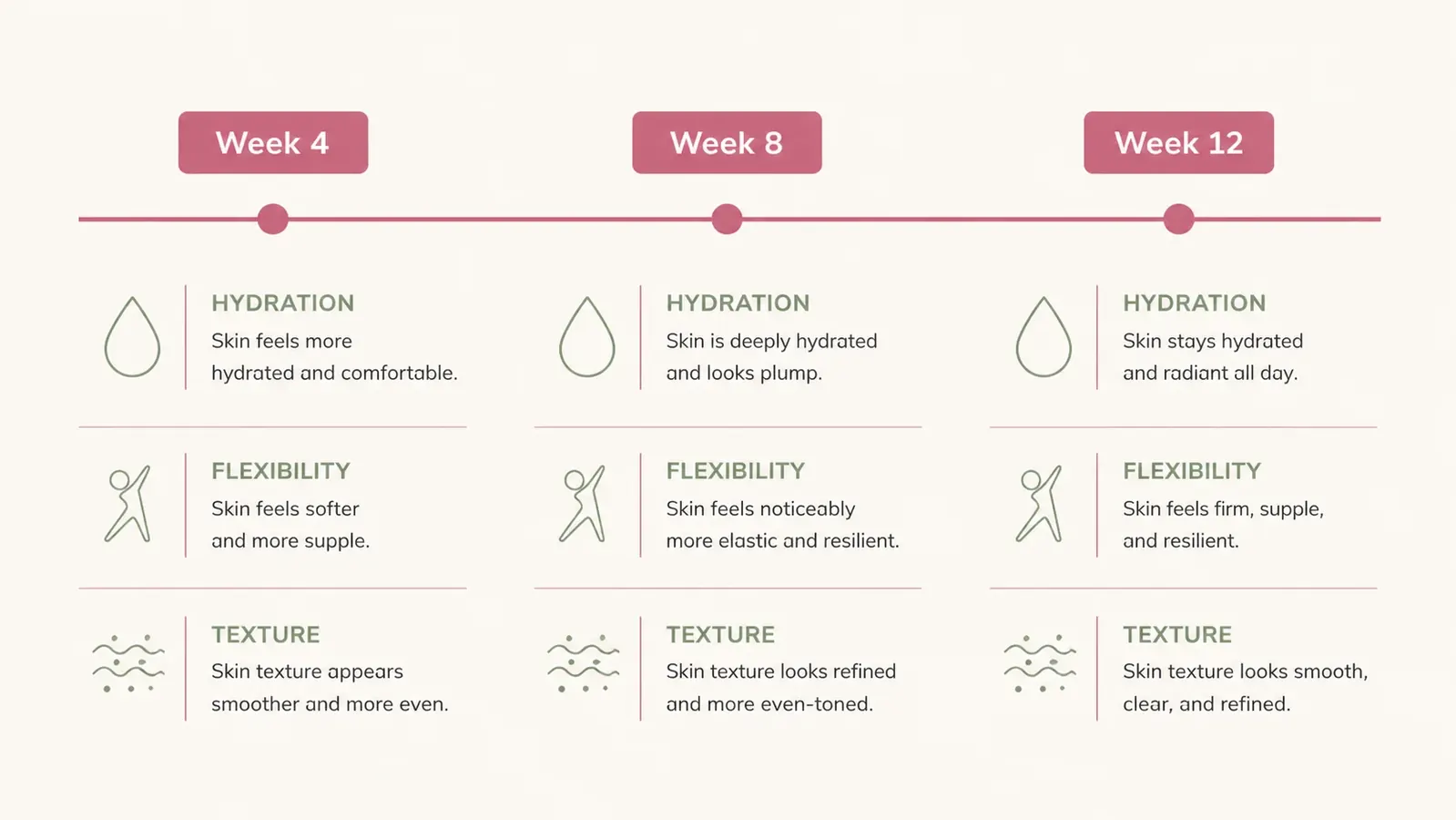
Step 5: Know What to Expect at Week 4, Week 8, and Week 12
This is the step most guides skip, and it is the reason so many women stop too early. Collagen supplementation does not work like a cup of coffee or a pain reliever. The changes are slow, cumulative, and easy to miss if you are not looking for specific things at specific times.
By week four, the most commonly reported early change is skin hydration. Not brightness, not fewer lines, not a dramatic before-and-after. Skin hydration. Many women notice their skin feels less dry or tight after cleansing, and that their moisturizer seems to absorb differently. Some notice their nails are a bit less brittle. These are small changes, easy to dismiss. They are also early signals that something is working. Write down how your skin feels in the shower at week one, and again at week four. The comparison is easier than relying on memory.
By week eight, if you are taking collagen for joint comfort reasons, this is roughly when some women begin to notice a difference in morning stiffness or ease of movement. The skin changes that started at week four tend to be more consistent and less variable at this point. Hair changes, if any, typically appear around this window as well, though they are the most inconsistent outcome across the research.
By week twelve, you have enough data to decide whether this supplement is worth continuing. Not because the changes stop, but because three months of daily use gives you a genuine baseline. If you have noticed meaningful skin hydration improvements, joint comfort, or reduced brittleness in nails, those benefits are likely attributable to the supplement and worth sustaining. If you have noticed nothing after twelve consistent weeks at an adequate dose, you can reasonably conclude it is not delivering value for you and stop.
Common Mistakes That Reduce Absorption
Under-dosing is the most common. I mentioned it earlier, but it bears repeating because it is the single largest reason women conclude collagen peptides do not work. A half-scoop every few days is not a test. It is a gesture toward a supplement. Use at least 10 grams daily for a proper trial.
Inconsistency is a close second. One week on, one week off does not produce the same effect as a steady daily intake. The body is not building a reserve you can draw on. The amino acids are available the day you take them and not the day you do not. Gaps of more than a few days reset your progress more than most people realize. If you miss a day, simply continue the next morning.
Expecting face-cream results is the third mistake, and it is more about framing than dosage. Collagen peptides are a dietary supplement that supports the body's own collagen synthesis from the inside. They do not directly plump lines or fill in areas of volume loss the way a filler would. What they can do, over time, is contribute to the skin's structural matrix, which affects hydration and firmness in a diffuse, gradual way. If you approach this expecting a topical skincare result delivered from inside a coffee mug, you will be disappointed. If you approach it as one component of a coherent routine for mature skin, you have reasonable expectations.
What Else Helps
The topical side of the equation still matters. Collagen peptides do not replace a good moisturizer, SPF, or any other skincare actives you are using. Think of the supplement as one part of a larger routine rather than a replacement for anything. Women who see the best results with collagen supplementation tend to be the ones who are also sleeping adequately, managing stress reasonably well, and eating enough protein overall. The supplement is an addition to a working foundation, not a fix for a missing one. For more on how to think about individual skincare actives alongside supplements, the three-month review covers the full picture from lived experience. And if you are curious whether collagen's effects hold up to scrutiny, the evidence overview walks through what the studies actually show.
You have the routine. Now you just need a powder that does not get in your way.
Vital Proteins Collagen Peptides dissolves cleanly into coffee or smoothies, is unflavored, and comes in a size that lasts about a month at one scoop per day. If you are building this habit, check the current price before you start so you know what to budget.
Amazon Check Today's Price on Amazon →