
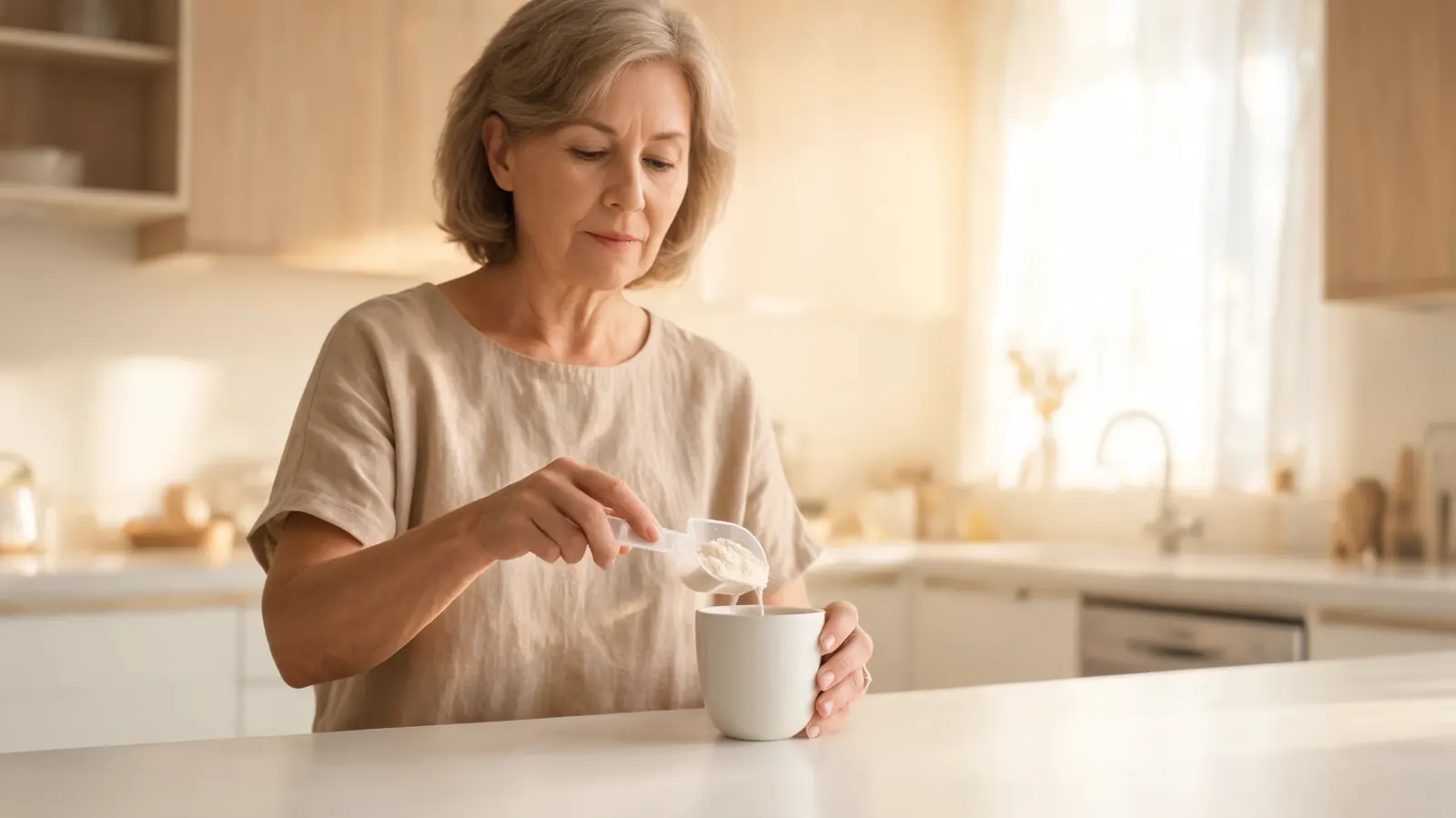
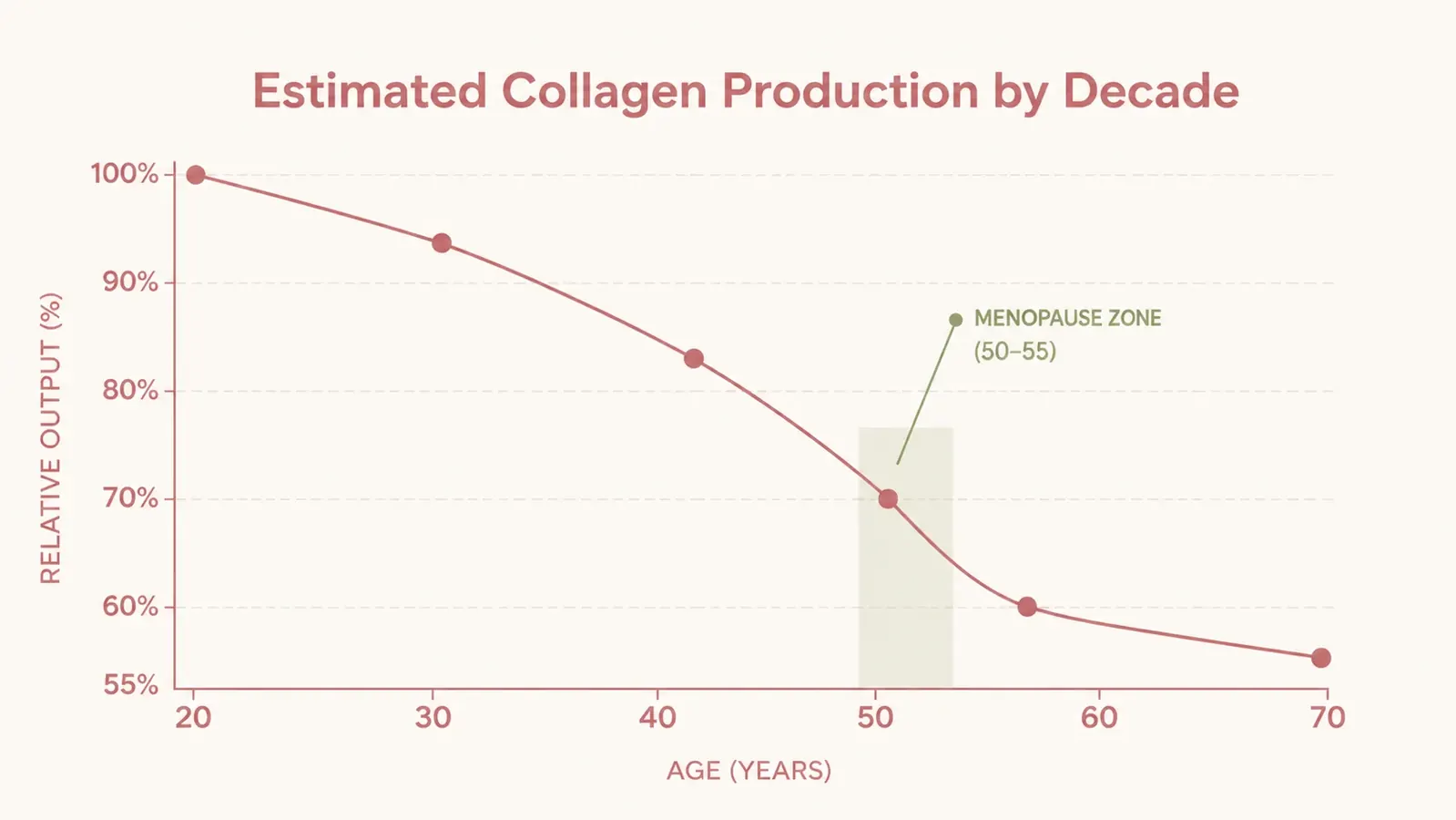
If you have been ignoring the collagen powder section of the supplement aisle, that is a reasonable position. The category has been buried under breathless marketing for years, and it can be genuinely hard to know what is wellness signal and what is wishful thinking. What I can tell you is that after fifty, the biology shifts in a way that makes collagen worth a closer look. Your body produces less of it every year, and the drop becomes noticeably steeper around menopause. Whether that is reason enough to add a daily scoop to your coffee depends on what the evidence actually says, which is more nuanced than either the enthusiasts or the skeptics tend to admit.
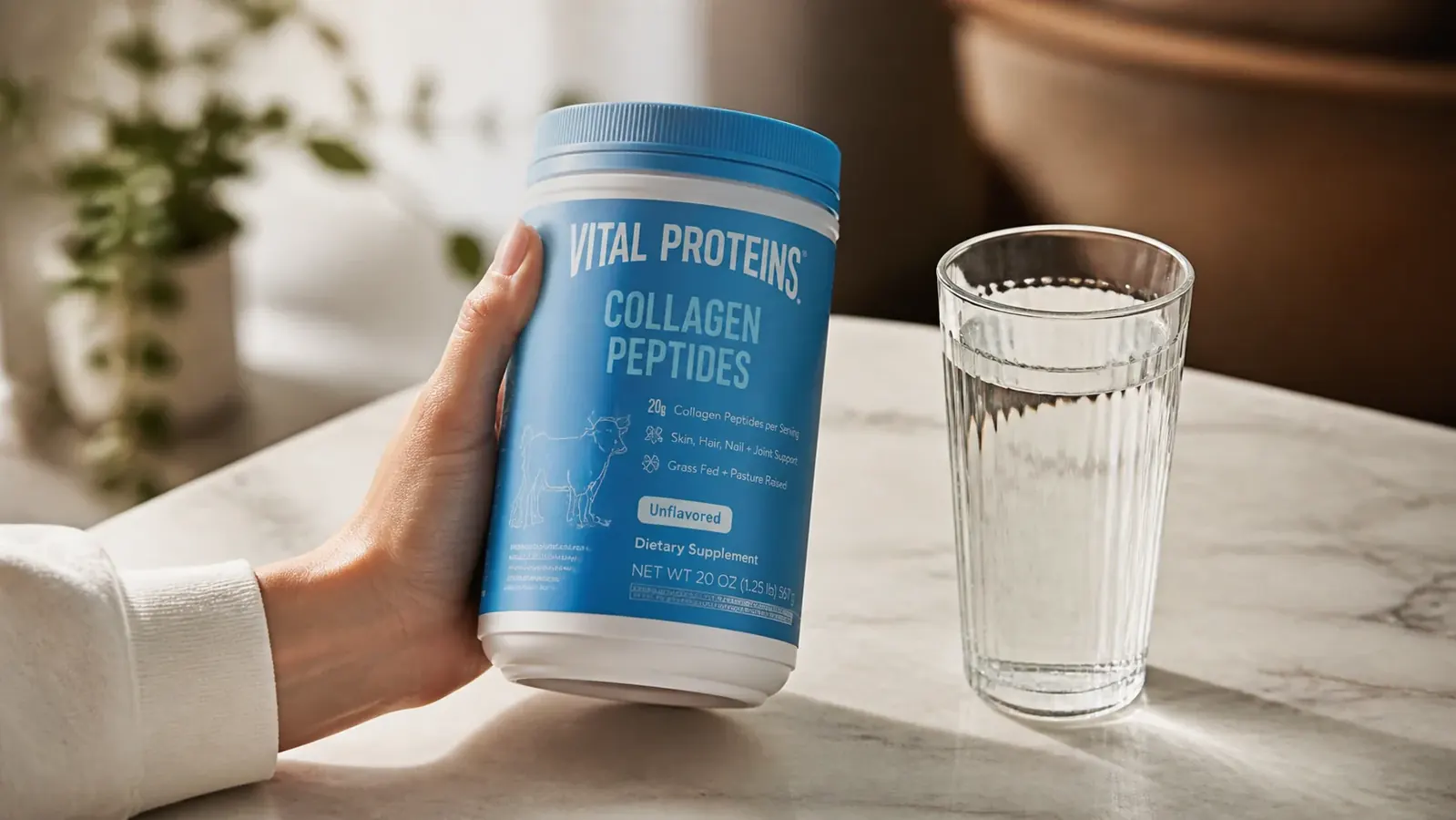
I have spent time with the research and with Vital Proteins Collagen Peptides specifically, which is the most reviewed collagen supplement on Amazon for good reason. It dissolves cleanly in hot or cold liquid, has no detectable taste, and delivers hydrolyzed Type I and III bovine collagen alongside hyaluronic acid and vitamin C, which are both relevant to how your body uses the amino acids it is getting. Here are ten reasons women over 50 keep reaching for it, alongside an honest read of what the science does and does not support.
Your collagen production has been declining since your twenties. Here is the product 213,000 reviewers added to their routine.
Vital Proteins Collagen Peptides is unflavored, dissolves in hot coffee without clumping, and includes hyaluronic acid and vitamin C to support absorption. It is the category benchmark for a reason.
Amazon Check Today's Price on Amazon →Skin hydration may improve measurably
Several randomized controlled trials have found that daily collagen peptide supplementation is associated with improved skin hydration and elasticity in women over 40. A 2019 review in the Journal of Drugs in Dermatology found statistically significant improvements across multiple studies, though sample sizes are often modest. Post-menopausal skin loses moisture-retention capacity as estrogen declines. Collagen amino acids, particularly glycine and proline, are the structural building blocks your skin uses to maintain its water-binding matrix. The effect is not dramatic or quick, but it is one of the better-supported claims in the category.
Skin elasticity is a separate benefit from hydration
Hydration and elasticity sound similar but are biologically distinct. Elasticity refers to your skin's ability to spring back after compression, which depends on the density and cross-linking of collagen fibers in the dermis. Research suggests that hydrolyzed collagen peptides, once digested and absorbed, may stimulate fibroblasts to produce more collagen and elastin. The effect takes time, typically eight to twelve weeks of daily use before any visible change is detectable. If you stop taking it, the effect fades. This is maintenance, not transformation.
Joint comfort is one of the more consistent findings
Collagen makes up roughly 60 percent of cartilage by dry weight. As collagen declines with age, cartilage thins and joint surfaces lose some of their cushioning. Studies on Type II collagen for joint health are the most robust in the supplement literature, but Type I hydrolyzed collagen (what Vital Proteins contains) has also shown some association with reduced joint discomfort in active adults in multiple trials, including work published in Current Medical Research and Opinion. The mechanism is still debated, but the signal is consistent enough that many sports medicine practitioners no longer dismiss it.
Bone density support is biologically plausible
Bone is roughly 30 percent collagen by weight. The protein matrix that holds calcium in place degrades as collagen production slows, which is part of why bone density loss accelerates after menopause. Some studies have found that collagen peptide supplementation combined with adequate calcium and vitamin D is associated with better bone mineral density outcomes compared to calcium and vitamin D alone. The evidence here is less conclusive than for skin, and it should not replace a conversation with your doctor about bone health. But the mechanism is real, and the combination approach is worth knowing about.
Nail strength may respond within a few months
Brittle nails after menopause are common and underreported. They are a direct consequence of reduced collagen and keratin support at the nail bed. A small but well-designed study found that daily collagen peptide use over 24 weeks was associated with a 42 percent reduction in broken nails and improved nail growth rate. Anecdotally, this is one of the first changes women notice, often before any skin changes are apparent. Nails may be more responsive simply because they grow and turn over more quickly than skin remodels.
Hair quality is the most contested claim, but not baseless
Hair becomes finer and grows more slowly after menopause, partly due to hormonal changes and partly due to reduced collagen support at the follicle. Collagen provides structural support around each follicle and may influence the hair growth cycle. The human evidence is thinner here than for skin and joints. Most studies are small, short, or funded by supplement companies. What I can say is that many women report noticing hair texture changes after several months of daily use, and the mechanism for follicle support is at least biologically coherent. Treat it as a possible benefit rather than a reliable one.
It is a meaningful source of glycine, which most diets underdeliver
Glycine is the most abundant amino acid in collagen, making up roughly one third of its structure. Most people over 50 are consuming far less glycine than their bodies use, partly because we eat less connective tissue than previous generations did. Glycine plays roles in sleep quality, liver detoxification pathways, and gut lining integrity. Supplementing with hydrolyzed collagen is one of the simplest ways to increase dietary glycine without changing your eating patterns significantly. This benefit is often overlooked in the skin-focused marketing but may be one of the more broadly useful effects.

The vitamin C included in this formula matters
Vitamin C is a required cofactor for collagen synthesis. Your body cannot make collagen without it. Vital Proteins includes 100 percent of the daily value of vitamin C per serving, which is not a trivial addition. If you take a plain collagen powder without pairing it with a vitamin C source, some of the potential benefit may be lost. The inclusion in the formula removes one variable you would otherwise have to manage yourself. This is a formulation detail worth paying attention to when comparing products in the category.
It integrates easily into a routine you already have
Consistency matters more than the supplement itself. A collagen peptide you take every day for six months will outperform a more expensive formula you forget half the time. Vital Proteins unflavored collagen dissolves completely in hot coffee, tea, or a morning smoothie without changing the taste or texture. There is no separate step, no pill to swallow, no aftertaste to manage. For a daily habit that needs to run for weeks before any effect is visible, that ease of integration is genuinely relevant, not just a marketing convenience.
The risk profile is low, which changes the cost-benefit calculation
Collagen peptides have an excellent safety record in the literature. No meaningful adverse effects have been identified in the research, and they do not interact with common medications in ways that have been documented. For a supplement category where the evidence is promising but not yet definitive, that low risk profile matters. If you are weighing whether a benefit that is associated with but not proven by research is worth trying, the fact that trying it carries essentially no downside shifts the calculation. You are not betting much on an uncertain outcome.
What I Would Skip
Collagen is not a repair mechanism for severe skin laxity or significant joint damage, and no responsible reading of the research suggests otherwise. If you are looking for something that will reverse visible aging in a meaningful way, this is not it. It is a slow, cumulative maintenance tool for tissue that is quietly declining. If you have a diagnosed medical condition affecting joints or bones, collagen supplementation does not replace medical management. And if you are vegan or dairy-free, bovine collagen is not the right category for you. Marine collagen is an alternative, though the evidence base is thinner.
Collagen is not a miracle supplement. It is a slow, maintenance-oriented tool for biology that is changing whether you supplement or not. That framing makes it easier to evaluate honestly.
The most useful way to think about collagen supplementation after menopause is as infrastructure maintenance. You are not fixing something that has broken. You are supporting systems that are losing raw material at a rate your diet no longer replaces. That is a quieter benefit than the category's marketing usually suggests, but for women making thoughtful long-term choices about their health, it is arguably a more useful one. For a longer look at three months of daily use and what actually changed, the full review covers that ground in detail.
If you want to read more on how to build the habit in a way that actually sticks, the guide on adding collagen peptides to a daily routine covers mixing methods, timing, and the vitamin C pairing question in practical detail.
If the cost-benefit math works in your favor, this is where most women start.
Vital Proteins Collagen Peptides, unflavored, with hyaluronic acid and vitamin C included. Over 213,000 reviews. Dissolves in hot coffee without a trace. Check the current price before adding anything else to your routine.
Amazon Check Today's Price on Amazon →