

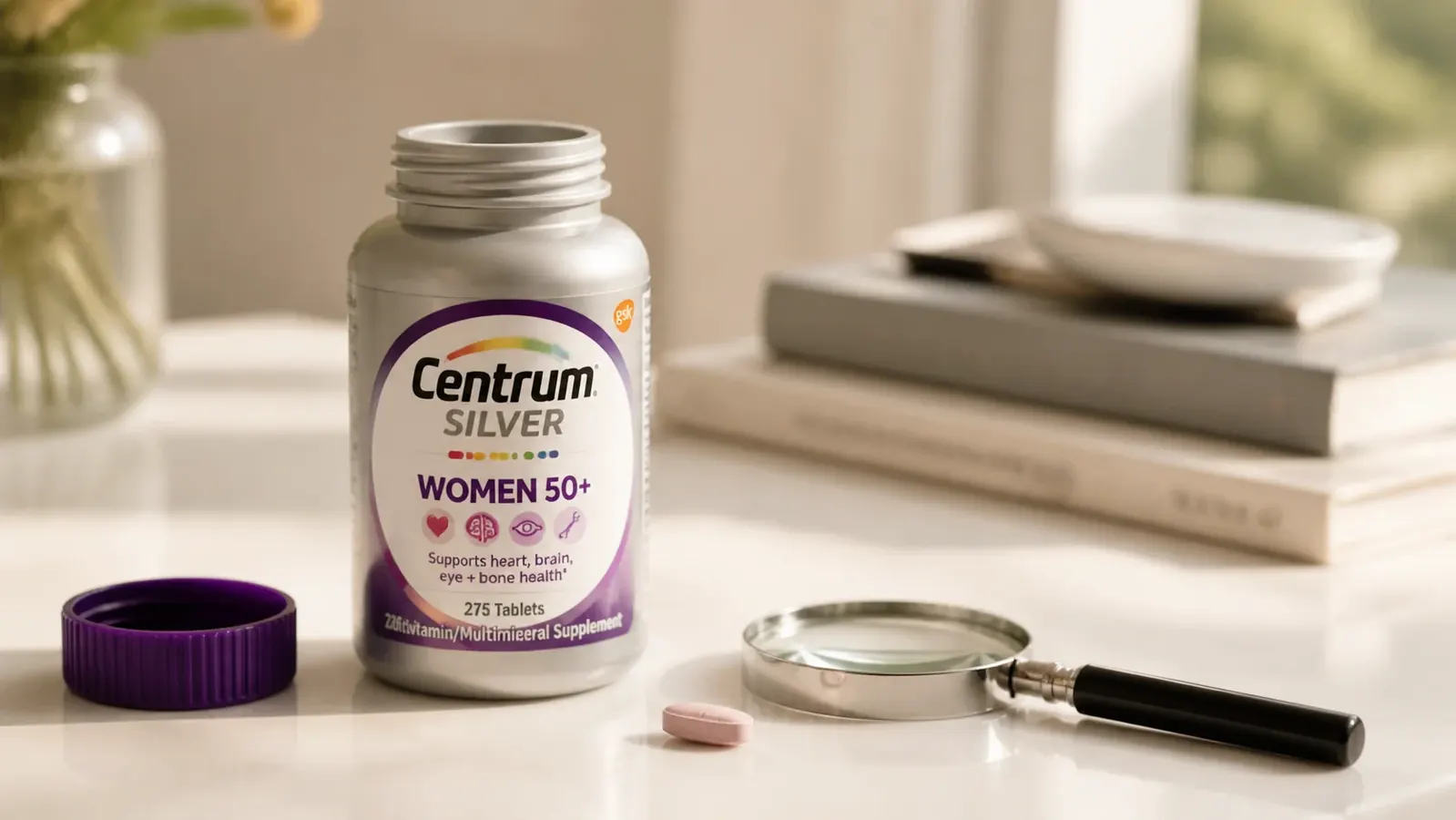
The thing about a 4.8-star multivitamin is that it tends to silence the conversation. When 33,000 people are broadly satisfied, the reviewer who squints at the ingredient list and asks uncomfortable questions about molecular form starts to feel like she is being difficult. I have been that reviewer for most of my adult life, and I am reasonably comfortable with the role. Centrum Silver Women 50+ is a competent, widely trusted multivitamin. It is also a product where the marketing language and the label reality are worth separating carefully, especially if you are a post-menopausal woman who is paying attention to more than just the headline nutrients.
I want to be precise about what this review is and is not. It is not a hit piece. Centrum Silver Women 50+ is a reasonable choice for most women who want a single daily pill covering their nutritional bases. What I am going to do is walk through the parts of the formulation that the enthusiastic reviews skip, explain why those parts matter specifically in your fifties, and let you decide whether any of it changes your calculus. That is the kind of review I would have wanted before I bought it.
The Quick Verdict
A broadly sensible post-menopausal multivitamin with a handful of formulation choices that functional medicine practitioners would call outdated. Worth taking, worth understanding, and worth supplementing in a few specific areas if your budget allows.
Amazon Check Today's Price →You have been reading labels for five minutes and already have questions. That is healthy.
Centrum Silver Women 50+ is a solid baseline multivitamin for women after menopause. If you decide the tradeoffs are acceptable, today's price on Amazon is worth checking before you commit to a bottle.
Amazon Check Today's Price on Amazon →The B12 Form Question: Cyanocobalamin Versus Methylcobalamin
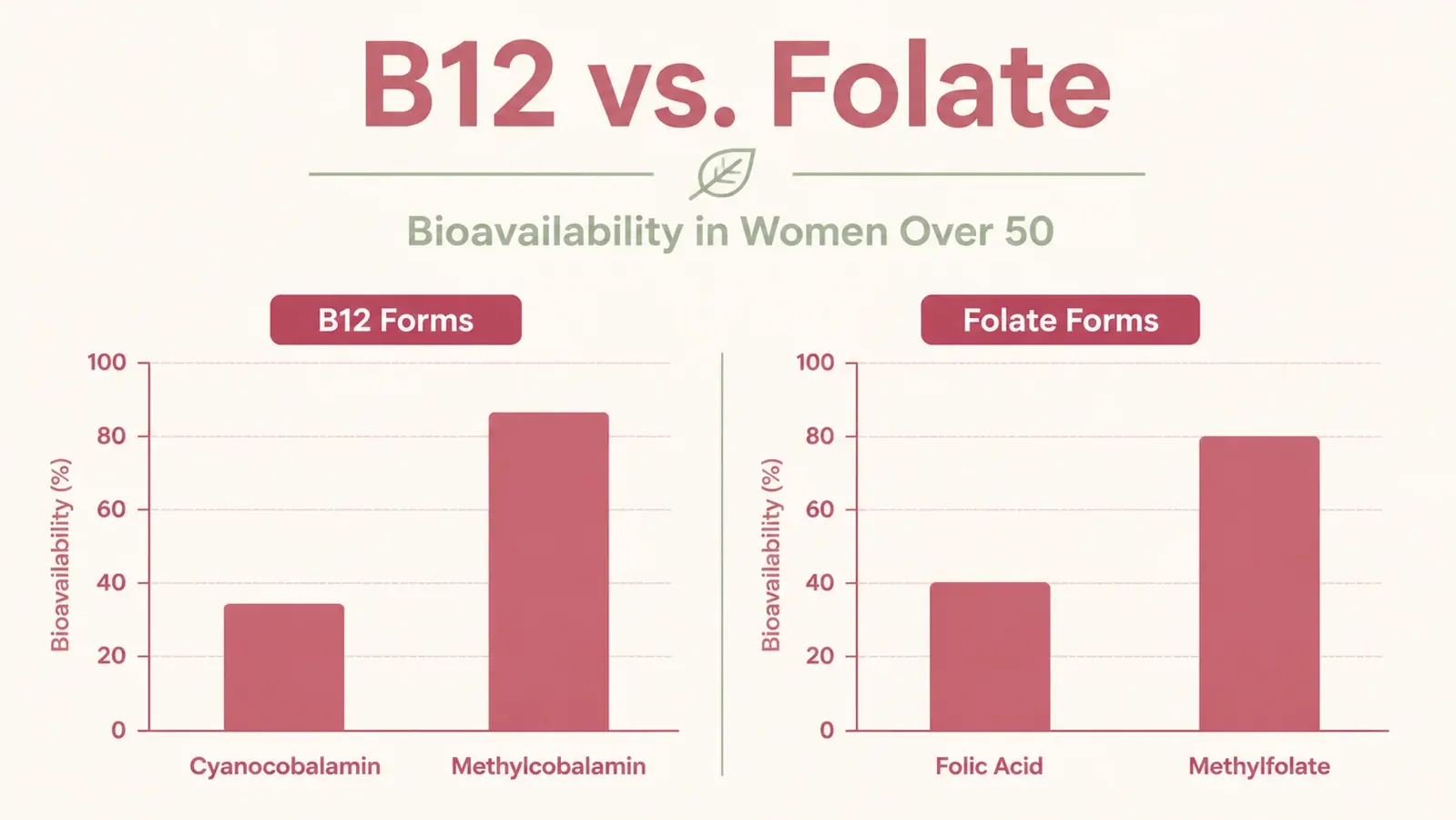
Centrum Silver Women 50+ provides 9.6 micrograms of vitamin B12, which is a decent dose and meaningfully above the RDA of 2.4 micrograms. The detail that the marketing materials do not dwell on is the form: cyanocobalamin. This is the synthetic version of B12, and it is the version used in the vast majority of mass-market multivitamins because it is cheap and stable on the shelf. To be usable by the body, cyanocobalamin must be converted into methylcobalamin or adenosylcobalamin, the two active forms your cells actually recognize.
For most people, that conversion is not a problem. The liver handles it without much fuss. But a non-trivial percentage of people, estimates range from 10 to 15 percent in the general population and somewhat higher in older adults, carry MTHFR gene variants that impair methylation. If your methylation pathways are running below capacity, the conversion from cyanocobalamin to an active form is less efficient. You may be absorbing less B12 than the label suggests. You probably do not know whether you are in that group unless you have had genetic testing or a functional panel. Cyanocobalamin is not dangerous. It is simply a less bioavailable form than methylcobalamin, and that distinction matters more as you age and your intrinsic factor production declines.
Centrum uses cyanocobalamin because it works for most people, is stable in tablet form, and keeps the price accessible. That is a reasonable manufacturing decision. It is also a decision worth knowing about if you have had suboptimal B12 levels on a blood panel despite taking a supplement that claims adequate coverage.
The Folate Situation: Folic Acid in a Post-Menopausal Supplement
Centrum Silver Women 50+ contains 400 micrograms of folic acid. This is the synthetic form of folate, and it is the one that raises the most questions in the functional nutrition world. Folic acid is not naturally occurring. It must be converted by an enzyme called DHFR into usable folate forms before your body can do anything with it. In younger women, this conversion pathway is a reasonable concern mainly because of neural tube development in pregnancy. In post-menopausal women, pregnancy is not the issue. The concern is different.
Research published in the past decade has raised questions about unmetabolized folic acid in older adults. When folic acid intake exceeds the conversion capacity of the DHFR enzyme, unconverted synthetic folate accumulates in the bloodstream. Some researchers have associated elevated unmetabolized folic acid with impaired natural killer cell activity, which has immune implications. This is still an area of active research and not settled science. But it is a question that does not arise with methylfolate, the naturally occurring, pre-converted form of folate that a growing number of premium multivitamins use instead. If you see methylfolate or 5-MTHF on a label, that is the form that does not require conversion.
Again, Centrum uses folic acid because it is stable, inexpensive, and meets regulatory requirements. The label is accurate and compliant. What it does not tell you is that this form may not be the most appropriate one for women who are past reproductive age and who have any degree of methylation impairment.
The label says 400 micrograms of folate. It does not say whether that folate is in a form your body can use without a conversion step. For some women after fifty, that step is where the coverage actually breaks down.
Magnesium: Present on the Label, Functionally Low
Magnesium gets a single line in the Centrum Silver Women 50+ supplement facts: 50 milligrams. The adequate intake for women over 50 is 320 milligrams per day. Centrum is covering roughly 16 percent of your daily need from this single supplement, which puts the rest squarely on your diet. That is not unusual for a multivitamin. Magnesium is a bulky mineral, and fitting therapeutic doses into a single tablet alongside 23 other nutrients is physically impossible. Most mainstream multivitamins provide a token magnesium amount and move on.
What is worth knowing is the form used here: magnesium oxide. It is the cheapest and densest magnesium form available, which makes it practical for tablet manufacturing. It is also the form with the lowest bioavailability, somewhere around 4 to 10 percent in most studies, compared to magnesium glycinate or magnesium malate which absorb considerably more efficiently. So the 50 milligrams on the label is already a small fraction of your daily need, and the fraction your body actually uses from that 50 milligrams is smaller still. For women who are using this multivitamin and hoping it covers their magnesium, this is worth understanding. Magnesium supports sleep quality, muscle function, bone density alongside calcium, and cardiovascular health, all of which are concerns that intensify in the decade after menopause.
If magnesium is a priority for you, a separate magnesium glycinate supplement taken in the evening is a more reliable strategy than expecting a multivitamin to cover it. Centrum Silver Women 50+ does not pretend otherwise on the label. But it also does not wave a flag about it.
No Vitamin K2: The Missing Partner to Vitamin D3
Centrum Silver Women 50+ provides 25 micrograms, or 1000 IU, of vitamin D3. This is the biologically active form and a meaningful improvement over the D2 found in older supplement formulations. For a post-menopausal woman, vitamin D3 at this level is a reasonable contribution to what most doctors recommend reaching through a combination of diet, sun exposure, and supplementation.
What Centrum does not include is vitamin K2. This matters because D3 and K2 work together in the body's calcium metabolism pathway. Vitamin D3 increases calcium absorption from the gut. Vitamin K2, specifically the MK-7 form, activates the proteins that direct that calcium into bones and teeth rather than into arterial walls or soft tissue. Without adequate K2, improved calcium absorption from increased D3 intake may not go where you want it to go. Some cardiologists and integrative practitioners have raised concerns about high-dose D3 supplementation in the absence of K2 for exactly this reason.
K2 is expensive, has limited shelf stability in some formulations, and is absent from virtually all mass-market multivitamins. Centrum is not unusual in leaving it out. But if you are supplementing vitamin D3 seriously, as many women over 50 need to, adding a separate K2 supplement, typically 90 to 120 micrograms of MK-7 per day, is worth discussing with your doctor.
What I Liked
- Iron-free formulation is correct for post-menopausal women and removes a common source of GI discomfort
- Vitamin D3 at 1000 IU is the biologically active form and a meaningful dose
- B12 at 9.6 micrograms exceeds the RDA substantially, which matters as absorption efficiency declines with age
- 200-count bottle keeps the cost-per-tablet genuinely low, reducing the excuse not to take it daily
- Gluten-free and non-GMO verified, which matters to a significant portion of this age group
- Easy-swallow tablet size and no unpleasant aftertaste, which affects adherence more than most people admit
Where It Falls Short
- Cyanocobalamin form of B12 requires a conversion step that is less efficient in women with MTHFR variants
- Folic acid rather than methylfolate raises bioavailability questions for women with reduced methylation capacity
- Magnesium oxide at 50 mg covers roughly 16 percent of daily needs in a low-bioavailability form
- No vitamin K2 to work in tandem with the D3 for calcium direction into bone rather than soft tissue
- Calcium at 160 mg is helpful but not a therapeutic dose; this is still supplemented separately by most practitioners
- The word 'complete' in supplement marketing language implies comprehensiveness that no 23-nutrient tablet can genuinely deliver
The Iron-Free Label: Actually the Best Thing About This Product
Here is where I want to flip the script, because the iron-free label on Centrum Silver Women 50+ is sometimes presented as a limitation, as if this version is simply missing something. It is not. It is missing something you do not need, and that distinction matters considerably.
Before menopause, women need higher iron intake to compensate for monthly losses. The RDA is 18 milligrams per day for pre-menopausal women. After menopause, the RDA drops to 8 milligrams per day, the same level as adult men, because the monthly loss is gone. Multivitamins formulated for general adult women often contain 18 milligrams of iron, which is appropriate for a 38-year-old and excessive for a 56-year-old. Excess iron in post-menopausal women is associated with oxidative stress, constipation, nausea, and, in women with hereditary hemochromatosis, potential organ stress. Iron is not benign at high doses.
Centrum removing iron from the 50+ formulation is a formulation decision that reflects actual post-menopausal physiology. If you have switched from a standard women's multivitamin and noticed less GI discomfort, iron is likely a significant part of the reason. The iron-free label should be read as a feature, not a gap.

What the Word 'Complete' Actually Means on a Supplement Label
Centrum Silver Women 50+ describes itself, in marketing language at least, as a complete multivitamin. The word complete is doing a lot of work here, and it is worth examining what it actually means versus what most people hear. What it means, legally and practically, is that the product contains a defined list of essential vitamins and minerals at levels that meet or exceed the recommended daily values set by the FDA. It does not mean that every nutrient is in its most bioavailable form. It does not mean that every nutrient is present at a therapeutically meaningful dose. It does not mean that the combination of nutrients addresses every common deficiency pattern in post-menopausal women.
What you are buying with Centrum Silver Women 50+ is a regulatory-compliant, age-appropriate nutritional baseline. That is a useful thing to have. Many women over 50 are genuinely low in D3, B12, and zinc, and a daily pill that addresses those gaps at a modest cost is worth taking. But a multivitamin is a floor, not a ceiling. The research on specific health outcomes in post-menopausal women consistently points to nutrients at doses that a single daily tablet cannot deliver: magnesium at 300-plus milligrams, omega-3 fatty acids entirely absent from any multivitamin, vitamin D3 often needing to be 2000 IU or higher depending on individual blood levels, and K2 as a dedicated supplement.
None of that is a reason to avoid Centrum Silver Women 50+. It is a reason to use it as what it is: one piece of a broader nutrition strategy, not the entirety of one.
Who This Is For
You are a good candidate for Centrum Silver Women 50+ if you are post-menopausal, not currently taking a stack of individual supplements, and want a single affordable tablet that covers the most common micronutrient gaps in your age group. The iron-free formulation is correct for you. The D3 dose is reasonable. The B12 is above the RDA. If you eat a reasonably varied diet, this multivitamin fills in the gaps without drama, and at a very low cost per serving for a 200-count bottle, the cost-per-serving math is hard to argue with.
You are also a candidate if you have had a blood panel confirming low D or B12 and your doctor has suggested a multivitamin as part of the response. This is a reasonable starting point. It is not a substitute for a targeted, higher-dose supplement if your deficiency is clinically significant.
Who Should Look Elsewhere
If you have confirmed MTHFR gene variants, or if you have had persistently low B12 on blood panels despite supplementing, the cyanocobalamin and folic acid forms in this product may not serve you well. You would benefit from a multivitamin that uses methylcobalamin and methylfolate. They are more expensive. Brands like Thorne, Garden of Life, and MegaFood carry them. The price difference is real and the label is less glamorous, but the conversion step is eliminated.
If you have been told your bone density is a concern and you are supplementing D3 at meaningful doses, consider adding a K2 supplement alongside whatever multivitamin you use. Centrum's omission of K2 is standard for the category, but that does not make the gap less relevant to bone health outcomes. And if sleep quality, muscle cramps, or blood pressure are current issues for you, add a separate magnesium glycinate supplement rather than expecting a multivitamin's 50 milligrams of magnesium oxide to address them.
You have read the fine print. If Centrum Silver Women 50+ still makes sense for your situation, the current price is worth checking.
For most post-menopausal women, this remains a sensible, affordable nutritional baseline. Understanding its limits is part of using it well. Check today's price on Amazon and read the label yourself when it arrives.
Amazon Check Today's Price on Amazon →